• Skip to primary navigation
  • Skip to main content

Trail Option

A personal geography of landscape and place, art and geo-science.

  • Home
  • TrailOption Blog
  • About
  • Contact TrailOption
  • Subscribe!
  • Lost Journals
  • Show Search
Hide Search

great basin

Nevada High Points #122 — Kinsley Mountains

D. Craig Young · August 3, 2024 · Leave a Comment

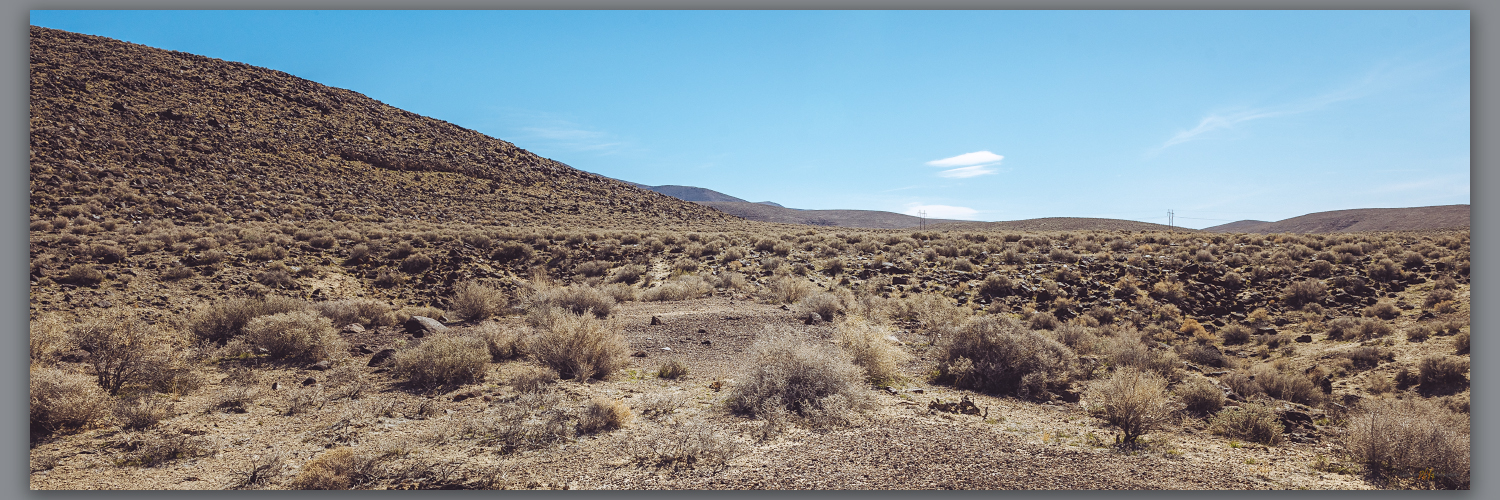
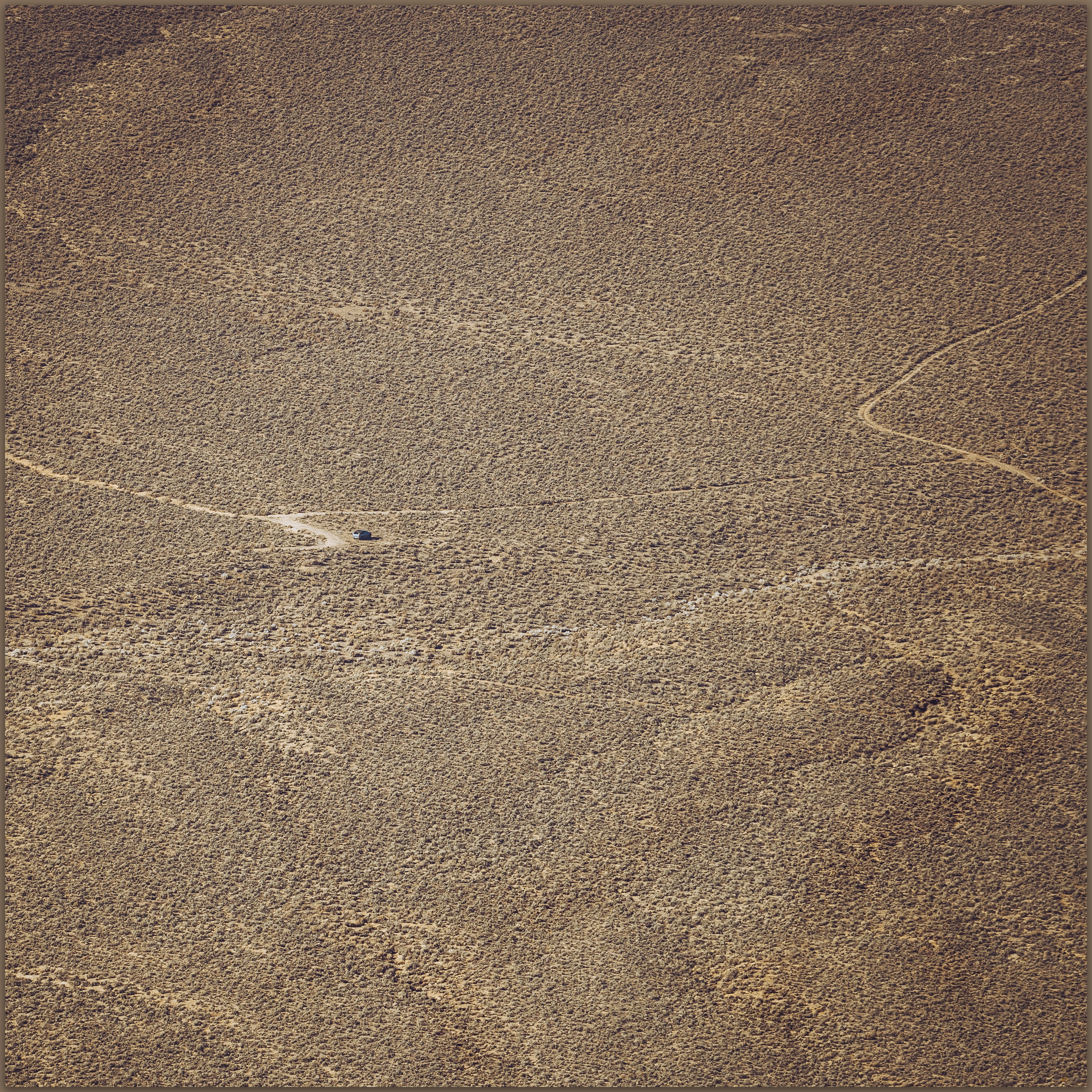
Tracks. Mining track on the beveled alluvial pediment of the Kinsley Mountains, NV, USA

Antelope VABM

7882 ft (2402 m) – 1400 ft gain

2024.05.12


The sky lit up as I opened the tailgate. I picked Antelope Valley, below the Kinsley and Goshute Mountains, as a good place to catch some Great Basin aurora. My eyes had yet to adjust to the fading of the blue hour, but I could easily make out white spires streaking skyward to my north; I had only just parked. I would forego setting camp and, preferably, set up my cameras. I took a few shots for settings, seeing the green and red hues of curtained aurora below the upright spires. On a second camera, my Canon R7, I started collecting images for a timelapse. I lacked time to consider any compositional elements, but the skyline of the Goshutes and the light-glow of distant Wendover might make decent foreground interest. It all looked rather good — for Nevada aurora, and I looked forward to a beautiful night. A coyote sang its approval.

Spires. Aurora appear in the early evening of Antelope Valley, eastern Nevada, USA

And then, nothing happened. I had paused to make dinner, setting water to boil on my stove, but a glance at the sky showed only stars above the false glow of the border-town casinos. I would wait — a quiet desert night is a good place to be patient.

I am on my way to meet my good friends and colleagues — Brian and Daniel — at the University of Utah, for a few days gouging around the southern Bonneville Basin. We are looking to improve the temporal resolution of landform deposition to investigate the natural taphonomy of radiocarbon dates — before archaeological dates can be used as a proxy for human population density in the Bonneville Basin of western Utah, we must understand how and where dates are preserved. If natural processes destroy or obscure otherwise dateable cultural features, we must calibrate our population proxies accordingly. There is a lot to it, but I let Brian and Daniel think about the proxies, while I try to understand the landforms. But in the dark of the night in Antelope Valley, prior to dropping into the Bonneville basin, I wait for northern lights and think about a morning walk into the Kinsley Mountains.

I missed out on a good night’s sleep. The aurora never returned, even as I waited and watched and then, waking every hour at the nudging of a vibrating alarm, monitored the sky throughout the night. Only stars. My cameras were ready but ignored. I soon give in to the blue hour. Fresh-ground coffee beans turn into a rejuvenating brew, so I can set my pack and break camp to find a canyon below the high point.

Although not known for its aurora possibilities, the Kinsley – Goshute mountain chain is the place for raptor migrations, so I had other attractions to consider. I could have done more research, but I thought maybe the spring movements might be in play. Many birds, especially hawks, eagles, and their kin, avoid open expanses of water, or former water in the case of the Bonneville playa and salt flats, preferring to hug the mountains along the margins. This focuses the migratory path into narrow bands, and Kinsley Mountains could be a rest stop along one such path. I will take the 100-500mm lens on my cropped R7 hoping for migratory birds.

Delivery. Long alluvial fan of alluvium above Chin Creek, Kinsley Mountains, NV, USA

Having chosen a canyon southeast of the high point, I drive along the alluvial bajada of the eastern mountain front, past ‘reclaimed’ mining waste hoping to look like hills. I notice a pronghorn antelope standing lonely on the playa-like plain of the basin fill, and I soon realize that she is not alone. She has a wobbly fawn; only a few hours old, the small thing is barely walking, it stands up, sits down. I am a little too close even though I am on a well-used road. Mom wanders off a little ways, so I move away as I hate to disturb them. My attempts at images are straight into the morning sun, so I leave the mom and her fawn alone.

Quaternary-age, uplifted alluvial pediment on southern eastern slopes of Kinsley Mountains, USA

The roads on the alluvium below the high point look good, so I turn toward the canyon of the Phalan Keegan Mine — the mine is inactive, but it is the reason the roads are here.  I can see steep limestone outcrops near the summit, and the adjacent plutonic granites are noticeably different. I park below the mine and set off, trying for an eastern ridge though I will need to dodge some large cliffs along the way. I am surprised to find, at the get-go, a well-constructed no-host bar nestled under pinyon tree. It is suitably decorated and has heavy chairs, a bar rail, a rock-lined hearth, and various pretty rocks and cached trinkets. An impressive surprise. I complain about ATV-laden hunting and off-roading parties at times, but they rather know how to create some intricate lodgings for their forays in the ‘wild’.

Hints. Trying to capture the flitting flycatcher, Kinsley Mountains, NV, USA

Wandering up canyon, I noticed a variety of songbirds, thankful for the Merlin app and its off-line identification magic. Gray Vireo, Dusky Flycatcher, Black-throated Gray Warbler, Blue-gray Gnatcatcher, Spotted Towee, Woodhouse’s Scru-Jay, Rock Wren, House Wren, Bushtit. I see the Vireo and Dusky Flycatcher (I think), and the Jay is easy and obvious. The others elude me. A small flock of Pinyon Jays (no app necessary!) heads northeast over the ridge and away. Peregrines emerge from a cliff face high above.

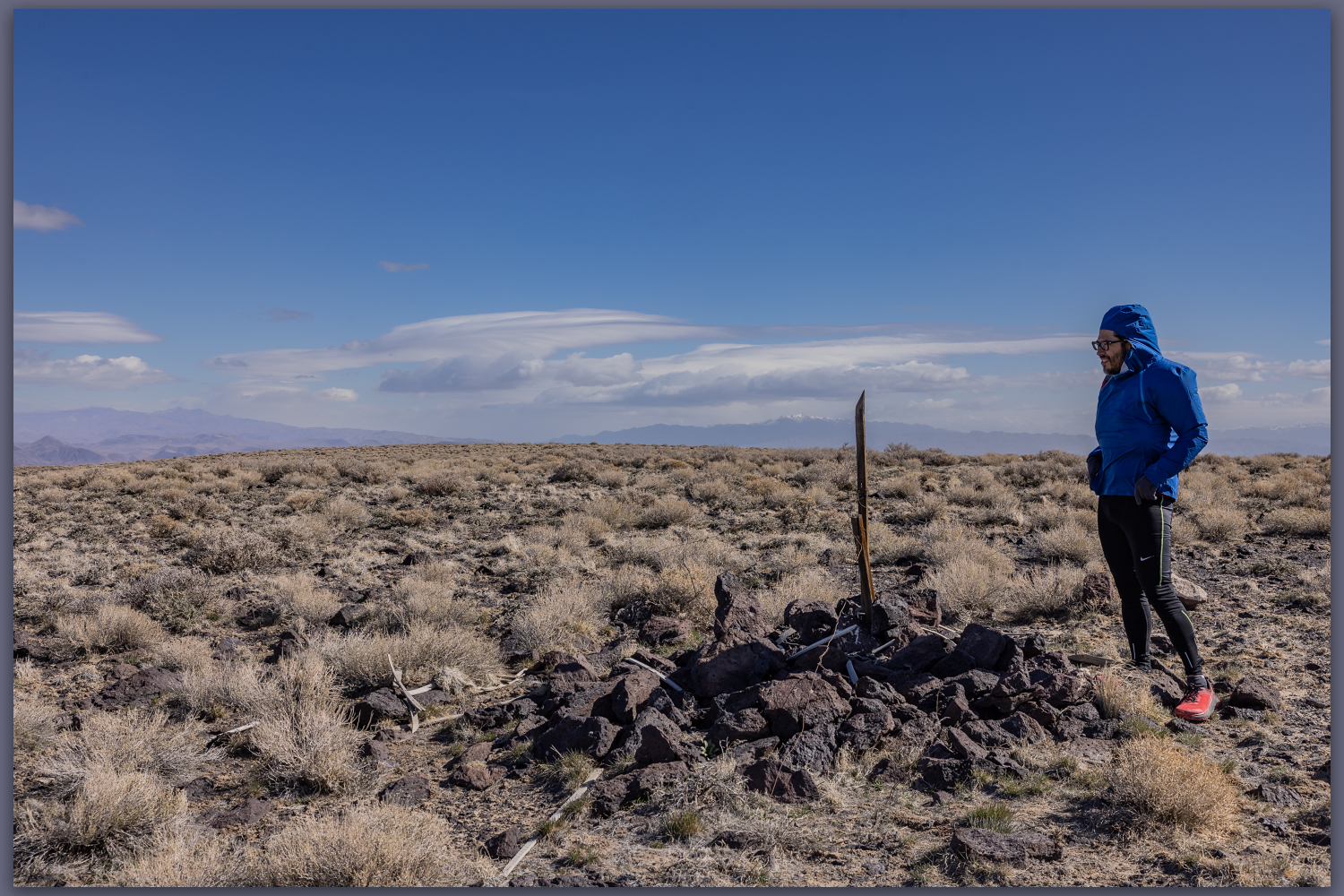
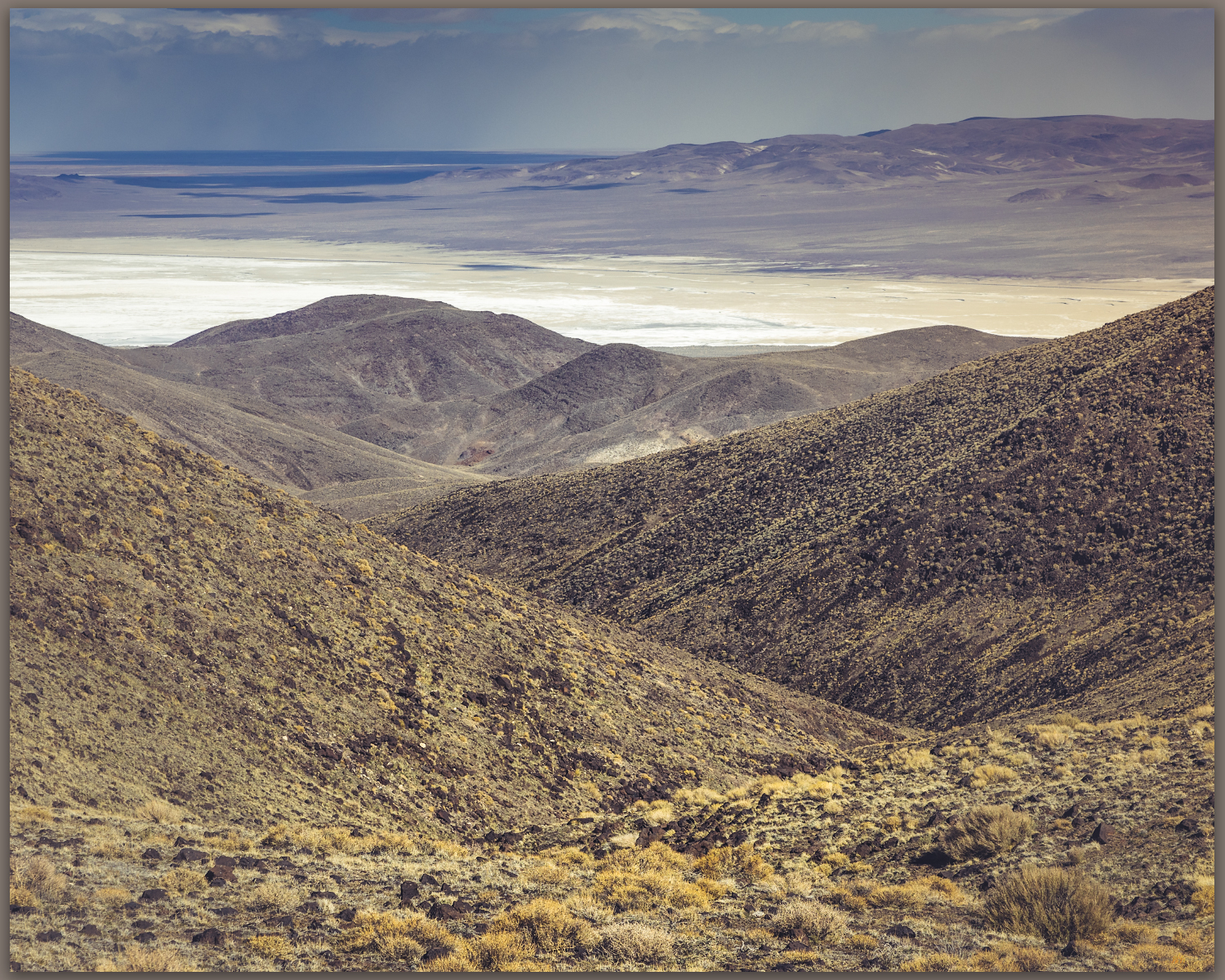
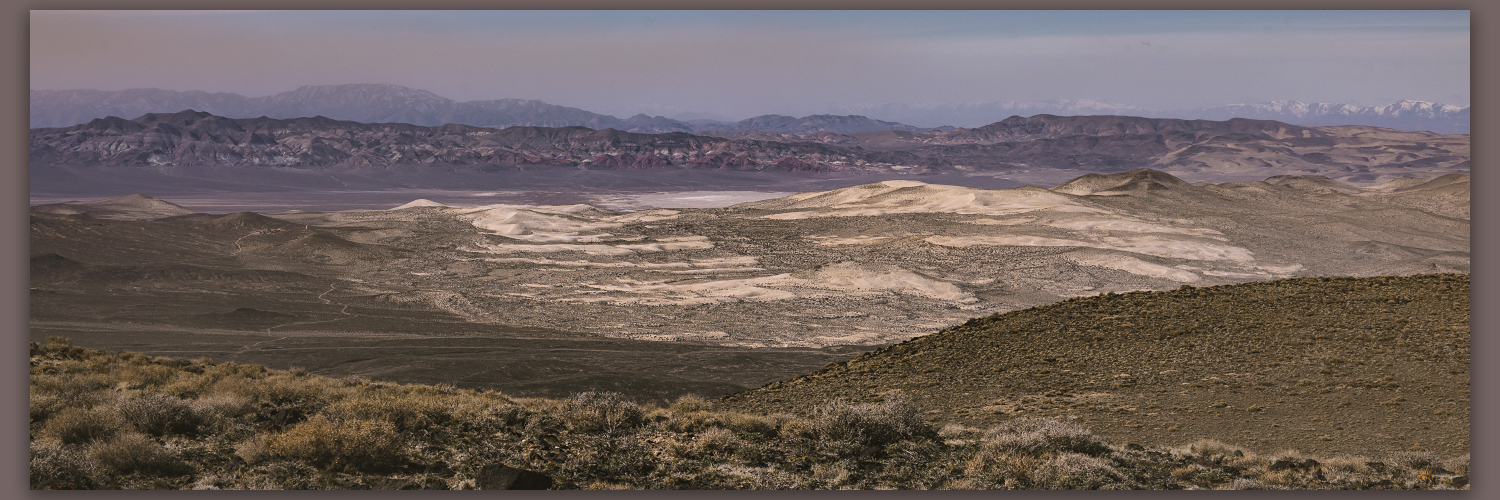
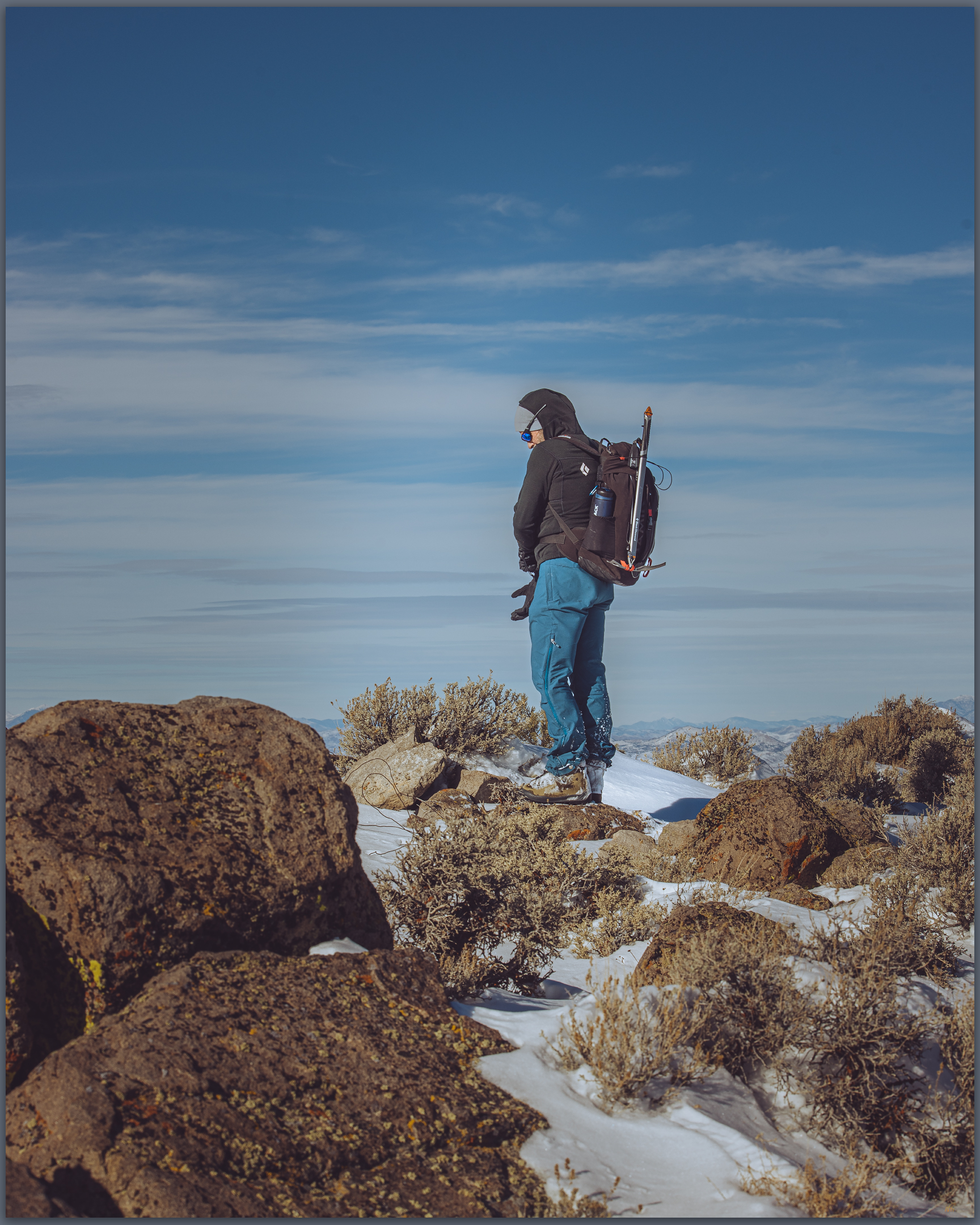
The walk is nice, though I am not photographically inspired. Ramps of limestone lead nowhere, but I can work my way along outcrops and across some back slopes to eventually reach a nice, rounded summit. There is barely a breeze, and the late spring temperature is perfect, practically no clouds. The summit is pleasing, like most any summit can be, but this morning stands on its own. I am unhurried in the calm and spend quite a lot of time just enjoying the views from Mount Wheeler in the Snake Range to the Rubies in the west, and the expanse of the West Desert of the Bonneville Basin rolling out to the east

Snake Range. Wheeler Peak in the snow from the Kinsley Mountains, NV, USA

I do, however, need to get going. I drop down the opposite, north side of the eastern ridge but flush a Peregrine pair suddenly. I had seen one of them earlier. They are nested in a near-summit outcrop, and I have walked in on them from above. I do my best to get quickly away, as I hate disturbing them. But disturbed they are, and I am variously screamed at and dived upon until I get some distance. I watch for a while and then continue downhill.

On guard. A Prairie Falcon protests my approach, Kinsley Mountains, NV, USA

It is an easy descent to some relict fans that are perched below the southern slopes. These ancient alluvial landforms are very old and almost perfectly smooth except where they are cut by deeply incised drainages. They are slowly tilted as the mountains build, and it is fun to see some Quaternary landforms far above the valley fills. Soon, I am back at the truck where I can open the bar where, here at noontime, it is bring your own beer.

Bar’s open. A welcome sight at the base of the canyon below the summit, Kinsley Mountains, NV, USA

Cheers to a nice walk. Even when the photos fail to motivate or impress me, the high points are special, every one of them.

Keep going.


Nevada High Points #121 — Sentinel Hills

D. Craig Young · July 28, 2024 · Leave a Comment

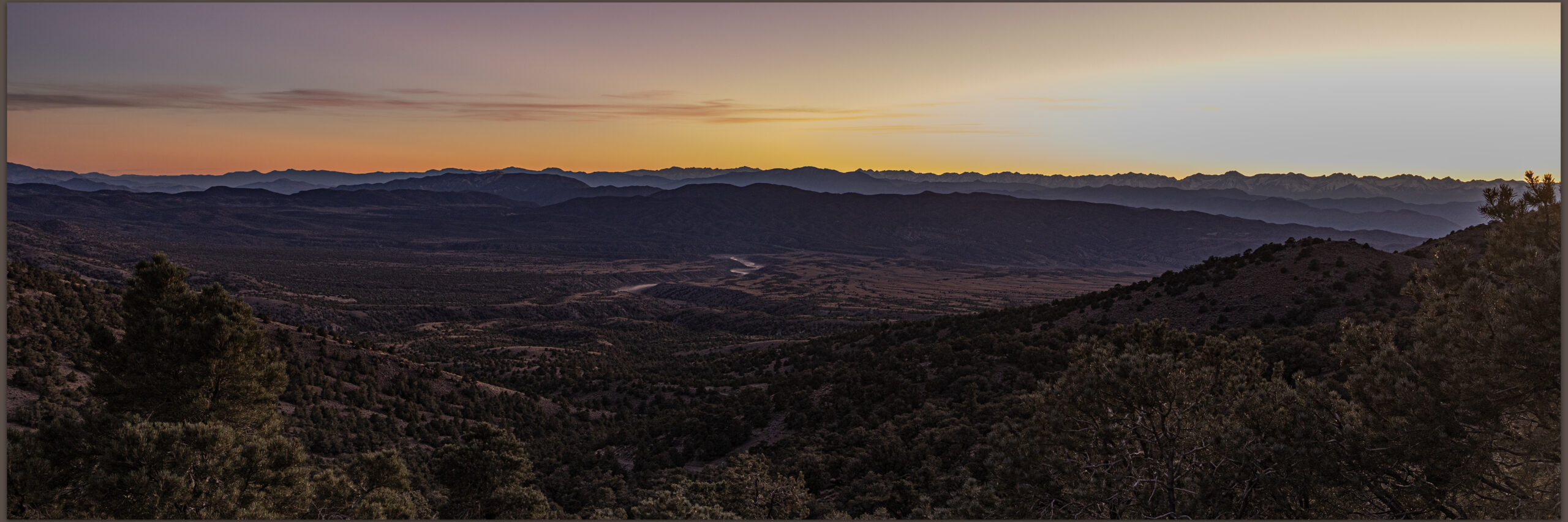
Quinn River Valley. Sentinel Hills, Great Basin Desert, NV, USA

Hoppin Peak

6148 ft (1874 m) – 1260 ft gain

2024.05.07


It was time to close the day. I left McDermitt, Nevada, after sharing results of recent projects in a long meeting with the council of the Paiute-Shoshone Tribe. Archaeological studies driven by proposed developments are not always welcomed, and while the meetings are almost always cordial and informative, they can be emotional and contentious given the variety of views regarding the impacts, good and bad, that projects bring. I do my best to be honest and clear in my presentations, but I understand that I work for a project proponent (utility or mining companies, for example) at the behest of a government agency, and sometimes limited by my western scientific perspective, I fail to resolve and answer adequately the deeper concerns of some members of the traditional community. We could do better. Weary from the long meeting, I pointed my rig into the hills west of Quinn River Valley, breathing easier and settling into the fading light of the afternoon.

Reveling in the sound of dirt under my tires, my head cleared; a pronghorn antelope stared at my intrusion. The volcanic tablelands of the Sentinel Hills spread to the southern horizon, and I could see Hoppin Peak rising as a rim-rocked butte, which I knew overlooked the Quinn River Valley now to my east. I would camp up here in the sagebrush and cheatgrass but, first, I thought I had enough evening light to walk a few miles to the Hoppin Peak high point. Finding a level area to eventually pitch my tent, I grabbed my pack and set off.

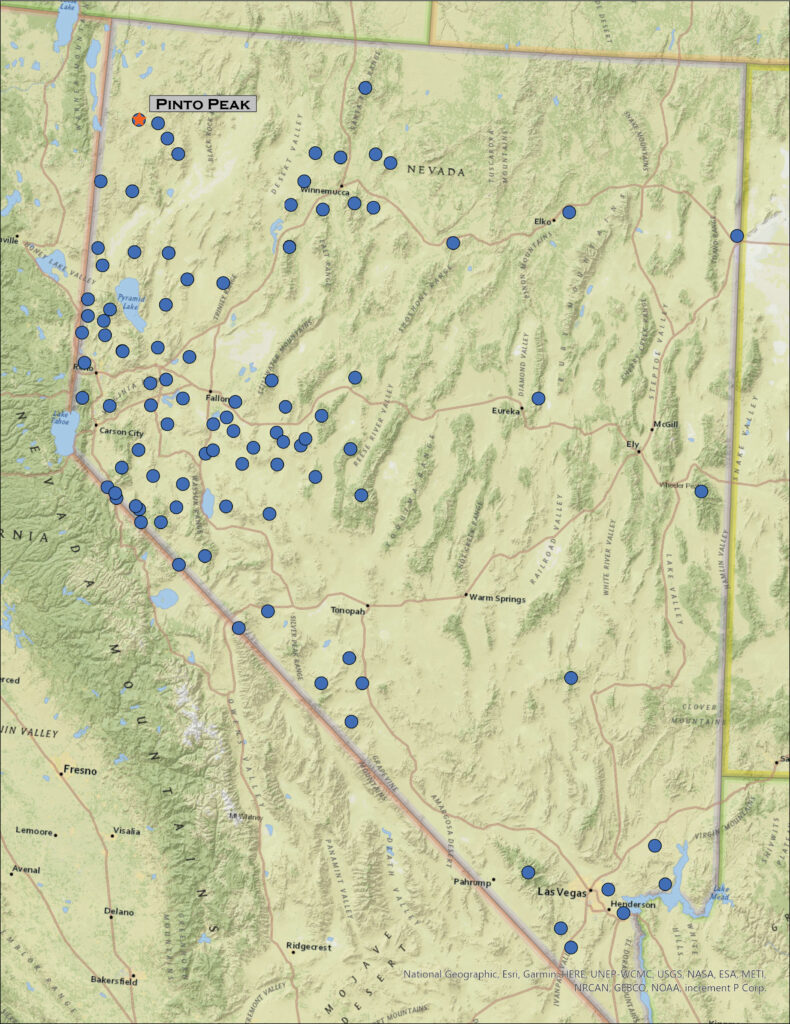
Hoppin Peak. High point of the Sentinel Hills, Great Basin Desert, NV, USA (Map point #1)
Oblique aerial imagery of a section of the Sentinel Hills showing route to Hoppin Peak.

The Sentinel Hills are block-faulted remnants of lava flows that oozed from the volcano that would eventually collapse to form the McDermitt caldera. Prior to its collapse, the volcano extruded a prodigious amount of rhyolitic tuff and lava. The eruption produced deep beds of pyroclastic ash with unimaginably hot and dense ground-clouds transitioning to highly viscous lavas; these may have cycled over and over as eruption followed eruption during the fiery event. In places, the weight of the viscous beds (along with somewhat unique combinations of chemistry and water content) resulted in strata of thick, glassy ignimbrite beds and, sometimes, massive glass beds of obsidian were left behind. These processes, especially the extensive evacuation of so much volcanic material, resulted in the volcano’s collapse by about 17 million years ago, leaving a mark on northern Nevada that remains to this day – and leaving a vast toolstone resource so prominent in the regional archaeological record. I have spent considerable time in the hills of the caldera but have yet to visit the high point on its eastern margin.

Above Quinn. Lichen-covered outcrop in the Sentinel Hills, Great Basin Desert, NV, USA (Map point #2)

The day’s light faded as it bounced among building clouds. I walked the rolling hills skirting the tops of canyons that cut into the volcanic rocks. Obsidian seems absent on the top of the tablelands, as I continue to map the geography of the volcanic glass around the caldera. It is not a demanding walk, the only challenge coming from two groups of wild horses that cannot decide if I should be there. They are at once curious and then immediately skittish, and I only want to stay out of harm’s way. The horses are momentarily fascinating and beautiful, bristling at my presence, but their numbers take a toll on the springs, and the local slopes are cut by numerous trails that radiate between water sources, most of which are now dry.

In a last gasp, the light rakes beneath the clouds as the sun sets about the time I gain the rimrock and talus that guard the summit. There is a small rock cairn and the usual quiet register. I had hoped for a dramatic sky highlighted above the setting sun, but the clouds dropped in a broad western curtain, and dark began to set in. I had several groups of horses to navigate through, so I did not wait any longer.

Overlap. Fading grass in the Sentinel Hills, Great Basin Desert, NV, USA

I had, of course, packed my headlamp, but I prefer not to use it unless completely necessary. I could hear the horses shuffling nearby, but they kept their distance as I made my way back to the truck to set up camp. Hoppin Peak is not dramatic in any way, but the walk is refreshing, and I feel much better for it. I learned something about the lavas of the Sentinel Hills, confirming that obsidian nodules of toolstone quality (or any really) are absent from the tops of the flows. I can expand my maps a bit more, adding this detail to the eastern margin of the caldera. I will continue my caldera excursion tomorrow after listening to the Chukar and coyotes; a Common Poorwill sings its haunting, lonely notes somewhere in the canyon below. A quiet close to a long day — the small hills almost always provide that.

Keep going.
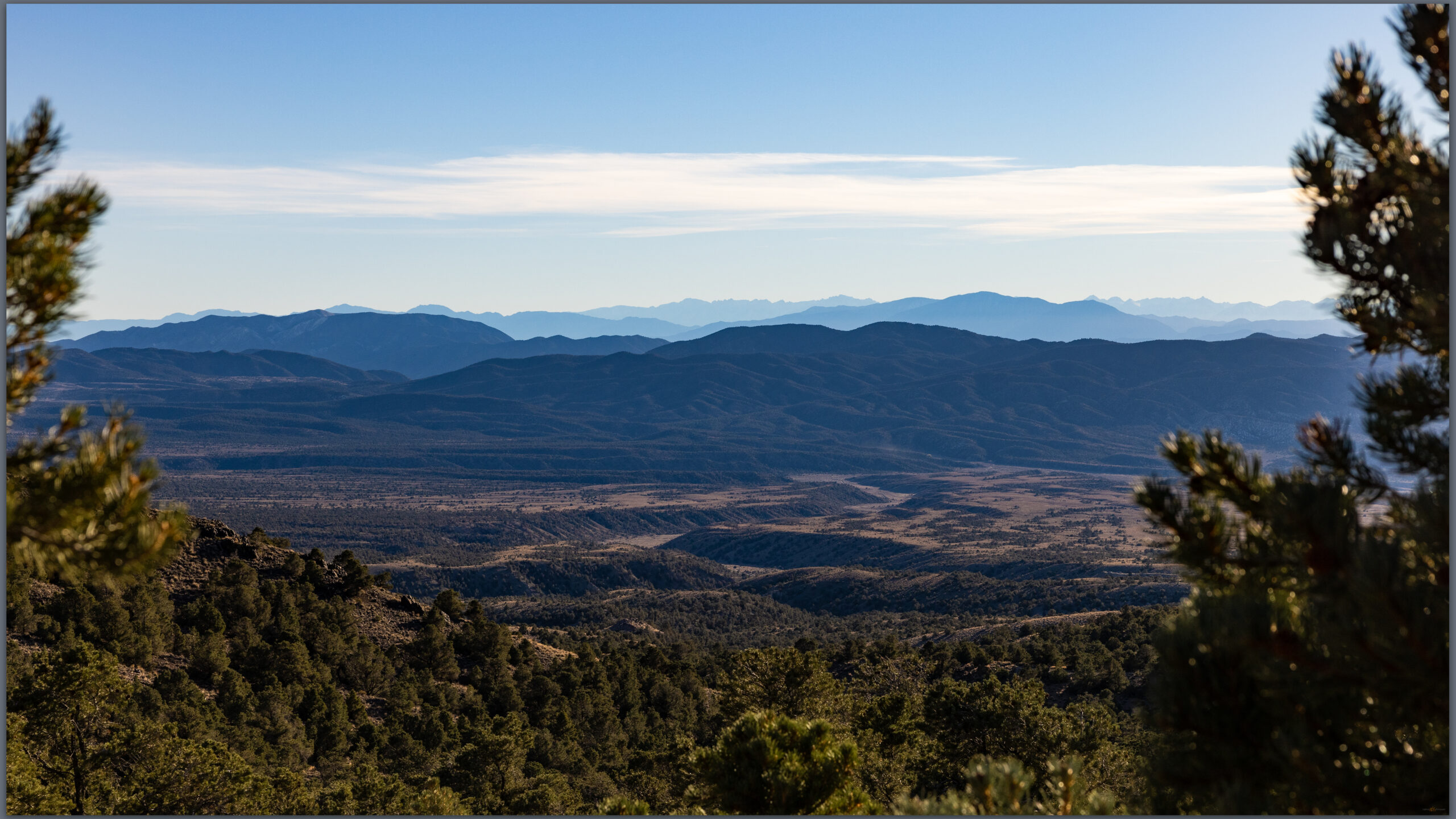
Heads up. Hidden Sage Grouse on Ten Mile Creek, Sentinel Hills, Great Basin Desert, NV, USA
Hun in flight. Hungarian Partridge in the sagebrush of the Oregon Canyon Mountains, Great Basin Desert, NV, USA

Please respect the natural and cultural resources of our public lands.

#naturefirst #keepgoing

Nevada High Points #119 – Resting Spring Range

D. Craig Young · April 7, 2024 · Leave a Comment


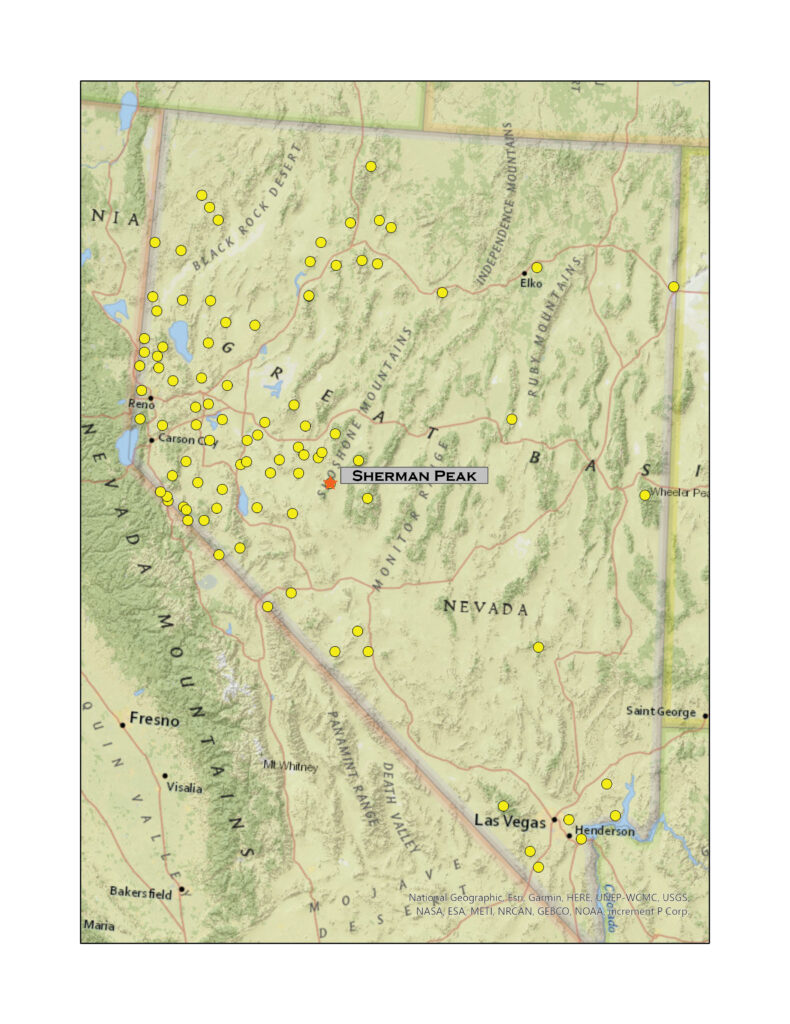
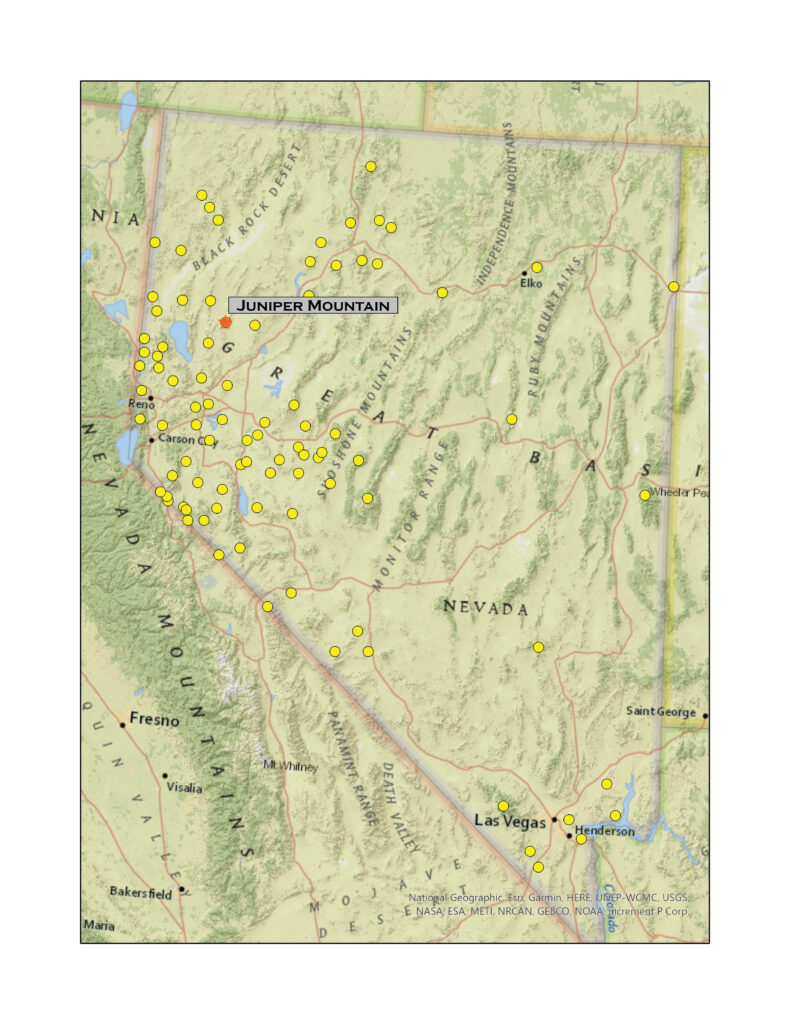
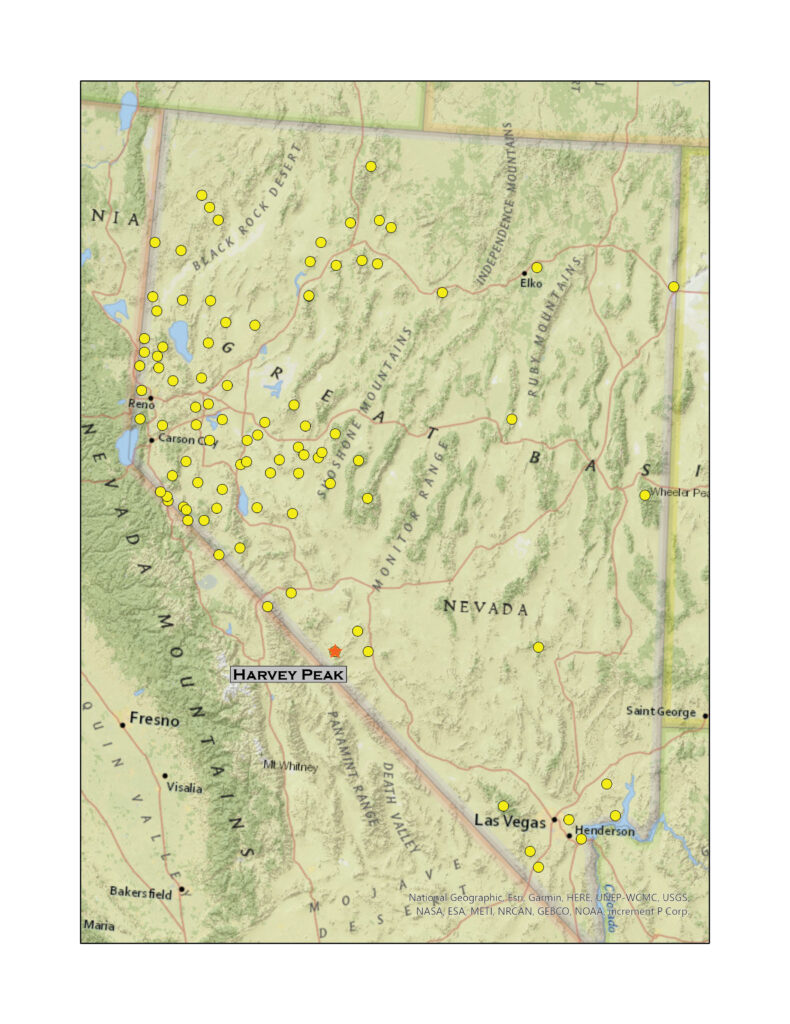
Map showing climbed high points with Resting Spring Range labeled as #119

Unnamed – Border Monument 105

3960 ft (1207 m) – 1530 ft gain

2024.03.10

Resting Spring Collection


I am back in the Mojave. In northern Nevada – in the sagebrush steppe of the Great Basin Desert – the transition to spring has brought a series of atmospheric rivers that vary from warm rains to several inches of new snow. Our water budget appreciates it, and the ski resorts are happy, but it lowers the potential for backcountry travel across the northern tier of the state. But late winter in the Mojave has a very different effect. The precipitation nourishes an ephemeral but amazing green, punctuated by blooms of wildflowers; the typically sharp and prickly landscape softens. Drawn by this ephemeral setting, like last month, I am once again in the Mojave.

Desert evening. Stewart Valley at the close of winter, Resting Spring Range, Mojave Desert, NV, USA (Map Point #1)

After exploring a few roads on the north side of the Resting Spring Range – most went nowhere or were badly washed out, I set camp on some desert pavement formed on small fans in low, hummocky foothills. The narrow mountain range rises above the Amargosa River with most of its mass in California and only a northern spur and expansive alluvial fans extending into Nevada. My target is the Nevada high point, marked by a small, ridge-line outcrop well below the prominence of Shadow Mountain, the range’s actual summit. I will head up there too.

But, first, I will turn the calendar back to yesterday. Desna and I visited the Nevada Museum of Art where there is a wonderful exhibit of Maynard Dixon paintings, poetry, and photographs created during his excursions to northern Nevada and eastern California (open until 7/28/2024). I mention this because first, I really enjoy so much of his work and, second, I think it important to look at art, especially landscape art, and to consider what I like about it. This might provide direction for my landscape photography. Dixon’s use of saturation and contrast, in color and in light, evokes my emotional connection to desert landscapes. His composition is typically minimal, and he has little hesitation in expressing the open sky, dotted with bright clouds, over stark shadows streaking across desert landforms.

Photographers, especially landscape photographers, often cringe at mid-day or high-contrast conditions, preferring the raking, red hues of sunrise and sunset, adding in dark, glowing clouds for dramatic impact. I love these too. I can, however, find challenge and growth in applying a touch of Dixon’s eye, maybe, to my photographic work – both in seeking and exposing compositions and in creative processing, as a painter might. Who knows? I may never be successful, but it got me thinking about its application. Oh, and third, I spent a lovely afternoon with Des.

Upheaval. Folds and fans in the hills of Stewart Valley, Resting Spring Range, Mojave Desert, NV, USA (Map Point #1)
Camp at dark. Foothills and pavements on the eastern margin of the Resting Spring Range, Mojave Desert, NV, USA

Back in the Resting Spring Range, after an evening exploring the pavements and hummocks around camp, I am up before first light, making coffee and collecting a few calories before setting out. I need to walk about three miles of alluvial fans before hitting a punchy slope to the Nevada high point. I go by headlamp, cresting a low hill where an almost complete darkness extends in front of me; the yawning space of the vast alluvial fans soaking all light, from the faint light of my headlamp to blackness to a very distant starry horizon. The night still feels close around me. It is a calm silence, until a Burrowing Owl calls from somewhere far ahead and below; her call a lonely reminder of the few critters that call this desert home. Again and then again, a quiet hoot-hoot is the only sound. I walk into the dark.

Shadow morning. Shadow Mountain at first light, Resting Spring Range, Mojave Desert, NV, USA
(Map Point #2)

As the light grows, I am in the openness of the fans, moving between desert pavements with dark patination – old, stable fan surfaces – and incised, bouldery washes exposing light-colored alluvium disturbed only recently. The variegated surfaces alternate to reflect the temporal structure of the piedmont or bajada below the steep slopes of Shadow Mountain. A Black-throated Sparrow flits and sings among the creosote and saltbush. The beautiful, sing-song call of a Rock Wren echoes from boulders along rock levees and debris flows that choke the fan’s incised gullies. The morning is perfect. There is a pink in the sky that off-sets the dark fan surface, and newly green blooms of the desert compliment the yellow-brown of the mountain backdrop. Bright yellow highlights reach out from the growing wildflower bloom – Yellow Suncups here; I am early for the ‘super-bloom,’ but it is definitely building.

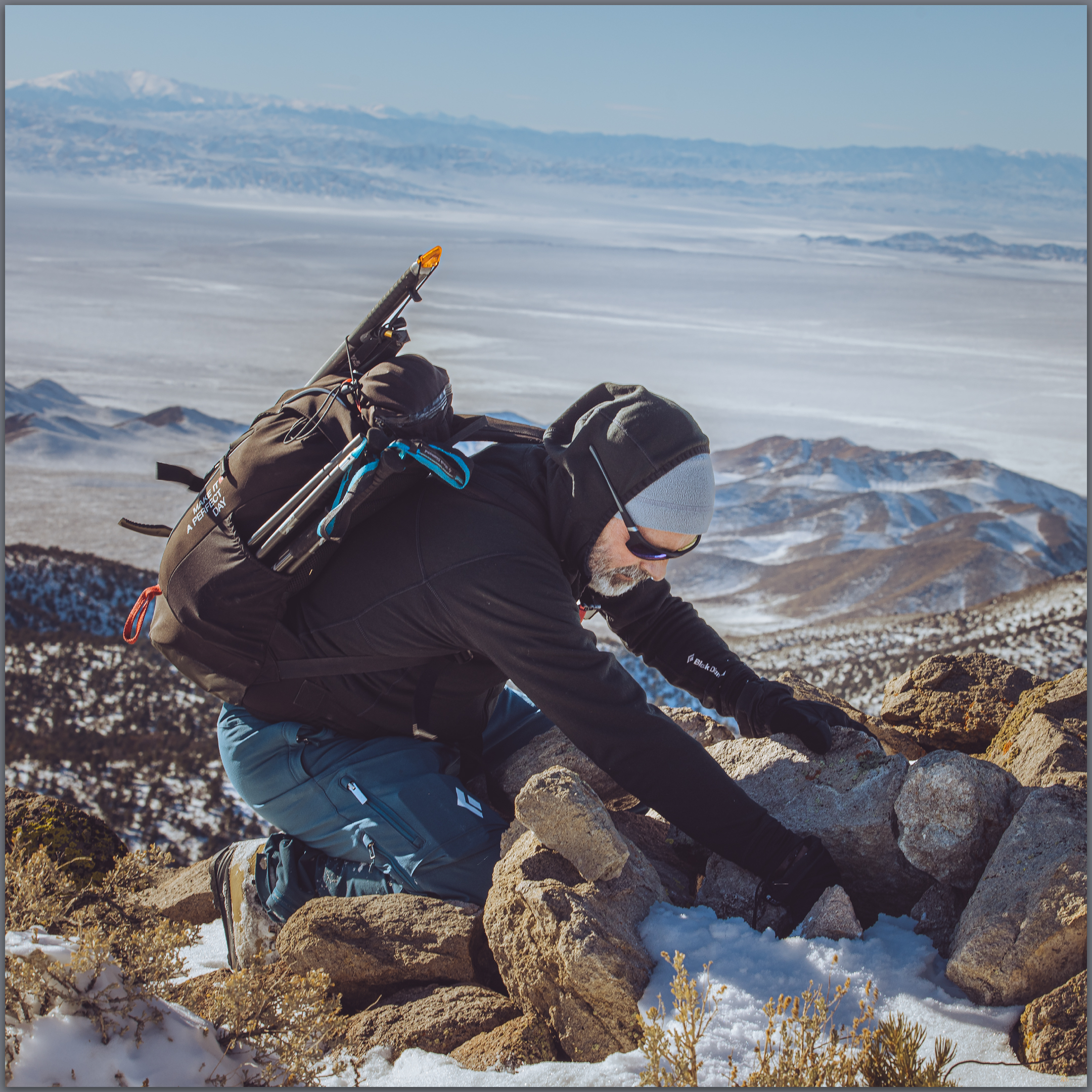
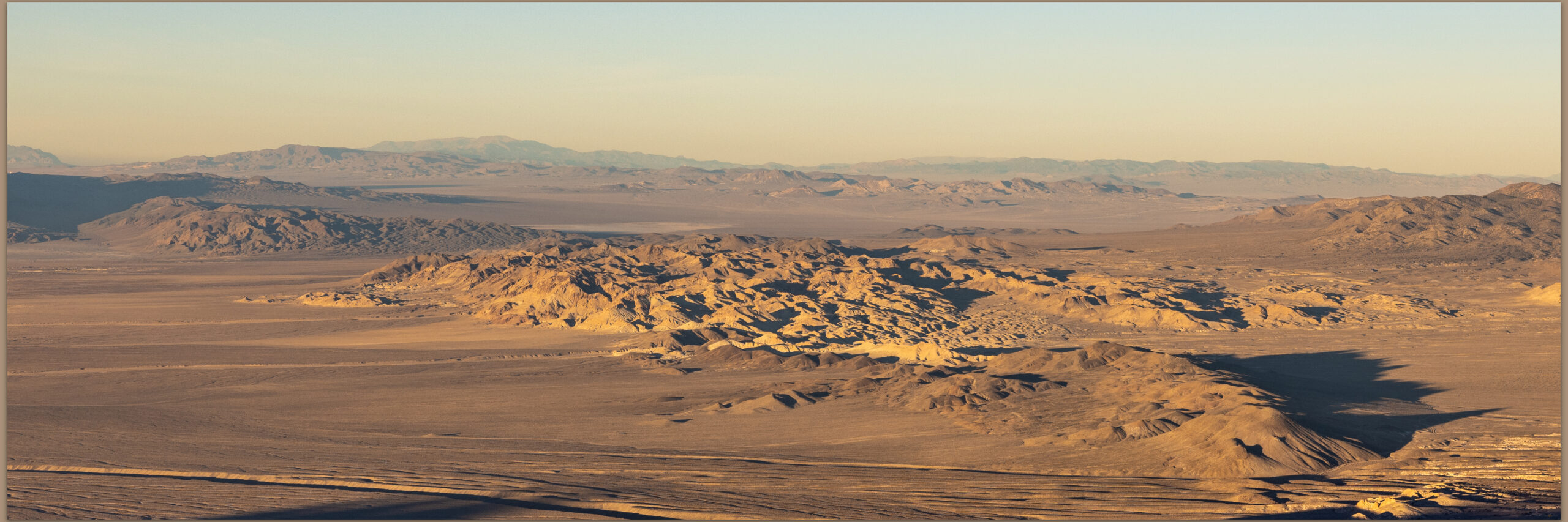
Rocky, talus-screed slopes lead to the Nevada high point at 3960’ above sea-level; I have climbed just over 1500 feet above my camp. Marked by a cairn on an otherwise non-descript ridge, the highpoint is a great viewpoint, nonetheless. Shadow Mountain looms to the south and Amargosa Valley drops precipitously to the west. The sun has risen behind me, and the wind is picking up. I cross the state border in a crease where the ridge drops from the Nevada side, I then begin a good ridge-walk toward the summit, 1000 feet or so above me.

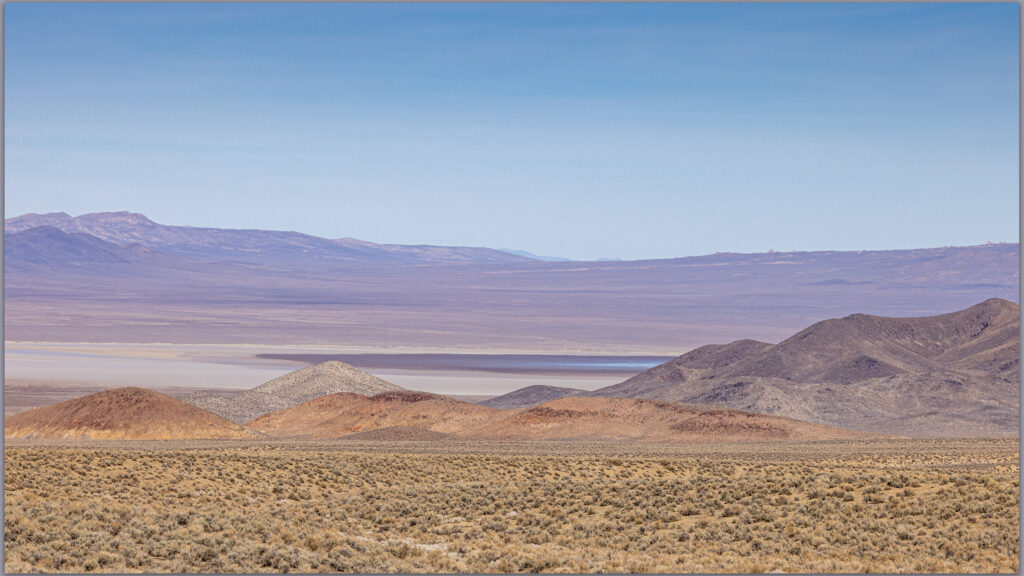
Amargosa distance. Playa and fine-grained alluvium at a constriction of the Amargosa River from the Resting Spring Range, Mojave Desert, NV, USA (Map Point #3)

It is a nice climb with great views in every direction. While the summit of Shadow Mountain does not reach above 5000 feet, the Resting Spring Range remains a prominent landmark visible in all directions. I am happy to be on the summit and realizing I have been looking at this peak for many years, and can now enjoy it from a different perspective – it is always satisfying to be driving or flying, and while looking up (or down) at a lonely spot, knowing that I have visited and experienced it for a short time.

Black-throated Sparrow. Resting Spring Range, Mojave Desert, NV, USA

I work my way down, visually mapping the variegated alluvial fans with their shaded pavements of various ages. I can easily identify four surface ages based on the maturity of desert pavement. Dark surfaces with seemingly uniform pattern of rocks, some that fit together like gravelly puzzle pieces, are generally old. Very old; it takes hundreds of thousands of years for the weathering to create the distinct, intricate patterning. Younger surfaces will be lighter colored, with rougher surfaces, seemingly random rock patterning, and even evidence of recent flooding. And several intervening surfaces along a continuum of very old to, well, practically yesterday. From a distance, the patterns can be clear, and I often map landform age based on aerial imagery that resolves the temporal relationships nicely.

Creosote crunch. An early glow on the sparse vegetation of relic fans of the Resting Spring Range, Mojave Desert, NV, USA (Map Point #3)

This is important because archaeological sites, their age and preservation, may be patterned in close relationship that age of a landform or its surface. Sites of any age may occupy the oldest pavements – let us assume there is some clustering of plant, animal, or water resources that might have led people to this location. Because that armored surface is as stable as it is old, it is very unlikely to hold buried archaeology. So, the information you get from the distribution of artifacts on the surface is the only information you are going to get.

As we move to surfaces that have formed and stabilized in the Holocene (say, the last 12,000 years or so), we may start to see some patterning among the surfaces, with some interesting changes over time; the relative age of fan surfaces may provide the first clues in looking for such patterning. Very young fans (with evident debris flows and tumbled cobbles and boulders) suggest that most sites may have been wiped out, and while you may find some displaced artifacts, there is little detailed information in such a disturbed setting. The patterns can shift rapidly as one moves across such an ancient and complex fan.

Quaternary landforms of northern section of Resting Spring Range, Mojave Desert, NV, USA

I recognized four temporal surfaces on the bajada (i.e., coalesced fans) expanding from the canyons on the northeastern side of the Resting Spring Range. On the map, Qa1 highlights the oldest surface, marked by darkly patinated and strongly developed pavement. Younger fans cut through the Qa1, leaving its ancient surface abandoned to continued slow, constant weathering. The gradient of surfaces from Qa2 to Qa4 reflects younger landforms and a general increase in recent erosion and/or deposition. The Qa4 is where the occasional floods happen or have happened relatively recently; one can hardly predict the next flooding disturbance to spread across the fans as the flashy flows find their paths basinward. A spot may be stable for centuries, until it is not.

As usual, I focus on the younger landforms (not rocks) and the processes that build the environments and habitats of today – that is why my maps only highlight the young, active landforms. The older rocks, their structure, composition, etc., play a role, but I want to document and understand the work that wind and water can do now that the mountains and hills are in their place, at the scale of the Holocene, at least. That is geomorphology, in a nutshell.

Resting Spring Collection

I reach camp happily after seven or so hours of walking out and back. It was a special and relaxing day. Unlike last month in the Last Change Range, I was well-provisioned, and my gear worked flawlessly (I did film more than I anticipated, and I should have brought my better audio set-up – the wind noise in my YouTube post embarrasses me). Although it is often better to focus on one activity during an excursion – Am I here to climb, do photography, map landforms, or make geomorphology videos? – I took the time, this time, to do a bit of everything during my walk. It is good to get a complete outing like this occasionally. This was a great one.

Register #119. Resting Spring Range, Mojave Desert, NV, USA

I continue this journey, after packing up my little camp, with a photographic excursion into Death Valley, and then on to more focused fieldwork in the landforms of the ancient Mojave River further south. It has begun well.

Keep going.

Please respect the natural and cultural resources of our public lands.

#naturefirst #keepgoing

Avocets of Kobeh Valley, NV

D. Craig Young · January 30, 2024 · Leave a Comment

Quarry home. American Avocet foraging in a gravel quarry, Kobeh Valley, Great Basin Desert, NV, USA

My work as a geoarchaeologist keeps me in the backcountry of Nevada for long parts of the year. I am fortunate to see the sagebrush ocean, while sometimes venturing into the sharper seas of the Mojave, across the seasons. In the late spring of 2023 I was mapping inset landforms in Kobeh Valley, Nevada, along Highway 50 when I cut across the valley on a dusty road to check out a gravel quarry. These quarries, developed for road construction and repair, stand out as small hills amongst the level sage. I seek them out, detouring haphazardly from my path, to look at the stratigraphic window into the landforms that the provide. I have been known to call gravel quarries ‘pluvial lake indicators’ as highway departments can often find ancient gravel bars where no other evidence exists.

Avocet Image Collection

On this day in early June, with a thunderstorm in the distance, I drop behind a horded pile of gravel at the edge of broad pit to find that its rim encompasses a postage-stamp oasis of wetlands and ponds; it is maybe the size of a couple tennis courts. Two pair of American Avocets wander the shore, flushing in a quick circle as I approach and stop dead in my tracks. I abandon my truck, quietly grabbing my camera and a long telephoto. I will lay at the pond margin a while until they settle in to my quiet presence. It is worth the wait.

Floating by. An American Avocet in a quarry pond, Kobeh Valley, Great Basin Desert, Nevada, USA
Forage ahead. An American Avocet moves between ponds, Kobeh Valley, Great Basin Desert, Nevada, USA
Working together. American Avocets in Kobeh Valley, Great Basin Desert, Nevada, USA
Avocet pose. American Avocet on the shore of a gravel quarry, Kobeh Valley, Great Basin Desert, Nevada, USA
Avocet stride. American Avocet, Kobeh Valley, Great Basin Desert, Nevada, USA

I would love to hear what you think of these. And hear of any places you might have seen these lovely birds in the drylands of western North America, or wherever your journeys, near and far, have taken you.

Dragon fly gone. Kobeh Valley, Great Basin Desert, Nevada, USA

Avocet Image Collection

Keep going.

Click to subscribe!

Please respect the natural and cultural resources of our public lands.

#naturefirst #keepgoing

Nevada High Points #117 – Monitor Hills

D. Craig Young · January 23, 2024 · 1 Comment

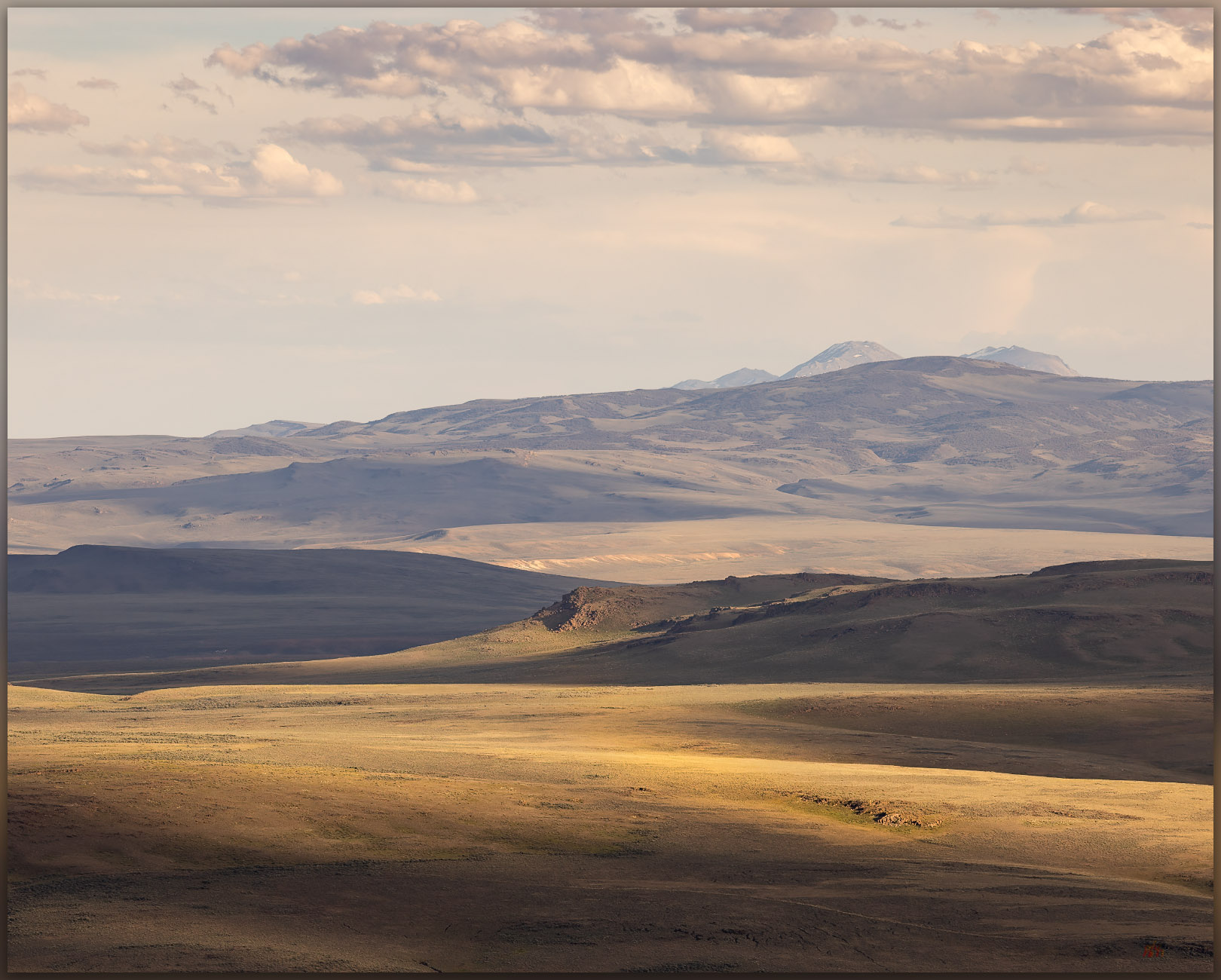
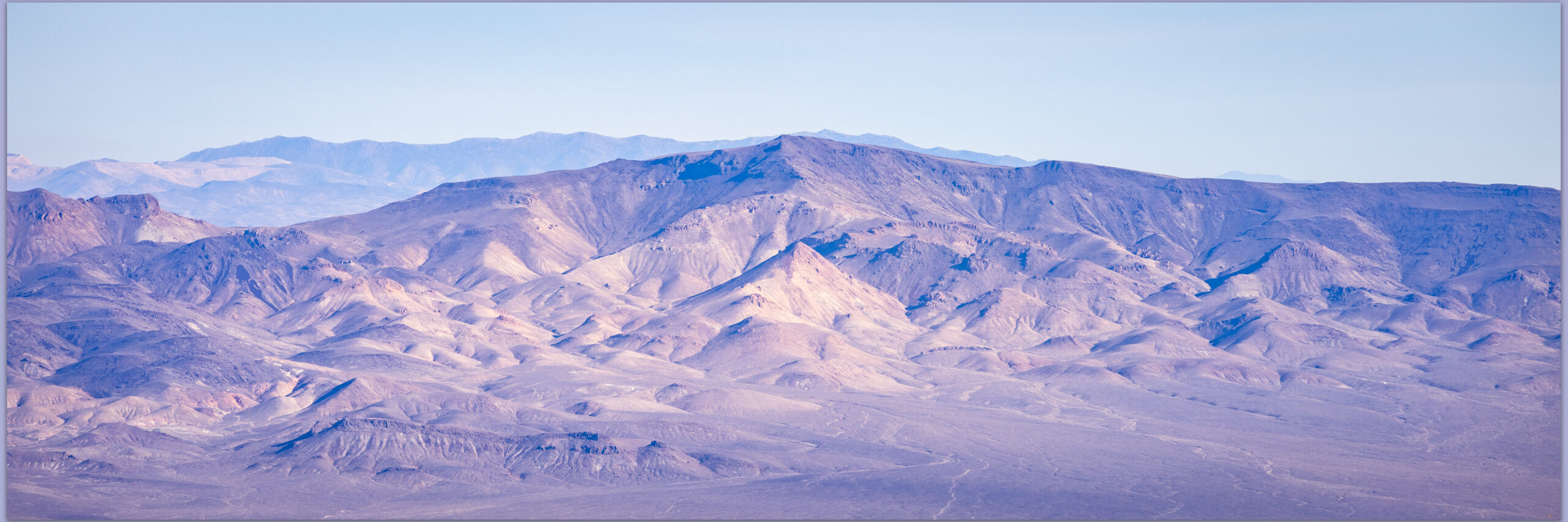
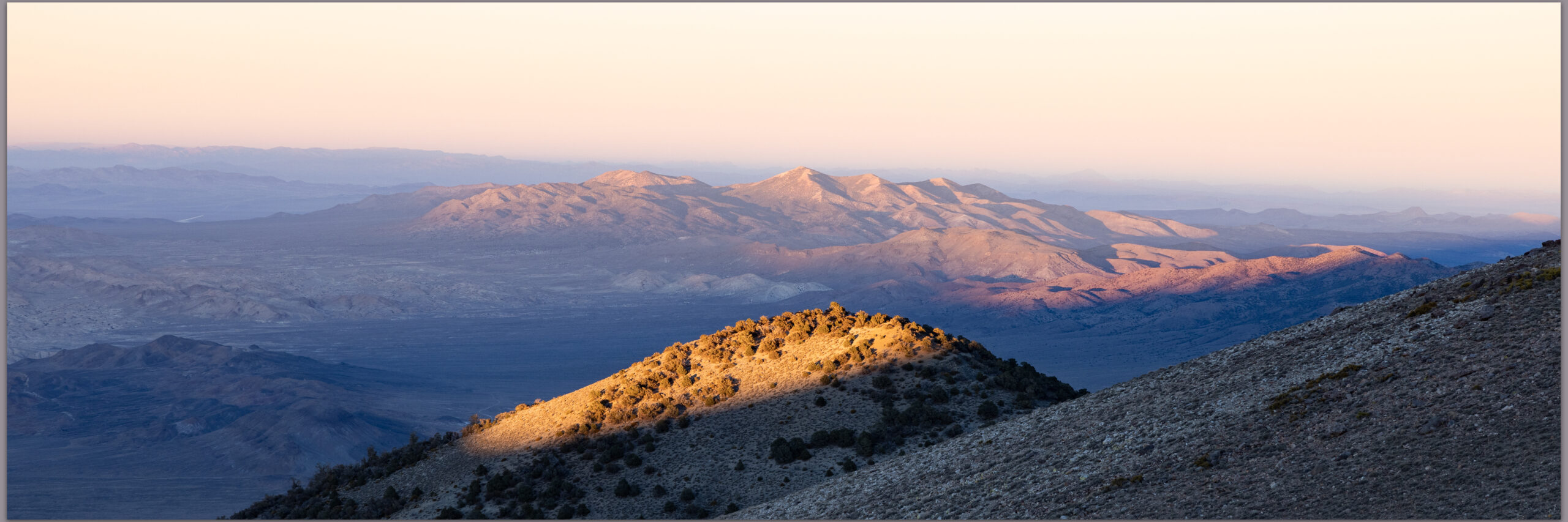
Ragged symmetry. The eroded landscape of the southern Monitor Range from the Monitor Hills, Great Basin Desert, NV, USA

Monitor Peak

6374 ft (1943 m) – 1030 ft gain

2024.01.24

Monitor Hills Collection


A missile, about 10 feet off the ground, marked our turn. I have driven many times past this lonely missile mounted on a pole next to Highway 6 east of Tonopah, Nevada, always wanting to take the turn and head south. There is a secured gate several miles further, but we were headed to the Monitor Hills, and not this secluded entrance to the Nevada Test and Training Range. Clear skies preceded us, and yet we had been driving through an early morning that varied between fog, rain, and snow. The weather followed closely, overtaking us as we parked at the foot of the small range.

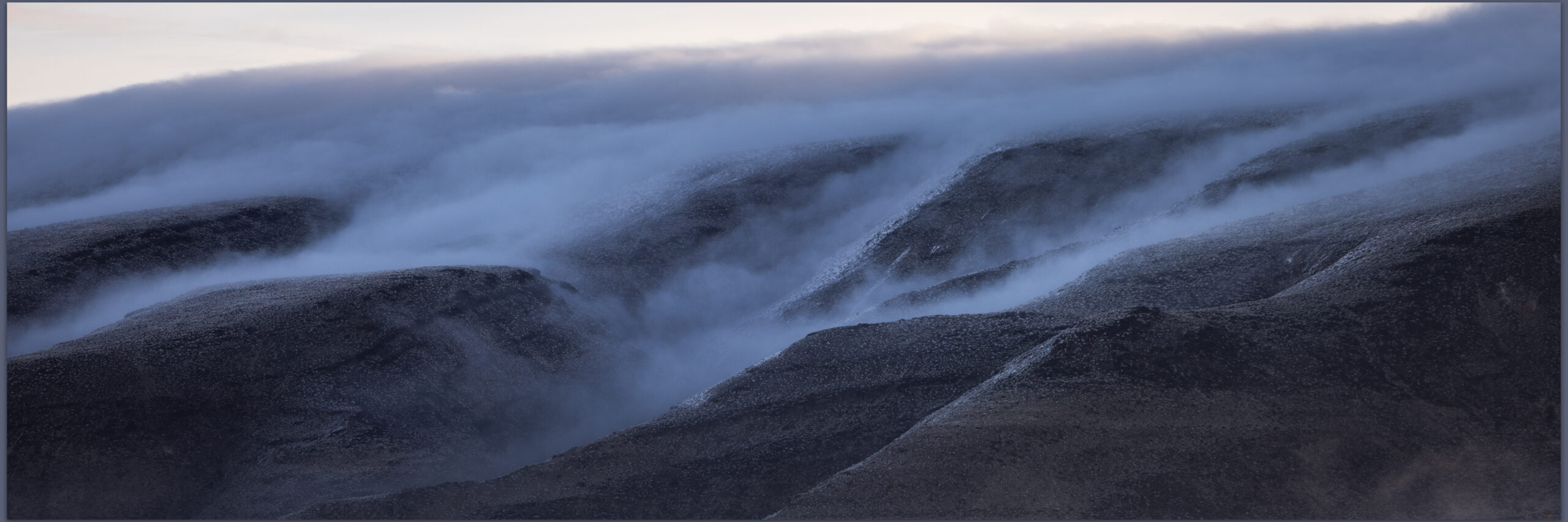
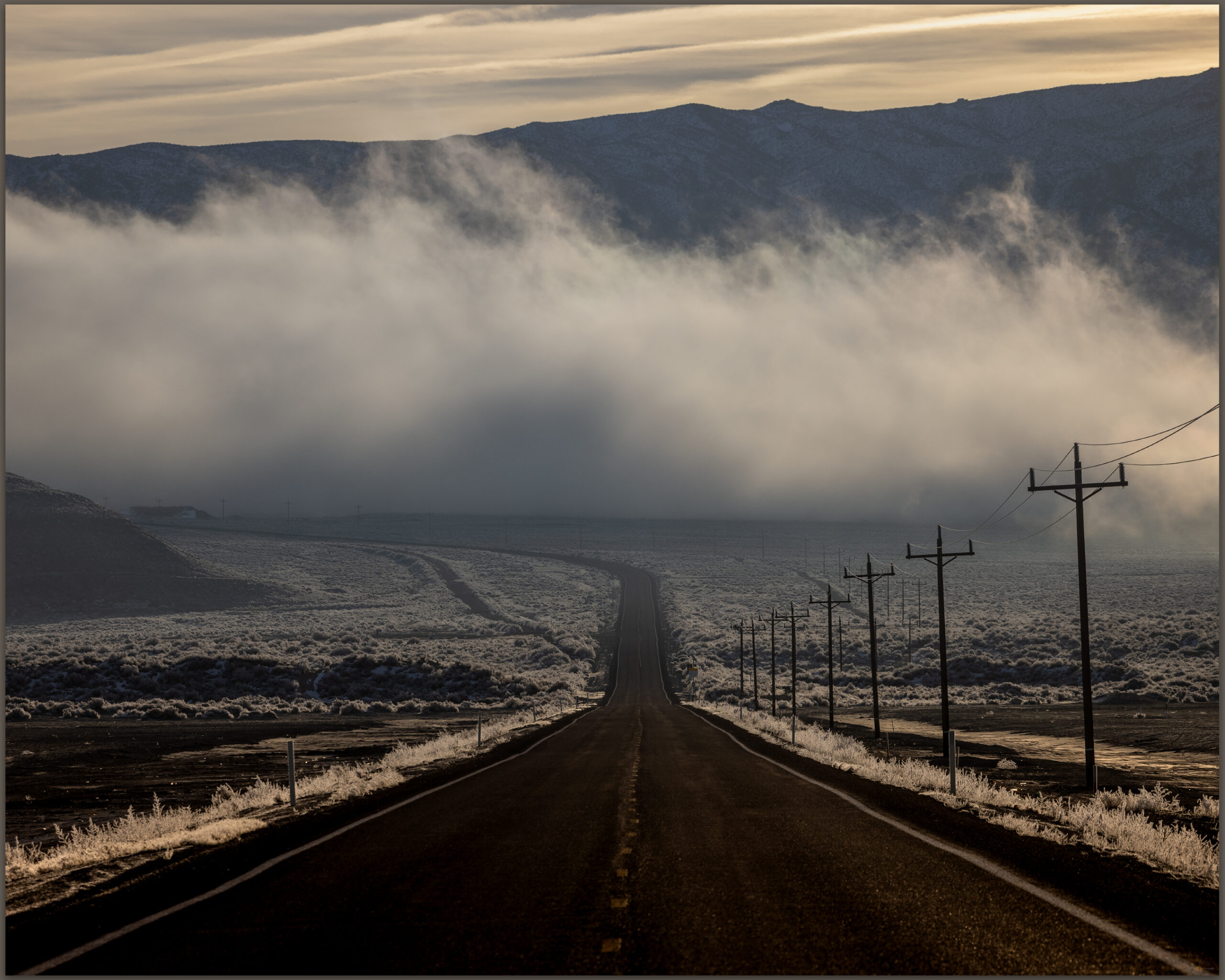
Setting in. A snowy fog follows our approach, Monitor Hills, Great Basin Desert, NV, USA

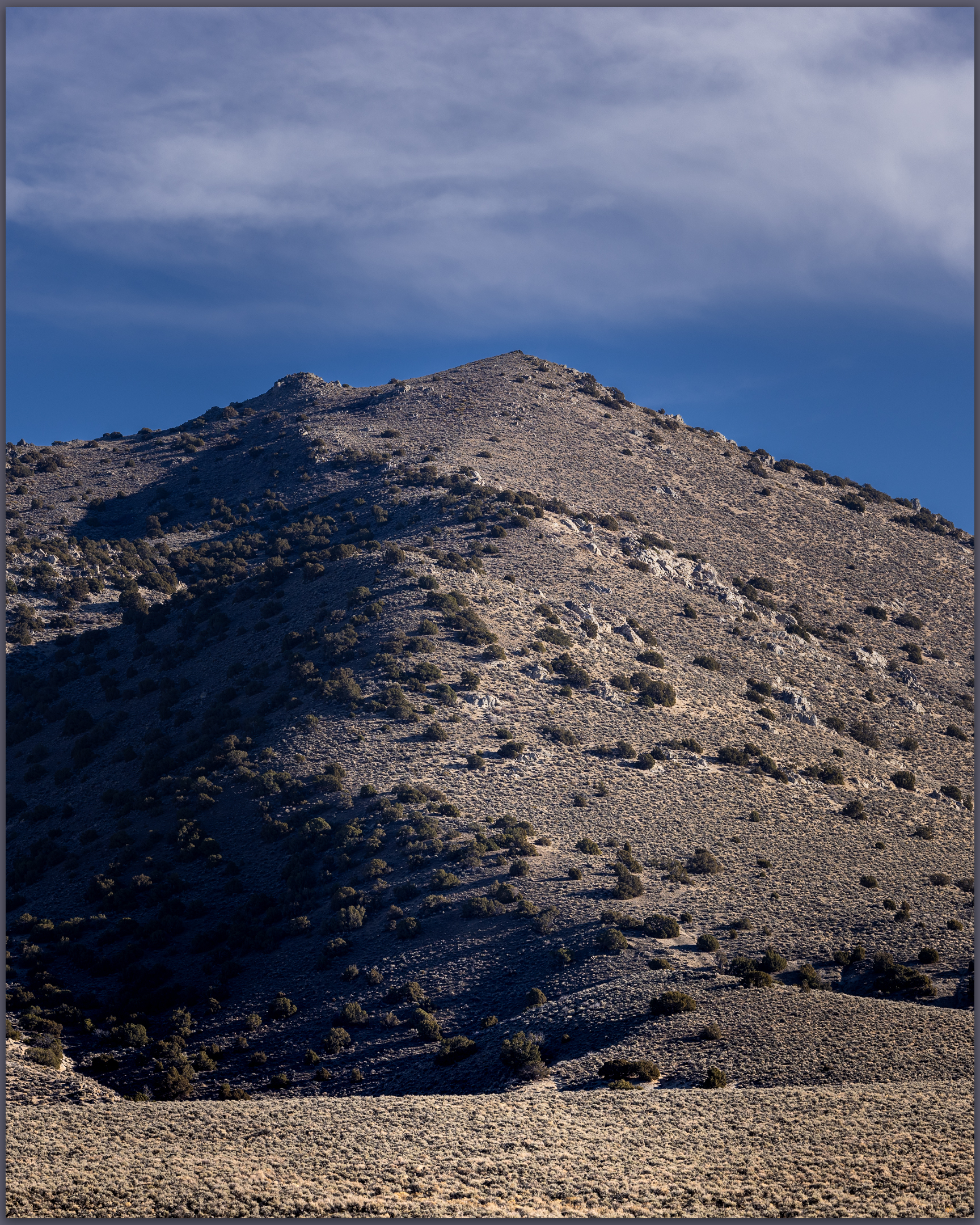
Monitor Peak is a nice, isolated hill with a lava-capped summit on a foundation of eruptive tuffs and relict fans that eroded from an ancient mountain range that this younger volcano pushed through million years ago. However, I had to mention the missile for a bit of excitement, because Darren and I, while having a good, snowy walk, reached the high point after a short, simple walk up a small canyon and quick traverse to the rolling summit. It started snowing as we started walking. I have hiked so many high points and have rarely had an inclement adventure on any of them, though I do not plan according to the forecasts – I would like an adventure or two with some dramatic skies to photograph. In the Monitor Hills, however, we had no views from the summit, while the snow fell gently as fluffy flakes falling slowly through a misty fog. It was a pleasure, but there is not much of a story to tell – the old missile looks as aggressive as any aerial weapon, but it is rusty and inert, of course, and basically a contractor’s sign for work on the test site.

Tuffs. Cenozoic volcanic rocks of the Monitor Hills, Great Basin Desert, NV, USA
Easy summit. Darren approaches the high point, Monitor Hills, Great Basin Desert, NV, USA

We walked across the tuffs and flows through a thin veneer of last week’s snow. Today’s precipitation would not amount to much. Bunch grasses poke through a sandy mantle, while shadscale and other small shrubs grasp to the shallow desert soil, here and there. Ground squirrels and probably a few kangaroo rats track the snow, burrow to burrow. It looks like tracks of horned larks cluster around some of the larger bushes, but I am not really sure what species might have left them, just guessing at the usual suspects given all seem to be hunkered down elsewhere.

Golds of winter. Monitor Hills, Great Basin Desert, NV, USA

Near the base of the hills, a series of recent alluvial fans forms as sediment is intermittently eroded from the short canyons cut through relic slopes of the uplifted hills. I can map these based on cross-cutting relationships where younger fans overlap older deposits. Although we noticed minor changes early on our walk, before we reached the sand-covered tuffs and conglomerates, I mapped the young fans later using aerial imagery of Google Earth.

The fans and active drainages, the local alluvial system, is number 1 to 3, oldest to youngest; Qa is a common label for Quaternary alluvium, so Qa1, Qa2, and Qa3 — older fans to young fans and the active washes. I could be more or less detailed depending on the questions I might be asking or patterns I want to illustrate. Also, given that the Quaternary is basically the past 2.2 or so million years — that is a long time, including both the Pleistocene and Holocene (and maybe the Anthropocene), I typically stick with this labeling even though I am primarily focused on the Latest Pleistocene, from the last couple ice ages to the present – less than 5% of the actual Quaternary – for mapping purposes. This is the time when processes driven by climate, tectonics, and gravity established the backdrop and influencing the formation of the region’s archaeological record.

These are the silly things I think about, while trying to take a few pictures and walking in the snow. Where nothing moves but slowly falling snowflakes.

Monitor Hills Collection

And nothing moves on the road, it is only us and the snow – the snow that vanishes as we return to the truck. One intense rain squall and the skies break to scudding clouds and occasional glimpses of distant sky. The wind replaces everything – it is a long drive home. My curiosity about the road marked by the missile sated, I can look forward to another high point and, maybe, more interesting weather, like today, when the walk is easy and landscape is quiet.

Keep going.

Click to Subscribe

Please respect the natural and cultural resources of our public lands.

#naturefirst #keepgoing

  • « Go to Previous Page
  • Page 1
  • Page 2
  • Page 3
  • Page 4
  • Page 5
  • Page 6
  • Interim pages omitted …
  • Page 11
  • Go to Next Page »

Trail Option

Copyright © 2026 · Monochrome Pro on Genesis Framework · WordPress · Log in

  • Contact TrailOption
  • Substack
  • Waypoints Bibliography
  • Young Archives