• Skip to primary navigation
  • Skip to main content

Trail Option

A personal geography of landscape and place, art and geo-science.

  • Home
  • TrailOption Blog
  • WayPoints
  • Galleries
  • About
  • Contact TrailOption
  • Subscribe!
  • Show Search
Hide Search

LightOpt

Sunrise and Smoke: An Early Morning Decision

D. Craig Young · August 5, 2018 · 1 Comment

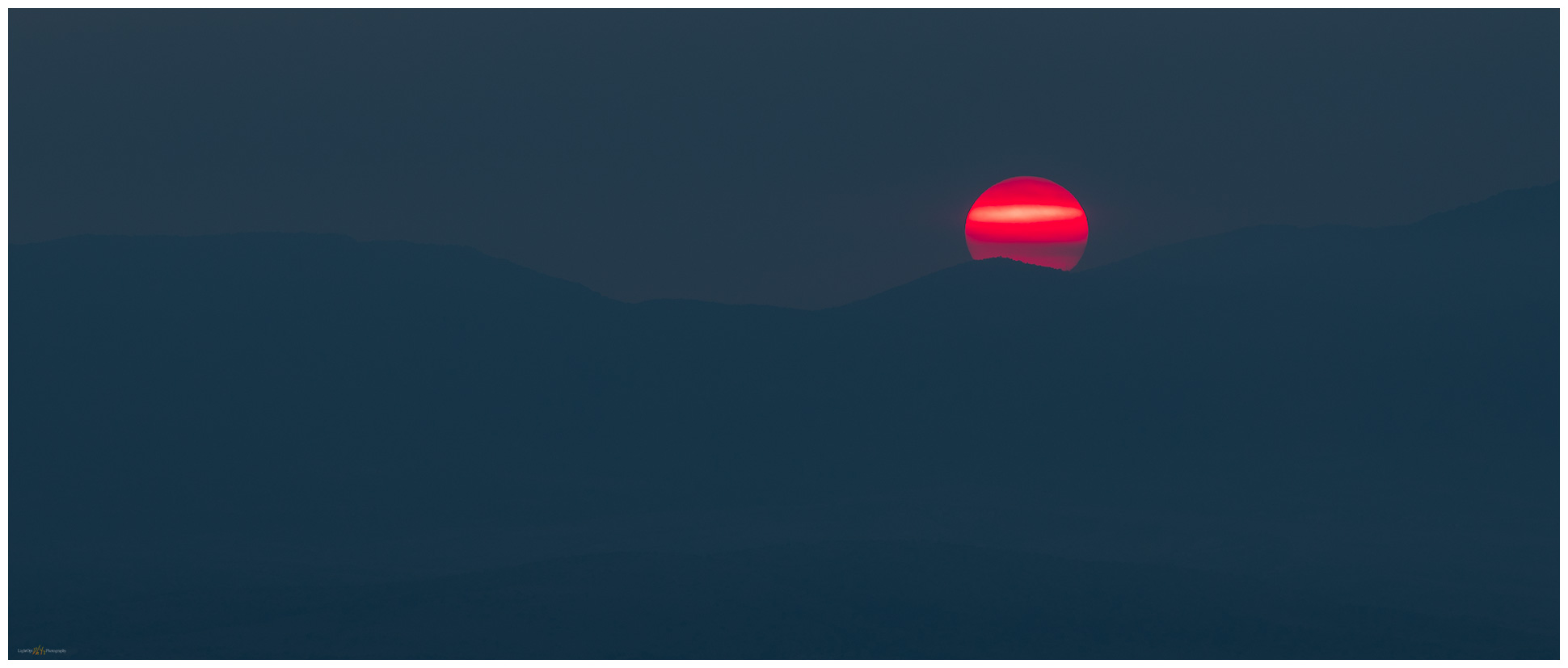
Is this real? Great Basin, Nevada. Sometimes spontaneous works. This is pretty much the image I imagined waking up an hour earlier.

Landscape photography typically involves planning, at least for me. I usually get some idea of place, story, mood, or composition, and begin by flying around in Google Earth, searching a few maps, checking the weather, and logging into PhotoPills or The Photographer’s Ephemeris. It is part of the fun, but this morning was not all that…

Sunrise and Smoke Collection

It has been miserably smokey in Carson Valley, with air quality commonly in the unhealthy range due to the disastrous and all too common fires in California and Nevada. We are in the smoke-plume of the Ferguson Fire at Yosemite. My trail running has ground to a halt, and there isn’t much motivation to get out for some landscapes. And yet, for some reason, I woke up at 4 AM — spontaneously, for otherwise no good reason — with the thought of catching the orb of the rising sun filtered through the smoke-plume haze. My pack sits ready and the tripod is in the car, so why not?  Let’s go.

I brewed some tea, toasted a bagel, and started out for Kingsbury Grade in the moonlit pre-dawn. I’d climb to a roadcut about half-way up the Carson Range and scramble over the edge to gaze down on the shadows of the Pine Nut Mountains. I knew I would keep it simple — my 70-200 to the horizon, and that’s it. The sun and smoke would do the rest.

I waited about 20 minutes and for much of that time I thought the thick curtain of smoke on the eastern horizon, with haze settling into the foothills, would block the sunrise completely. But soon a sliver of red appears, as if the ferocious fire had itself jumped from the High Sierra to the lowly Pine Nuts. The orb was here, pretty much as my dreams must have known.

Portal arch, Great Basin, Nevada. After capturing an earlier image, I watched the sun disappear and expected it would soon be too bright in the cloudless sky. As I began to pack, the orb crested the densest plume and seduced a second shot. This may earn a large print, to be viewed at a distance.

Sunrise and Smoke Collection

My smoke-themed photos tend to be rather dark, a reflection of the foreboding plumes of the destructive fires in our midst. Please be careful out there and I hope those affected — the people and our wild lands — can soon recover. Please feel free to comment below.  Too dark?  Fire and smoke affecting you?

Keep going.
Tufa and Smoke, Mono Lake, CA

D. Craig Young · July 29, 2018 · 9 Comments

It was time to take advantage of a break in the work routine. The summer monsoons had recently encroached on the Pine Nut Mountains above StoneHeart, so maybe there would be some dramatic clouds and lightning to chase. Or, the exhausting California fires would continue to pour smoke onto the eastern Sierra, creating another saturated sunset.

I checked my radar apps all afternoon but the bright red blobs of the past few days were absent, and only a few yellow-level squalls bloomed momentarily and then scurried away in the afternoon heat. Nothing to chase in those. But I saw cumulus remnants in the direction of Mono Lake, so I steered south-bound on Highway 395 – a little later than I planned – with the goal of wandering among the near-shore tufa formations at the Mono Lake Tufa State Preserve. Smoke from the Ferguson Fire, the one that closed down Yosemite National Park for at least this week, should add some character to photographs of the tufa.

Tufa and Smoke Collection

It is always a good drive through the Walker River Canyon. The drive was relatively quiet this evening, probably due to the smoke-filled skies keeping tourists away. I notice once again several outcrops and exposures along the canyon that could make splendid compositions in the right light and with the addition of some low-hanging clouds or a back-drop of fog. I will have to plan for that.

Osprey waiting

The Reserve basically circles the lake, and with the light fading fast, I dropped in to the easy access of the Old Marina parking area just north of Lee Vining. It isn’t the most dramatic tufa on the lake, but there are plenty of outcrops and towers – some with nesting Osprey – where one can find a composition or two. I dropped the three-dollar fee into the bin, grabbed my pack, and hiked out the boardwalk. I could see a group of hunched-back photographers at the distant end of the boardwalk, a workshop almost certainly; only a couple other photographers strayed from the cluster of tripods. With a happy hello – they did seem to be composing their images at the prime and fleeting moment of the smoky sunset – I circled away from the small crowed, eastward, off-trail among the sedges and flat-lying tufa mounds. It was getting dark fast, but I liked the darkening mood as the last light saturated the smoke and blurred the horizon.

Looking back, I noticed the group had departed, but a lone photographer remained, and for some reason he seemed to be composing his shot where I would be in the frame. I did not notice anyone working this direction when I passed by. I hope I’m not ruining his composition, or maybe he wants me for scale. I am, as yet, unaccustomed to wandering among landscapes with other photographers in them.

My feet were soaked and I’d stumbled into some deeper shoreline bogs here and there. But I’d found what I hoped for. Wading into knee-deep water, I picked out a tear-drop shaped rock leading to a set of tufa towers under a fiery, glooming sky. I set up a wide, vertical composition to get the low dynamic range, with hints of saturated color, from sky to foreground.  I took a few images in case I needed to focus stack, but I ultimately liked the first capture.

Immersed. Smoke at sunset over Mono Lake tufa formations. 2.5 sec, f/20, ISO 100; Canon 5DmIV, 17-40 mm.

I waited into the blue-hour and the smoke settled into red-to-pink pall as I zoomed to the middle-ground towers to get them in the mirror of sky and water. As I was packing away my gear, a large coughing or huffing sound echoed from a nearby outcrop. I froze for a moment as the sound repeated itself. Where and what was it? It was strangely loud for being invisible, though it was practically dark. And then two large deer bounced from behind a tufa block, pogo-sticking through the grassy wetland of the nearby shoreline. Cool.

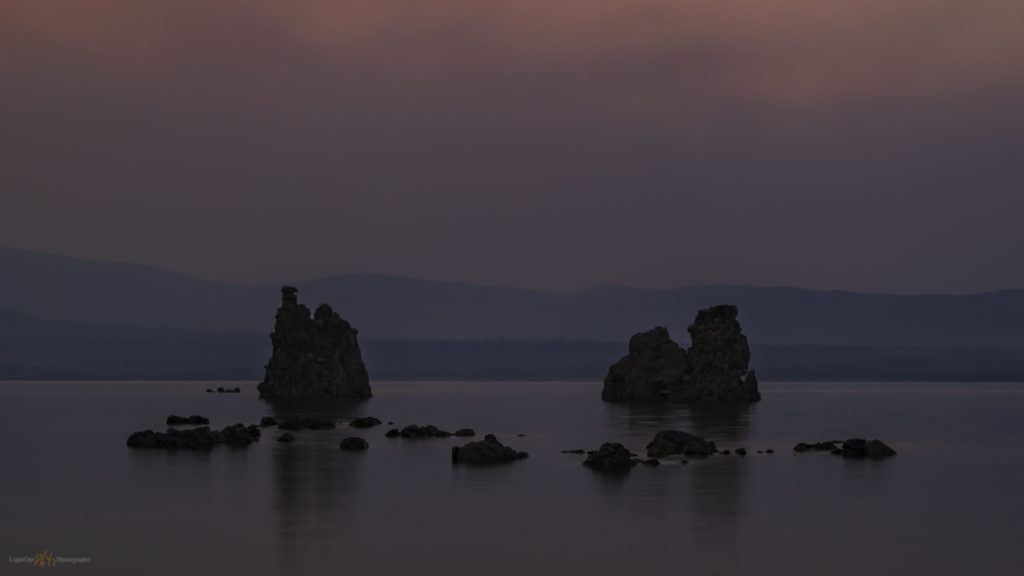
Tufa and Smoke. A long exposure as early darkness set the mood at Mono Lake Tufa State Natural Reserve. 2.0 sec, f/11, ISO 100; Canon 5DmIV, 17-40 mm.

I returned to the lone photographer at the boardwalk and apologized for possibly crossing into his image. He had no concerns and was merely waiting for the full moonrise. I set up to wait with him, trying to capture the red, smoke-tinted orb.  I had no luck, having not practiced much on the puzzle of the quick orbiting moon in a long lens with little or no foreground. It was an awesome sight, however. I left for the highway and turned toward home, where it would soon be midnight.

Tufa and Smoke Collection

I processed the two images shown here to capture the mood of the smoke-filled basin and subdued lake in the coming night. The images are dark and saturated, captured after the heat of a long day as the destructive fires weigh on our minds and we cannot yet see the season’s end.

Keep going.

Memorial Day: Skunk Harbor, Lake Tahoe, NV

D. Craig Young · June 4, 2018 · Leave a Comment

The extended cycle of low-pressure storm systems, that seemed to continually rotate across the Great Basin, has ended momentarily. And, of course, after a few weeks of dramatic skies, morning and night, I get a break to get out on a short landscape photography evening. The western sky looked promising all day; some mid-level rotation and even some brief rain squalls at home, and I was sure I would get some golden hour to sunset light over Lake Tahoe. I have been wanting to get down to Skunk Harbor for awhile now, so this would be the afternoon to head out.

Lake Tahoe at Skunk Harbor

It is Memorial Day weekend, so I expect some traffic and maybe even a crowd. The cove of Skunk Harbor can get a few boats at anchor, social platforms of a kind, and I anticipate folks out for a day-hike. The cove isn’t too far from the highway, and the dirt road is an easy hike–the return can be warm and seem very steep in the heat of summer.

Skunk Harbor Collection

We’d worked around StoneHeart much of the day, trying to get a viable tree and garden irrigation system going, and planned an early dinner before I left for the Skunk. It’s about thirty minutes from StoneHeart to the Spooner turn-off on Highway 50. The gated road to Skunk Harbor is only a couple miles north of the Spooner State Park. Traffic was a bit heavy, but it is Sunday afternoon at the “official” start of summer and all Sundays will be busy around Tahoe now. The turn-out and overflow parking on the south-bound side of Highway 28 were full, not summer-time full, but I was let-down by how crowded it felt. Snuck my Subaru into the last of a long line of parked cars in the main pull-out just above the gate.

I packed up and headed down, it’s a nice easy walk. I was unsurprised when I began to pass an exodus of out-bound day-trippers; counted thirty-one as I approached the waterline. Am I alone now? No, a few folks hanging around in the last light, but I bet the pull-out parking is pretty lonely.

Stone Gables. The buildings of Skunk Harbor — 1/250″, f/4.5, ISO 200, 50mm
Stone glow

There are some nice rock buildings here, and some comprehensive interpretive signs telling the story. Come see and it all makes some sense. Otherwise, it is a classic and lovely east-side Tahoe cove with a small beach and the cliché-rounded granite boulders. There are some jetty pilings that sometimes provide leading fore-ground elements (ones that John Peltier has used to perfection) but with the return of high lake levels these are now inundated and only a single wooden support breaks the water’s surface, and just barely-it looks like flotsam.  Although the parallel series of abandoned, now-submerged pilings would be a nice addition to any composition, it’s the current lake-level that helps their preservation so we should be thankful when the lake overtakes them; I had hoped to catch an image of the parallel dock remnants, but happy to see the lake high and the beaches practically gone–we need some water in the bank.

Stone glow II

I wandered back-and-forth a bit, hoping to catch a composition. I’m not always patient enough to do this, but tonight I focused on simply taking my time and seeing what presented itself. I thought about the sunset–for once, I had a couple hours to consider it–and wandered to some bouldery outcrops on the north side of the cove. From here I could look back toward the rock building, let the setting sun help me out, and maybe get some backlit clouds in a wide angle view. It was about now, although the thought had occurred to me at the car, that I realized how heavy my pack was. Why do I carry all this stuff?  I should be able to trim this kit once my experimenting and learning catches up with my gear syndrome.  Still, it’s fun to set up my main composition and then wander around practicing with other gear. Right now, I’m typically shooting “target” images with my Canon 5D mIV, while wandering with a Canon 80D. The lens choice varies with my composition, but I’m usually carrying a 17-40mm, a 24-70mm, a 70-200mm, and a prime 20mm. That’s simply too much and too many, but I’ll make better choices eventually, I hope.

Liquid Gold

Skunk Harbor Collection

I set up looking back toward the building and waited an hour for the light to grab the clouds. Wait, what? Where are those clouds that have been here for weeks, teasing me each evening as I stare longingly toward the Carson Range? They are basically gone. A few filaments hang here and there but I can tell the storms are spent and I’ve timed my excursion for a cloudless golden hour. Good light nonetheless, and a good time to practice patience to see what unfolds.  The cove lights up for a few minutes at sunset and the clear skies feel like summer. It must be Memorial Day.

Keep going.

Quinn River and the Sentinel

D. Craig Young · June 1, 2018 · Leave a Comment

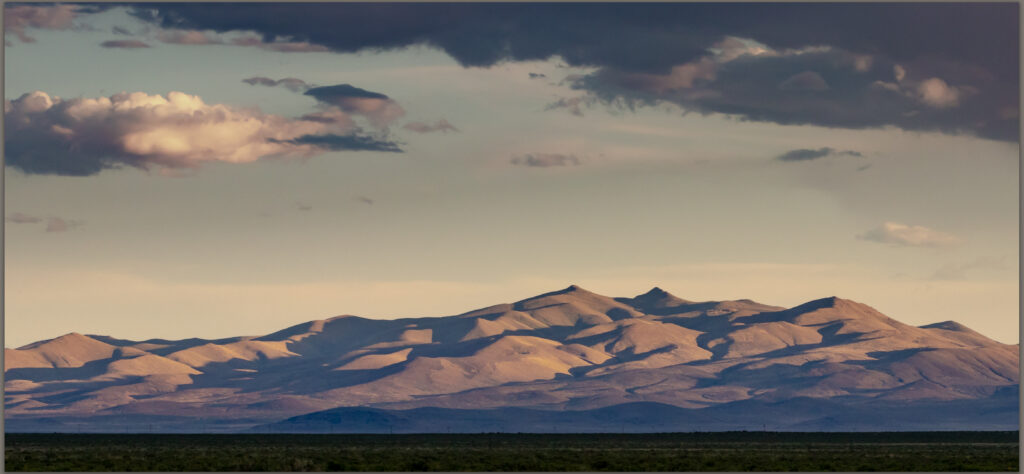
Slumbering Hills. My mild attempt to bring out the light of Maynard Dixon, Great Basin Desert, NV, USA

I have been camped for a little more than a week with an archaeological team in the Quinn River Valley of northern Nevada. Our work focuses on the vast, natural obsidian sources of the Double H and Montana Mountains that rise west of the valley’s broad sagebrush and agricultural land. I have been doing research on obsidian sources in this area of northern Nevada, off and on, for over twenty years, and I am still amazed by the complexity of these ancient volcanic rocks. Of course, I enjoy every opportunity to get into this part of the Nevada outback. While we document the obsidian and archaeological sites throughout the source areas, I get time in the early mornings and late evenings to practice and capture compositions around our project area.

Quinn River Collection

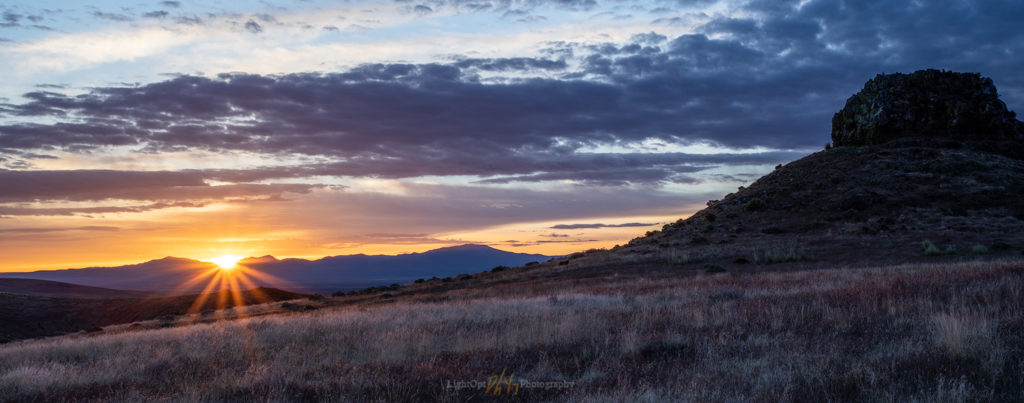
Sentinel morning. First light is always fun. Seems a little unbalanced due to the dark outcrop. This is an HDR merge of two images. 1/15 sec, f/22, ISO 100; Canon 5Div, 17-40mm (38mm).
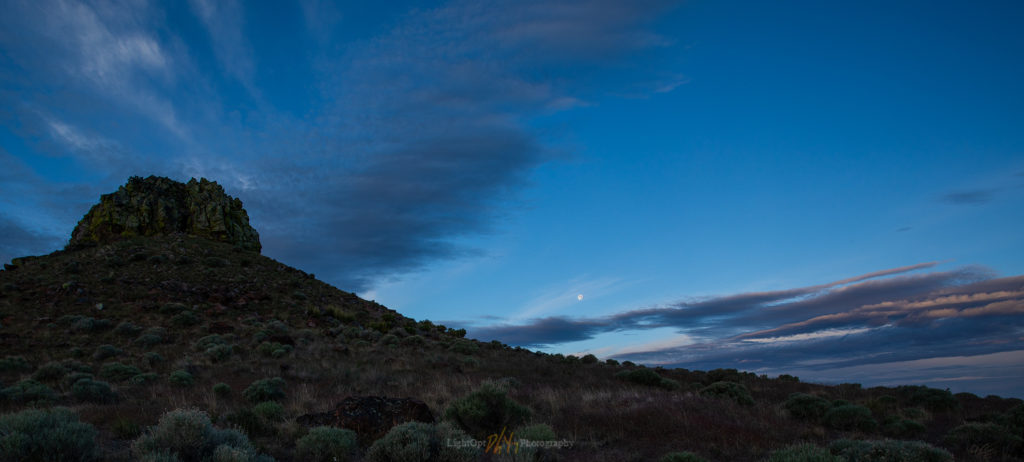
Sentinel moonset. The wide angle almost loses the moon. 1/25 sec, f/14, ISO 100; Canon 5Div, 17-40mm (17mm).

Sentinel Rock is a prominent landmark on the western side of the Quinn River Valley. I am on the road early one morning—the morning with a few clouds—to hike the ridge to the volcanic plug. I circle the outcrop to capture the sunrise and the moonset. The images are nice, but I struggle with how to work with the dynamic range while expressing the feeling of early morning light.

The clouds built into isolated and short-lived afternoon thunderstorms, so I worked into the evening to watch the light play on the mountains. I undoubtedly spent too much time on the big views of the light, as I often do, and this results in a general lack of clear subject or foreground interest in many of the images from the Quinn River evenings. It is a basic limitation of moving between camp and the project area, or heading out quickly at the end of a field day; there is little time to get settled into a specific place and find a story or compose one or two thoughtful images that highlight the experience of this part of the Great Basin.

Orovada rocks. The rainbows have faded, but the post-storm show had one more curtain-call. 1/20 sec, f/14, ISO 100; Canon 5Div, 70-200mm (168mm).
Camp after rain. Our field camp in the Quinn River Valley. 0.4 sec, f/22, ISO 100; Canon 5Div, 24-70mm (55mm).

I like this challenge, but I remain on a slow learning curve. So, my shots remain disconnected snippets of my time along the Quinn River, and yet, there are a couple favorites here that will inhabit my portfolio collection for the near future.

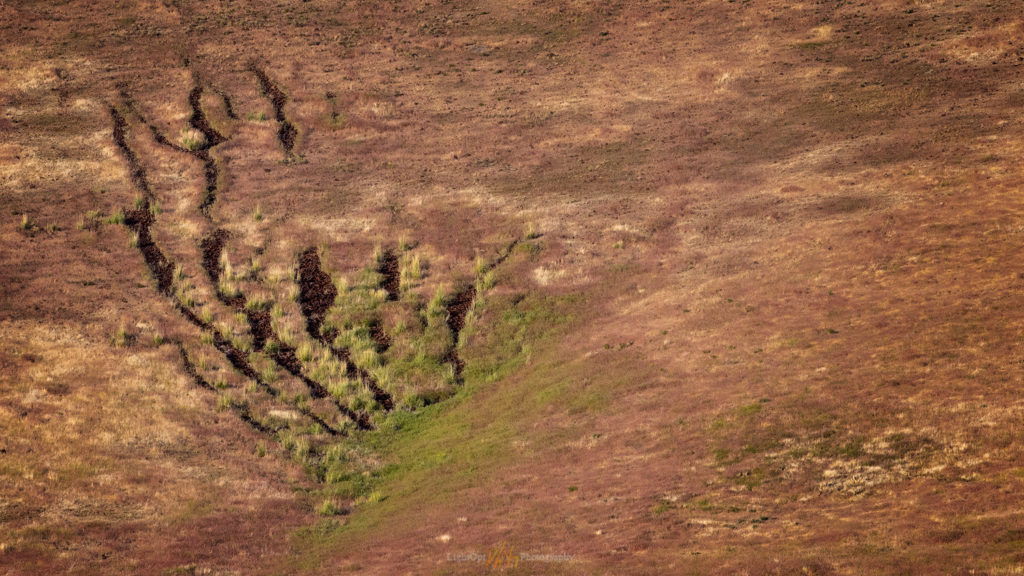
Scratched. Rock lines in the talus of Crowley Creek, the view from the Sentinel. I’m always on the lookout for animal tracks, scaled or not. 1/500 sec, f/8, ISO 400; Canon 80D, 70-200mm (168mm).
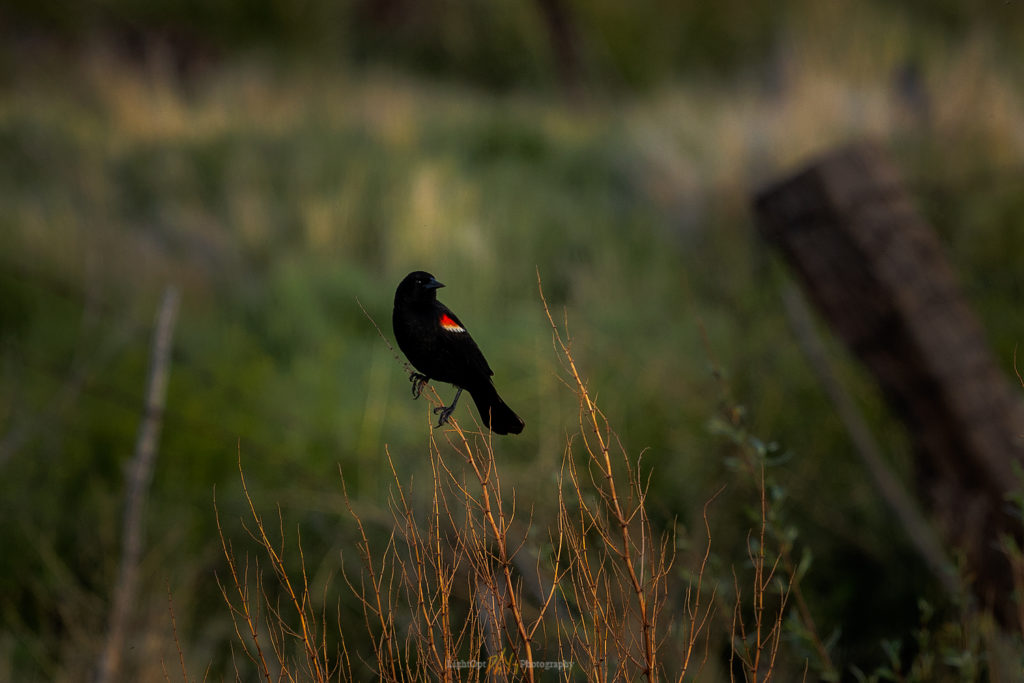
Red-winged sentinel. This noisy friend (Agelaius phoeniceus) followed me through the wetlands of Crowley Creek. 1/320 sec, f/4.5, ISO 200; Canon 80D, 70-200mm (168mm).
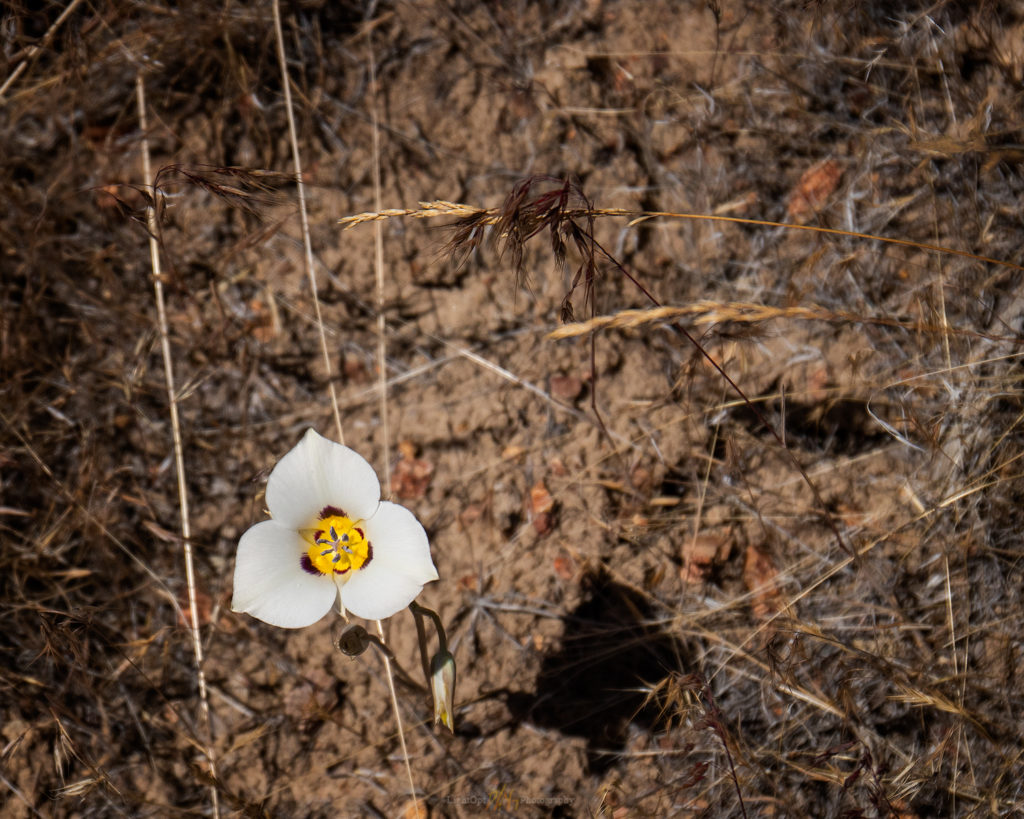
One. A lone sego lily (Calochortus nuttallii) in the sagebrush of Thacker Canyon. 1/1250 sec, f/5, ISO 200; Canon 80D, 24-70mm (53mm).
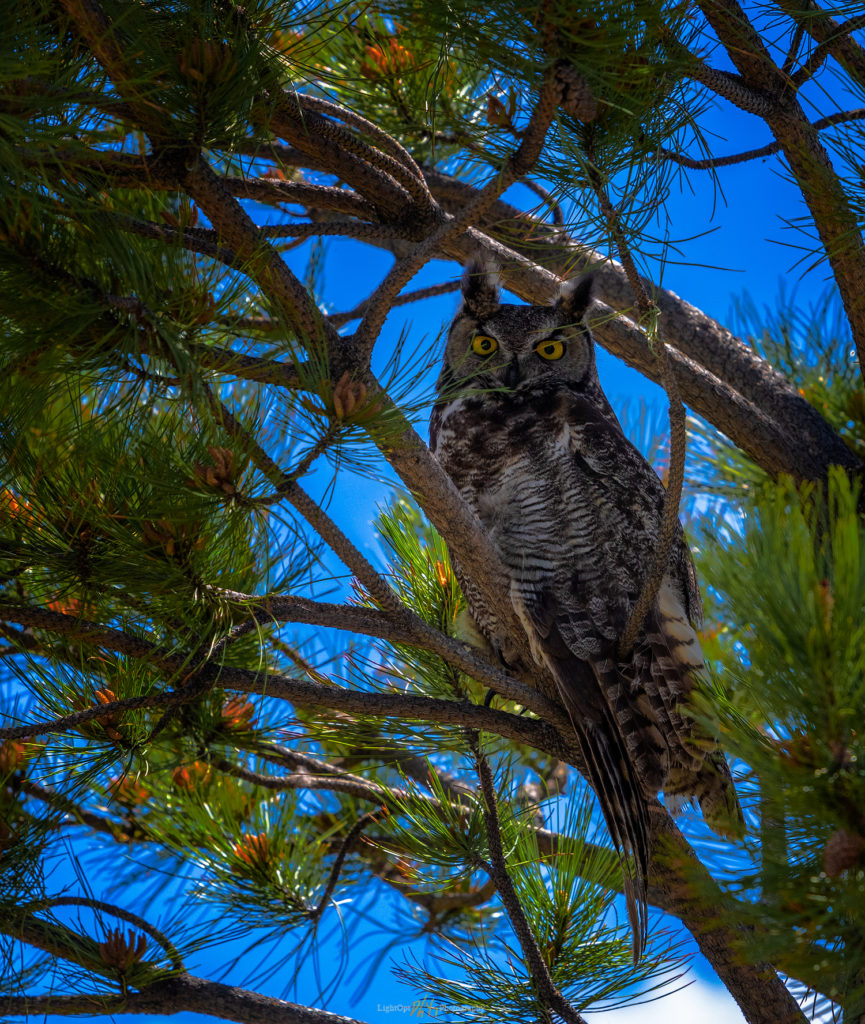
Camp host. A Great Horned Owl (Bubo virginianus) at rest in the mid-day, but keeping close eye on me. 1/130 sec, f/5.6, ISO 400; Canon 80D, 70-200 mm (180mm).

Quinn River Collection

Keep going.

Holiday at Planet X

D. Craig Young · November 24, 2017 · Leave a Comment

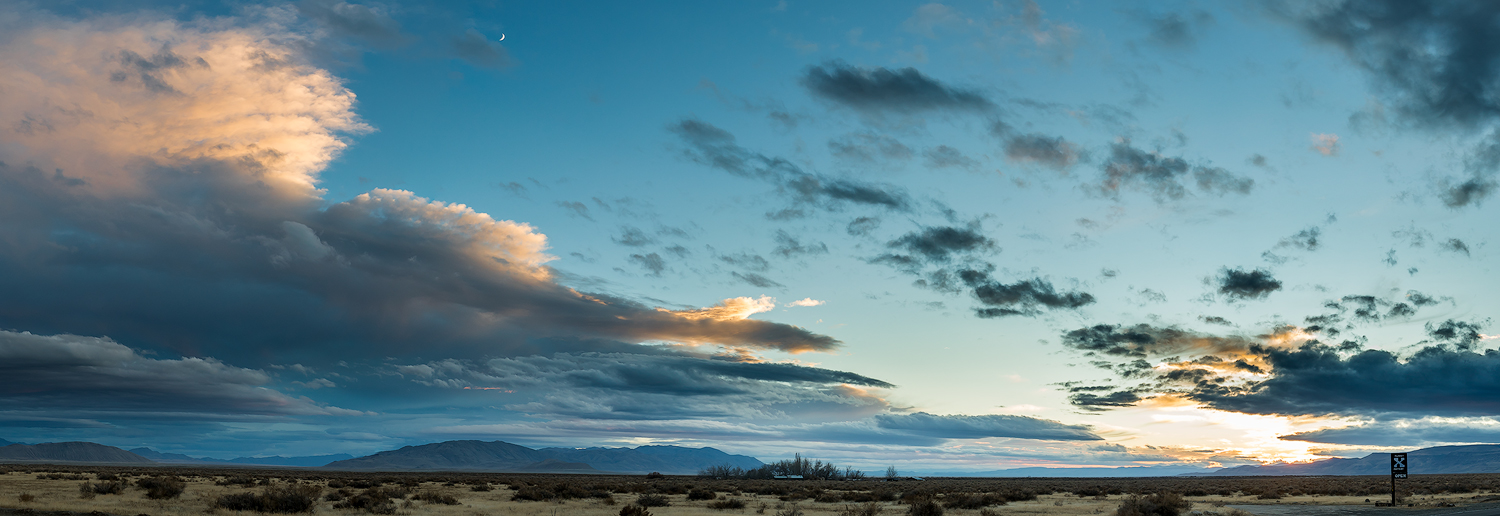
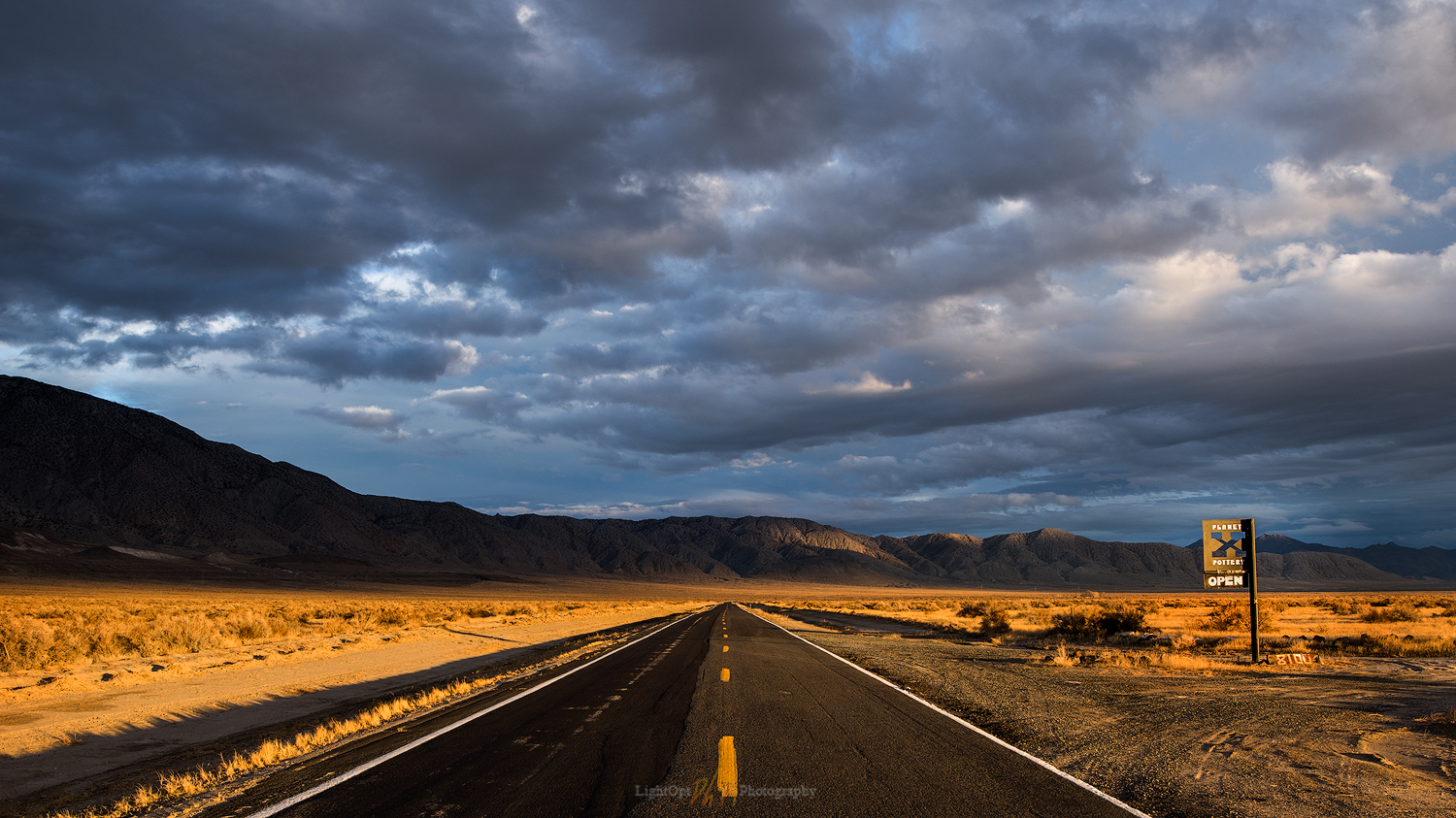
Planet X and Smoke Creek Desert

One of my favorite respites from road-weary travel in the Black Rock – High Rock country of northern Nevada is a stop at Planet X Pottery. John and Rachel have become great friends over several decades of occasional, but all-too-rare, visits to their home and gallery northwest of Gerlach. Our shelves are lined with the basin-born art, pieces having evolved to daily utensils that maintain our connection to the desert at the foot of the Granite Range.

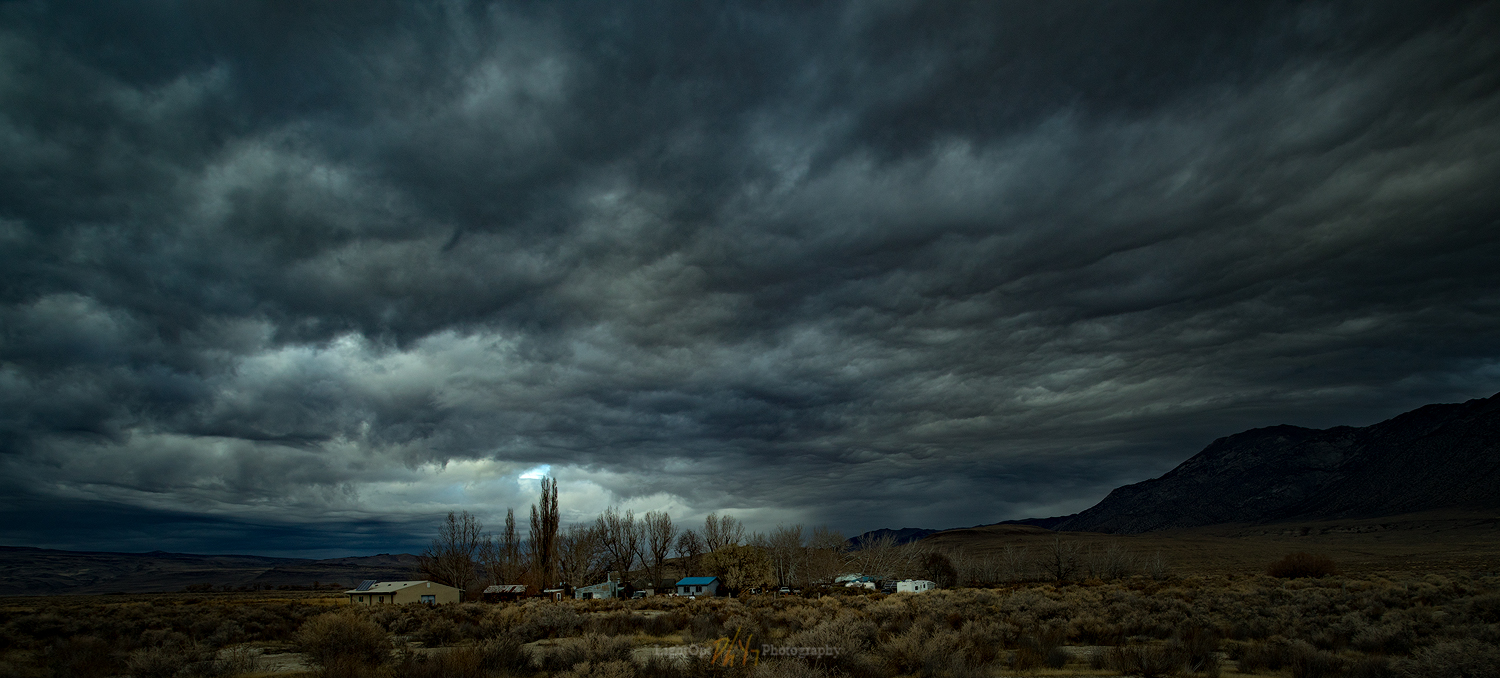
We went out to visit John and Rachel and to share Thanksgiving dinner, taking a holiday break with a drive into northwestern Nevada. We are rarely confined here at StoneHeart, but we will take any opportunity to shrink into the space of the Smoke Creek Desert. The forecast called for a chance of an early-season, slider storm. Hard to predict where the fast-moving fronts will have an impact, but they usually provide an active sky.

Planet X Collection

I took some time in the evening to follow the build-up of moody skies. I circled the property, walking the desert in search of compositions that would give a sense of space while also highlighting some subject of interest. I kept coming to views of the Planet X gallery set against the changing skies. John and Rachel often use images of the gallery and its desert habitat to advertise gallery shows and to highlight its unique setting. I thought I might try to add a few to their collection, a thankful expression of many years of welcoming visits and a wonderful Thanksgiving dinner to come.

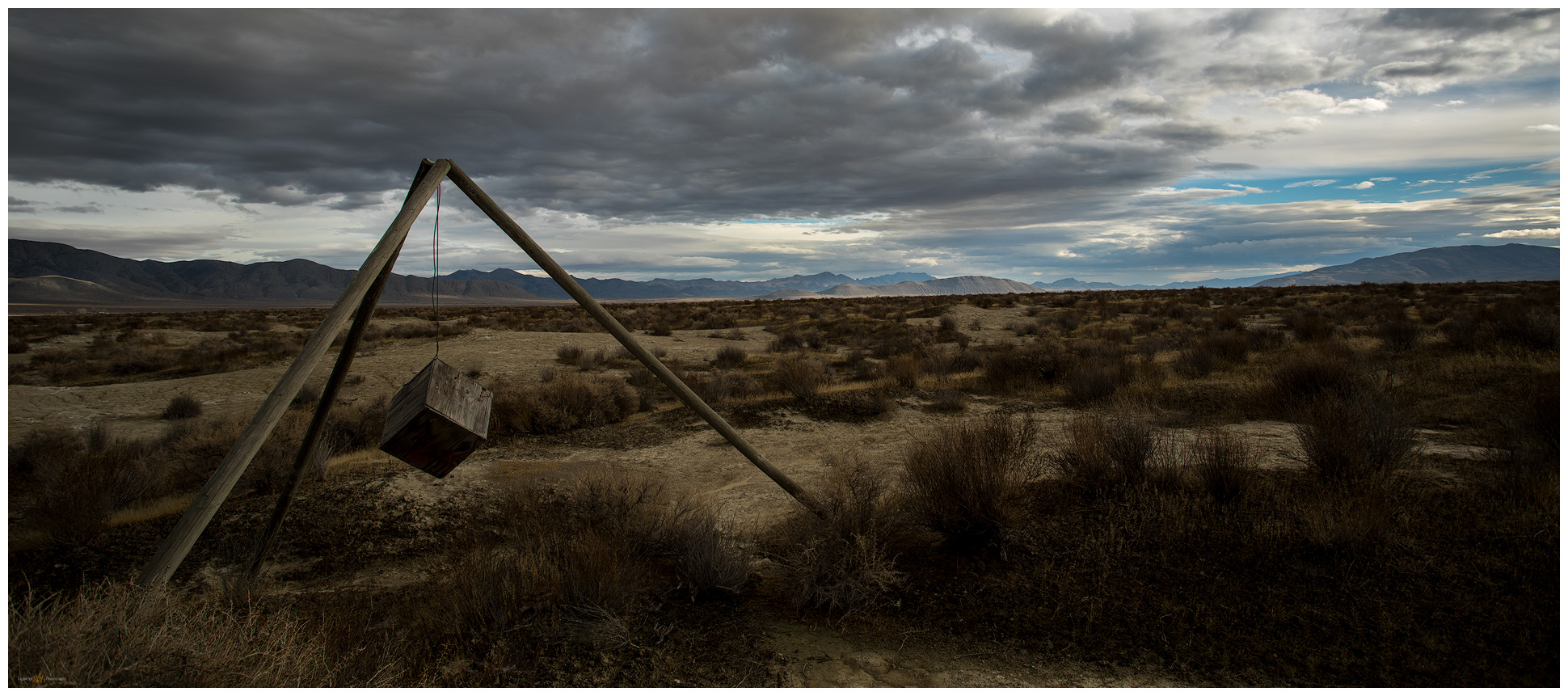
Wind vane, Great Basin, Nevada. Installation on Smoke Creek Desert.
The vanishing at Planet X. I love lonely, straight-line roads, especially where good friends are found. 1/50 sec, f/8, ISO 100; Canon 5Div, Sigma 20mm F1.4.
First storm. The skies turned ominous in the late evening of Thanksgiving. The storm, however, passed us by — dramatic decoration only. 0.5 sec, f/8, ISO 100; Canon 5Div, EF 17-40mm F4L (17mm).

The skies cleared in the early morning. After a few very early excursions outside the house, watching the constellations spin above the desert, I drove into the pre-dawn darkness to work on a series of sunrise shots in the arroyo of Squaw Creek west of the gallery. These are the kinds of images I really want to make work. Arid landscapes with prominent landforms or compelling evidence of geomorphic process and change—highlighting the beauty, subtlety, curiosity, and occasional drama of the natural systems of deserts and mountains. High hopes, and though unsuccessful this morning, I enjoyed, as always, engaging the landforms and watching the light of the morning come alive. It was good practice.

Arroyo dawn. Waching sunrise over Squaw Creek arroyo at the margin of the Smoke Creek Desert. If I am going to highlight landforms, I need to compose with their features as clear subjects of interest. The sunrise dominates this composition. 1/4 sec, f/16, ISO 100; Canon 5Div, EF 17-40 F4L (17mm).

I spent the mid-morning wandering the gallery taking hand-held stills of the beautiful habitat of art and life around the gallery. This was not something I’d practiced at all previously and I enjoyed the outcome.

Morning bell. A scene from the porch gallery at Planet X. 1/160 sec, f/7.1, ISO 100; Canon 80D, EF 24-70 F4L (35mm).
Wheels and wood. Looking for patterns and contrast. 1/640 sec, f/5, ISO 100; Canon 80D, EF 24-70 F4L (26mm).
Broken window. Painted ceramic by John Bogard; my favorite of his motifs. 1/125 sec, f/5, ISO 100; Canon 80D, EF 24-70 F4L (42mm).

Planet X Collection

Thanks so much to John and Rachel for our holiday escape to Planet X. We will return with pies someday soon.

Keep going.

  • « Go to Previous Page
  • Page 1
  • Interim pages omitted …
  • Page 5
  • Page 6
  • Page 7
  • Page 8
  • Page 9
  • Page 10
  • Go to Next Page »

Trail Option

Copyright © 2026 · Monochrome Pro on Genesis Framework · WordPress · Log in

  • Contact TrailOption
  • Substack
  • Waypoints Bibliography
  • Young Archives