• Skip to primary navigation
  • Skip to main content

Trail Option

A personal geography of landscape and place, art and geo-science.

  • Home
  • TrailOption Blog
  • WayPoints
  • Galleries
  • About
  • Contact TrailOption
  • Subscribe!
  • Show Search
Hide Search

LightOpt

Wildlife Photography: Getting Lost with the Red-headed Woodpecker

D. Craig Young · April 18, 2021 · 2 Comments

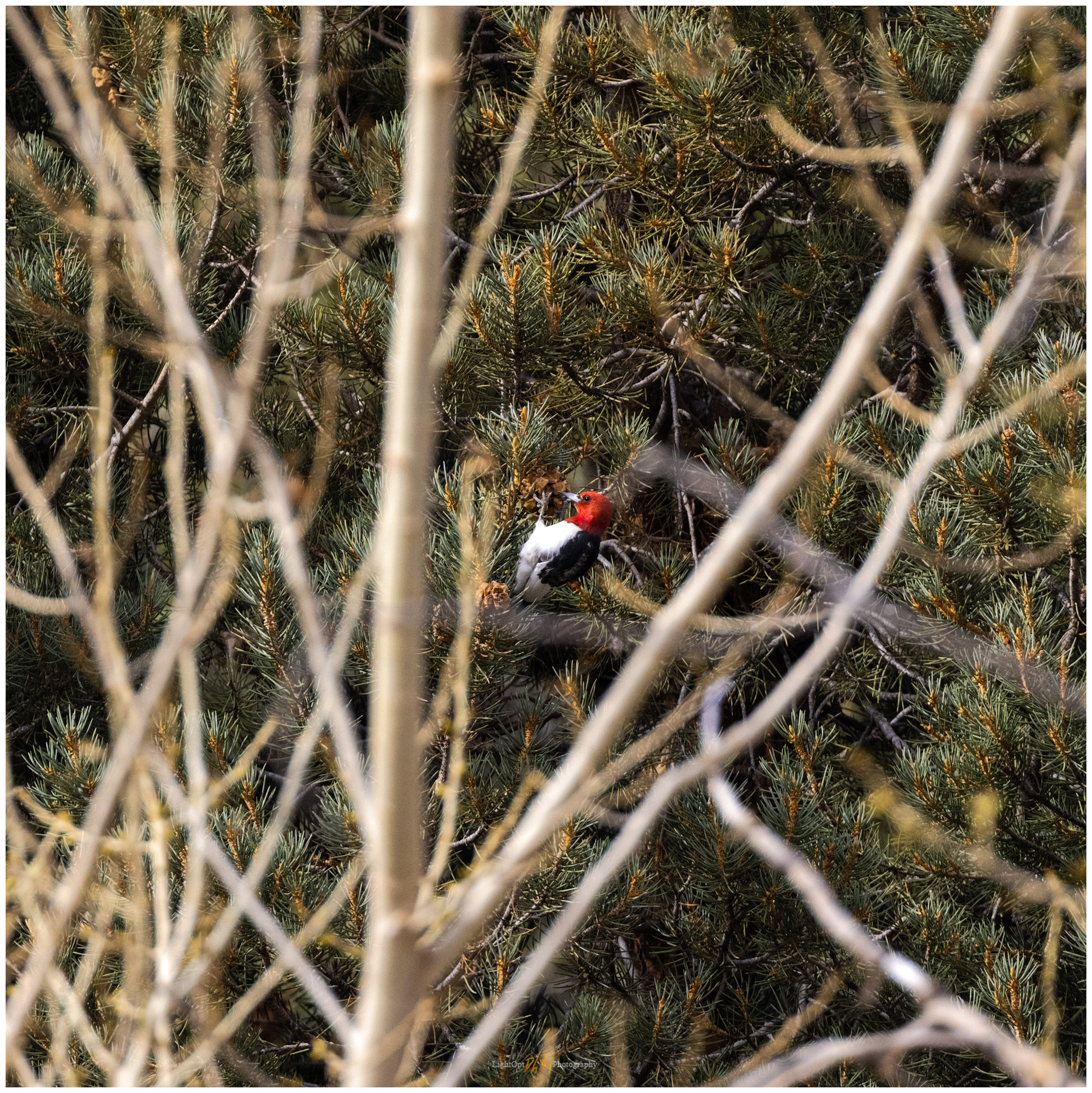
Red-headed Woodpecker | Melanerpes erythrocephalus; foraging for pinyon nuts. Virginia Range, Great Basin Desert, Nevada.

Ok, this is not a bird photography website. It just happens that this was an interesting week.

Six-Mile Woodpecker Collection

After our brief birding excursion along the East Walker River, Desna heard that a Red-headed Woodpecker had taken up brief residence in Six Mile Canyon in the Virginia Range, just below Virginia City, Nevada. This is interesting because the poor bird seems to be a bit lost. Their common range is east of the Rocky Mountains, with only occasional appearances in the West.

Des made a successful sighting in Six Mile Canyon, along with a few other Reno-Carson-area birders out to add this to their lists and to enjoy the attractive, colorful bird. She said I should get up there and get him for my new avifauna image list. That was recommendation enough, so I went up early on a weekday morning – strange to drive into Six Mile and up to the outskirts of Virginia City, a place we lived for almost ten years. Happy to see Shaun and Debbie right off; Desna had also let them know that they had a visitor in their town.

We waited along the road, hoping he would come out for some morning foraging. This was the reported pattern. Sure enough, after about 45 minutes of waiting, I saw the white wing-flash, moving from the pinyon forest on the hillside to the cottonwoods of the riparian corridor. Unfortunately, the daily flow in the Six Mile drainage is augmented by the town’s effluent plant. But the birds do not seem to care.
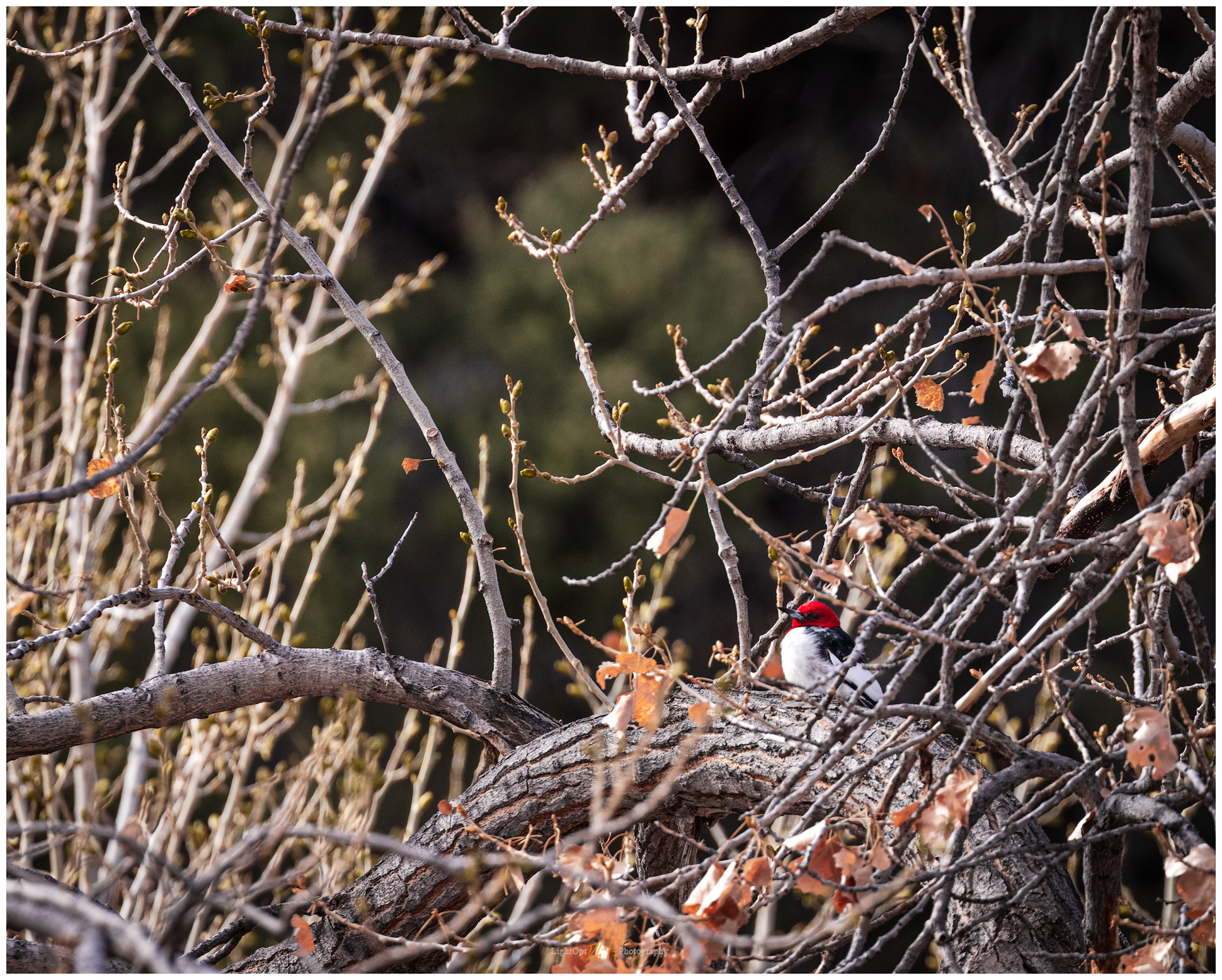
Red-headed Woodpecker | Melanerpes erythrocephalus. Virginia Range, Great Basin Desert, Nevada.
Red-headed Woodpecker | Melanerpes erythrocephalus; eyes closed, perched. Virginia Range, Great Basin Desert, Nevada.

The Red-Headed Woodpecker worked his way around the cottonwoods. It was a challenge to capture images of the bird as he was adept at hiding in branches and trunks as he forages. We lose sight of him for long periods and then he reappears in a flush of red and white. Although my images are pretty good (I still need to develop the skill of getting a few more sharp images) it is very fun to share some time with a relatively uncommon bird. I have only been ‘birding’ for a few days, and I now have a rare one on my short list. Very fun, with more practice to come.
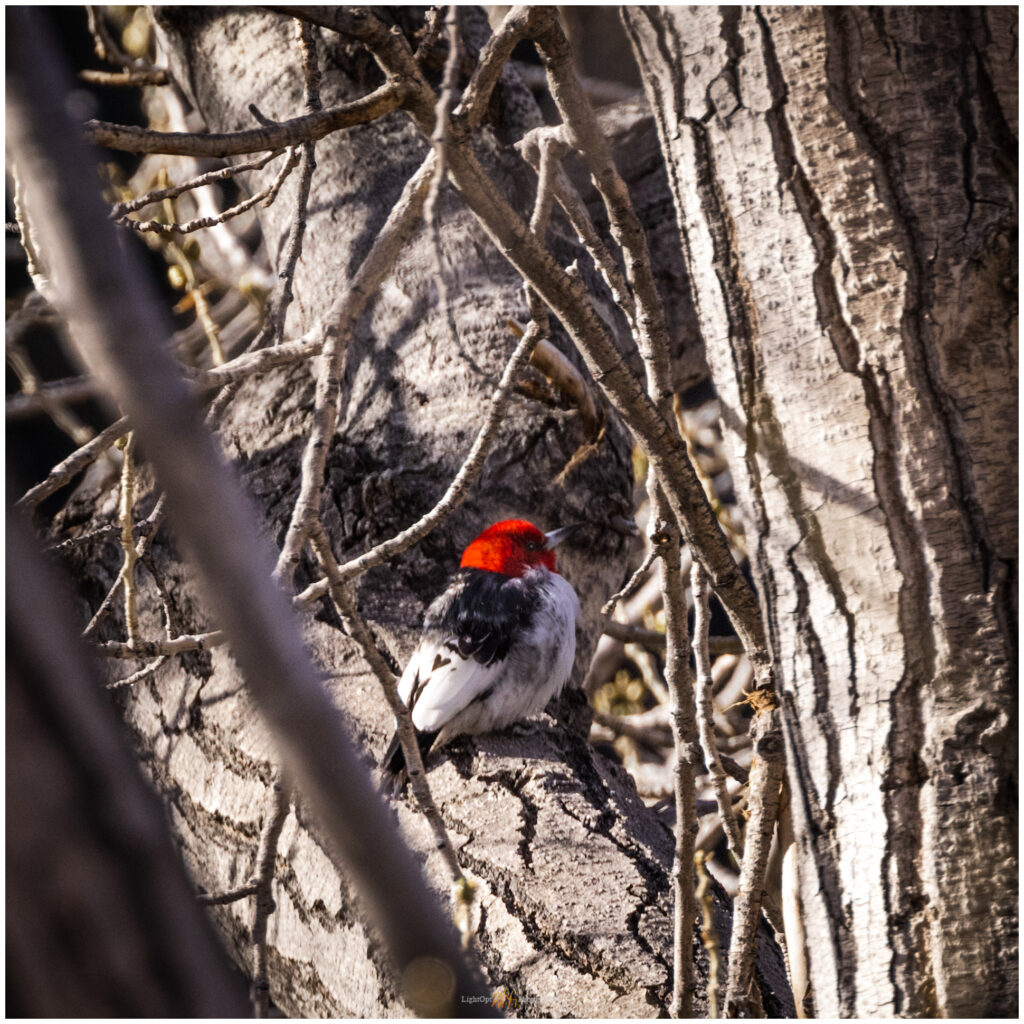
Red-headed Woodpecker | Melanerpes erythrocephalus; the bird of hearts. Virginia Range, Great Basin Desert, Nevada.

Six-Mile Woodpecker Collection

Bird Image List: Red-headed Woodpecker

Keep going.

Please respect the natural and cultural resources of our public lands.
#naturefirst #keepgoing

Wildlife Photography: Birds of the East Walker River, Nevada

D. Craig Young · April 17, 2021 · Leave a Comment

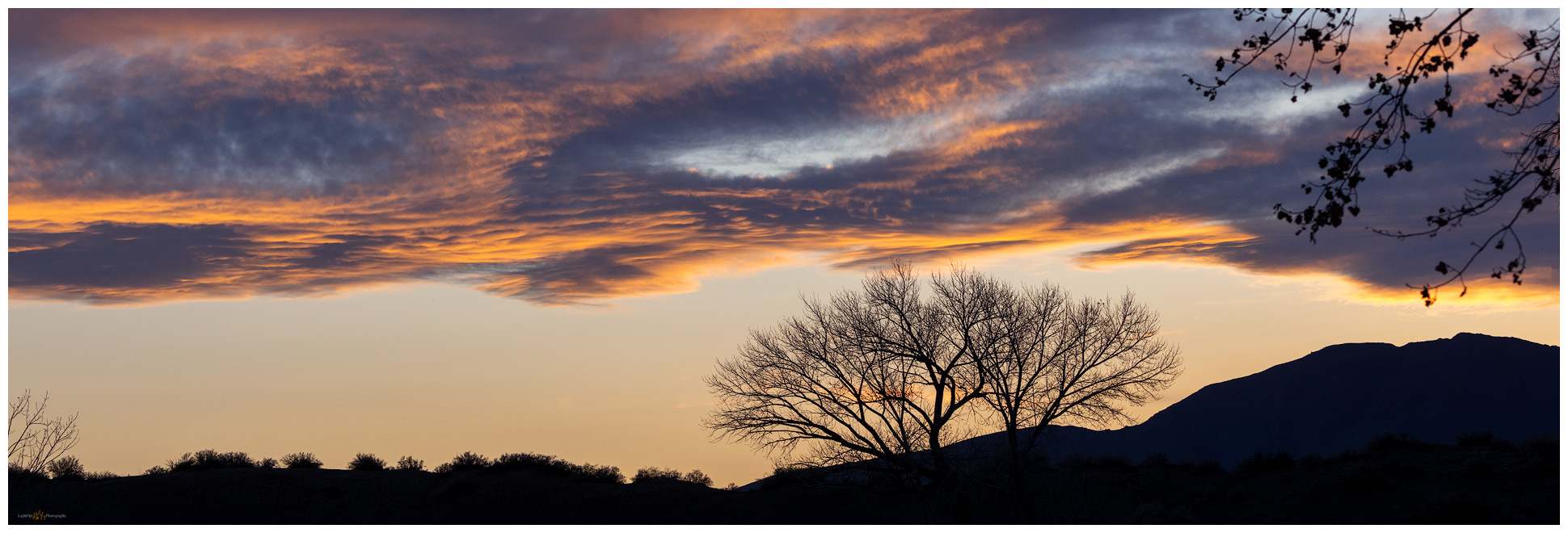
East Walker sunset. East Walker River, Great Basin Desert, Nevada.

Here is a slightly different angle for the LightOpt Photography blog. My wife and I teamed up on a quick camp trip to the East Walker River to check out birds in the Walker River State Recreation Area, a relatively new component of the state park system. I had passed by here on my excursion into the Gray Hills and thought we might try the campground for an overnight; it is only an hour from home. 

The campground sits on old pasture or hayfields of the Pitchfork Ranch which is now the visitor’s center of the State Park. The campground is wide-open space with several sites are close the river, and this evening the place looks rather full as we pull in. We do not typically do campground locations, appreciating the open public lands, but once in a while they make for an easy break – though we aren’t ever in danger of too much discomfort when out in Desna’s camping rig. Even now, with most of the camp sites taken and the crowd looking ready for a whole lot of motorized recreation, we consider heading back out of the park, into the backcountry. But we came to give it a try and quickly decide to settle into spot #10.

And then the drone of generators begins. I have never really understood the camp-need of endless power generation. We have one in our rig, but hardly find much use for it – we cooked popcorn in the just-as-useless microwave, if only to prove we could – the sound is ridiculous. I understand needing some extra power to prep dinner for a family, but the evening-long rumble from just about all camps is something we hardly bear. Anyway, I should not complain much, it is still nice to be out here, and I can look forward to the quiet of the morning, when pre-dawn quiet still reigns.

East Walker Bird Collection

I was out early indeed, wanting to practice bird photography. Des is a great birder and I have been looking forward to documenting, if possible, the various species we come across together. As I step from the camper, flocks of waterfowl are passing low overhead, their calls muffled in the feathered-beating of so many wings. It seems a good start.

I work my way into a riverbend where a grove of cottonwoods holds a Great-horned Owl pair. It is too dark to photograph, but I watch them until they move across the river and farther north. I turn and wait for a Red-tailed Hawk to move from her nest, maybe for a morning hunt, or to switch duties with her mate. I wait over an hour, as the sunrises, and only the songbirds and some Western Bluebirds pass among the branches above me. Nothing in today’s adventure of wildlife photography, but that is how it mostly goes.

Des comes across the fields to meet me, and we walk back toward the slowly stirring campground. As we pass another raptor nest, a mother Red-tail is guarding her roost, and then it is the little birds that spring to action. A Song Sparrow greets the sun and hurriedly gathers material for a nest as a female looks on. He splits time between singing for his territory and bouncing through the grass with twigs, though I cannot quite tell where they are settling in. A Downy Woodpecker gets up a usual ruckus, ricocheting from tree to tree and jack-hammering up and down the branches.

My simple favorite is the common White-crowned Sparrow guarding the fence as we enter the campground. I have a soft spot for the little passerines, the ones we see every day and practically forget they are there. This sparrow poses patiently and then drops to ground beyond the fence to forage for the sparse seeds of early spring.

I later find I had plenty of difficulty getting the focus and depth of field needed for good images. This is something I need to work toward, knowing that capturing sharp, well-composed images of fast-moving birds (and other animals) is always a challenge. I am hooked, however; and the challenge will be a pleasure in the quiet moments among the birds. Thanks to Des for sharing this with me.

East Walker Bird Collection

Bird Image List: Red-tailed Hawk, Song sparrow, Downy Woodpecker, Western Bluebird, White-crowned Sparrow. Links jump to the ebird.org information pages.

Keep going.

Please respect the natural and cultural resources of our public lands.

#naturefirst #keepgoing

Landscape Photography: Snow Recce in Antelope Valley CA

D. Craig Young · March 4, 2021 · 1 Comment

Snow filled the valleys of the western Great Basin at the end of January, when lake-effect squalls, energized as they traversed Lake Tahoe, cycled through the valleys southeast of the lake. We approached two feet of coverage at St0neHeart, with deep drifts along fence lines and out-buildings. So early on a Sunday morning, I decided to chase the light while the snow was still fresh and deep in the fields and foothills of Antelope Valley, across the state line but not far from home.

There had been rumors of fog in the forecast, but the the pre-dawn sky was clear. As I traversed the ranch roads that crisscrossed the ranchlands of the valley bottom, little motivated me to leave the warmth of the truck, it was 18F (-8C) along the Walker River. Cattle barely noticed me, refusing to lift their heads from their early-morning feed.

I ventured into the pinyon hills of public land on the valley’s east side, but the deep snow and bunchy trees turned me back. As I regained the truck, I noticed a heron gliding along an irrigation ditch banked in snow and willows. It disappeared on wide wings, seeming to drop into the snow. I eventually found the bird patiently watching riffles in the flowing water, a slight bit of turbulence at a confluence of ditches. It made sense that any morning meal would have to pass this now-dangerous intersection with a great blue heron (Ardea herodias) in waiting.

Waiting. A Great Blue Heron patient in the cold.

I too waited. The heron never moved. I finally crept slowly away. Full disclosure: I never left my truck — resting my long lens in the window and sharing time with one of my favorite birds.

Antelope Valley Collection

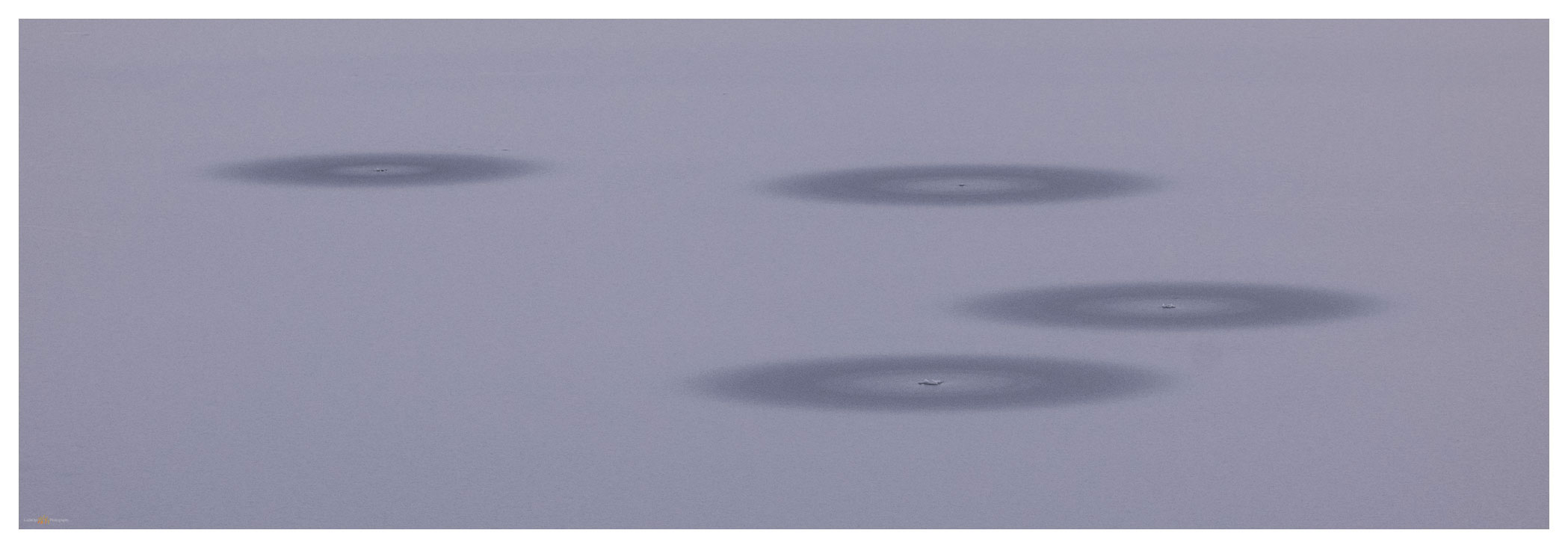
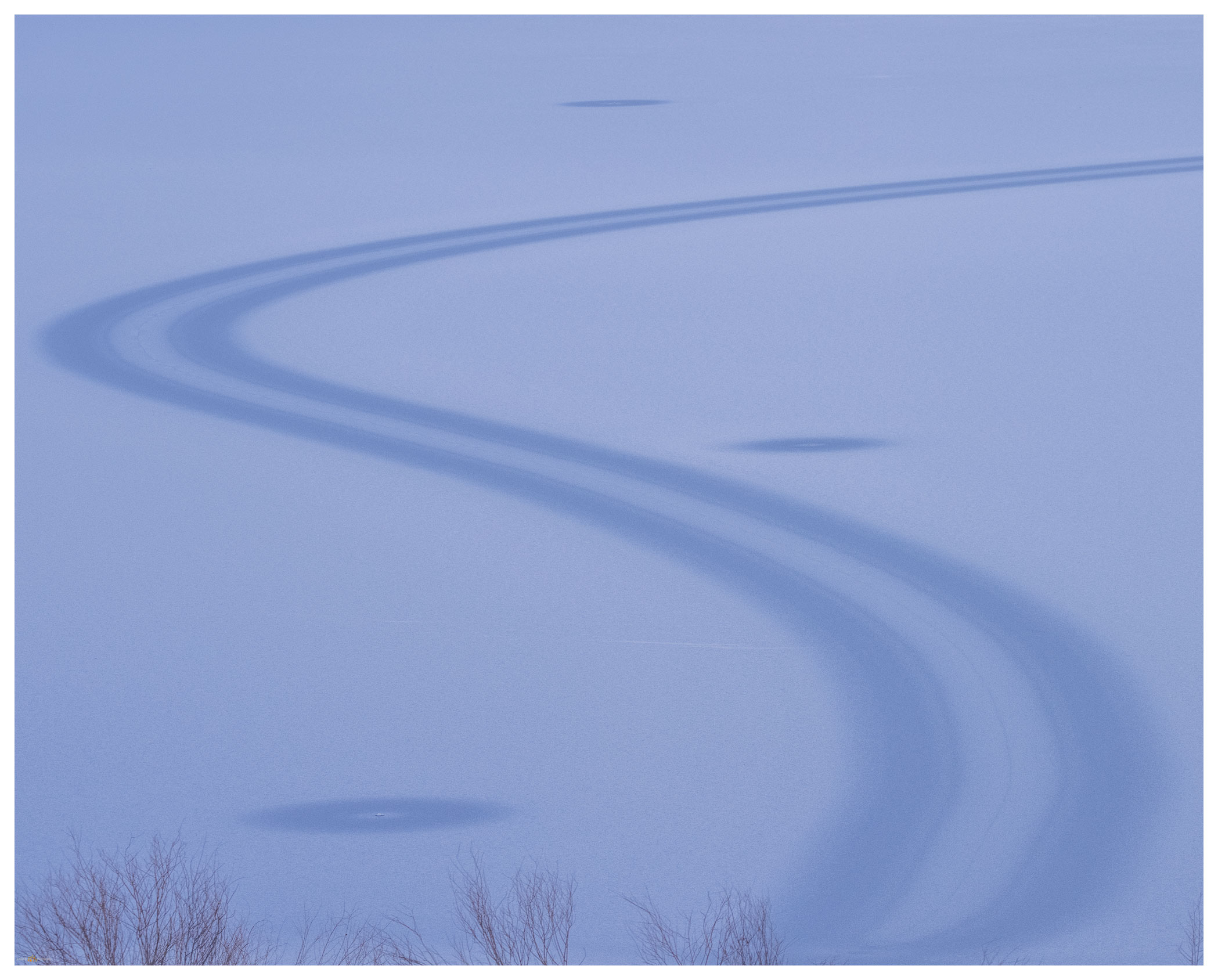
I had basically given up for the morning and turned for home. I had the one image of the heron (or, at least, I would get one from the several I’d captured) and was happy with that. But from the highway I saw strange patterns, starting with perfect circles on the ice of Topaz Lake — still frozen at its southern shore. I’m still not sure how they form, but the simple pattern turned me around and I found a pullout above the steep drop to the lake.

Topaz spots. Abstractions in the ephemeral ice of Topaz Lake.
Connection. Some patterns are too cool to explain.

I was happy to have stopped to check the patterns. For a popular lake typically overrun with boats of all kinds, I have had some very good, quiet images from its shores. And it can be very nice that it usually presents these things as one passes on Highway 395.

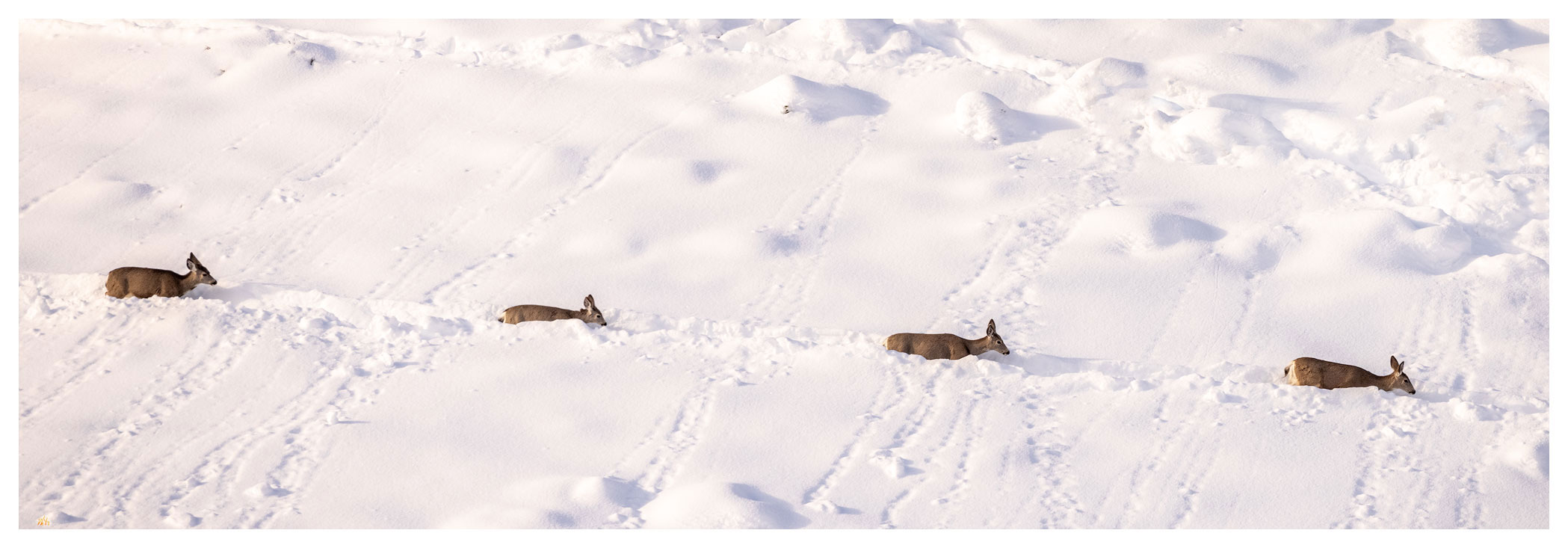
Further north I caught sight of a string of mule deer (Odocoileus hemionus) moving slowly in their beaten trail. Bounding occasionally to clear obstacles I could not see. It was the spacing that caught my eye. It’s a wide image, so give it a click and get the full view (note: you can do this with all images at Trail Option, usually).

Leading line. A well-spaced group of mule deer on slopes of the eastern Sierra.

Antelope Valley Collection

Some times short trips, with few expectations, give the best results — all within 30 miles of home.

Keep going.

Please respect the natural and cultural resources of our public lands.
#naturefirst #keepgoing

Landscape Photography: Late Snow and Last Light on the Black Rock Playa, Nevada

D. Craig Young · February 27, 2021 · 1 Comment

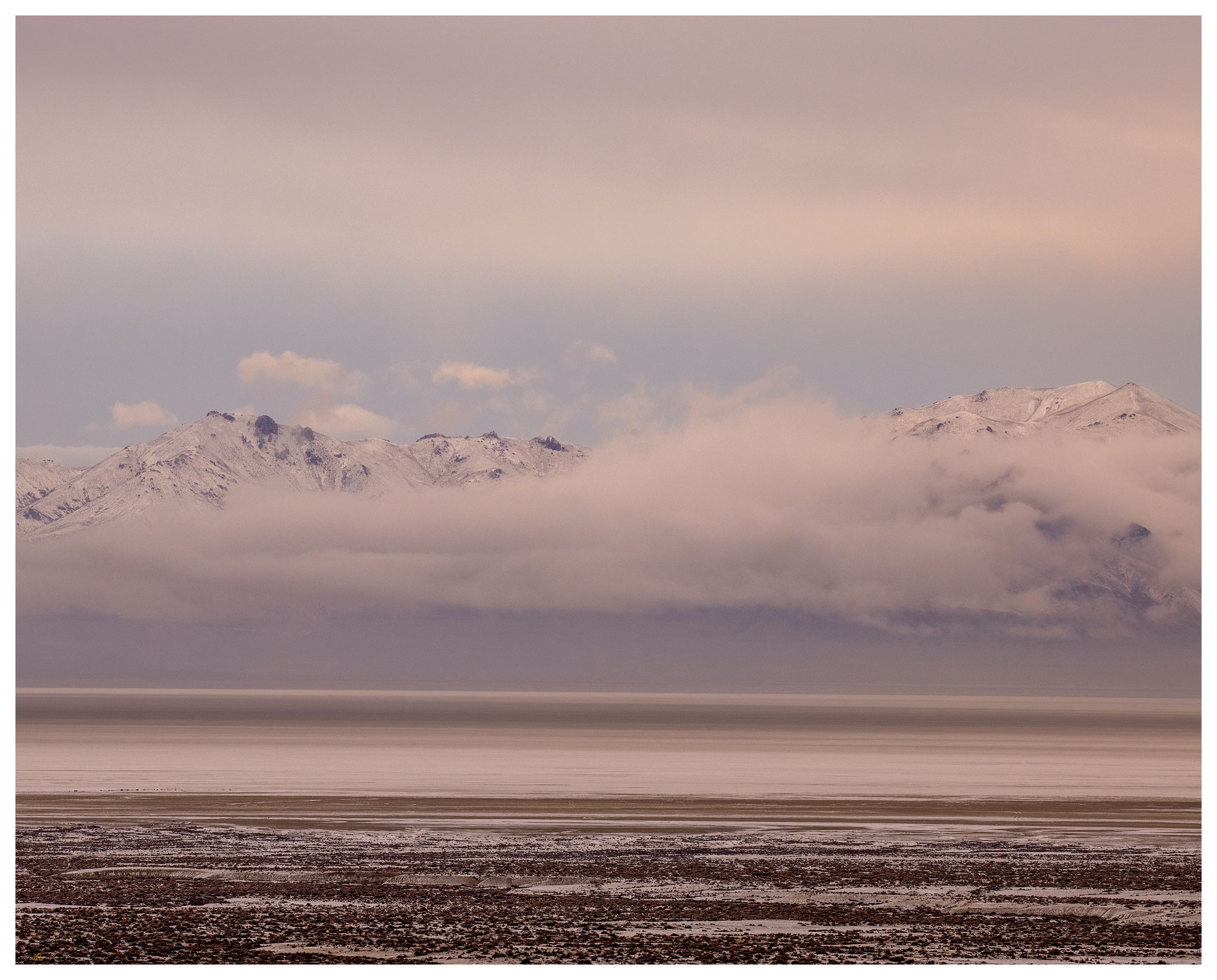
I spent the day, having started well before sunrise, on an overland obsidian recce focused on the geomorphology and distribution of the Majuba and Seven Troughs toolstone sources. A series of dramatic snow squalls cut that effort short just as I reached the ‘High Road’ from Sulphur to Gerlach. However, as I broke out of the western margin of the storm, I could see a blanket of new snow across the dark space of the playa of the Black Rock Desert.

The playa is typically a dry, dusty basin — most experience this place in the summer and fall, with the denizens of Burning Man transforming the space annually (though the playa got a break in 2020). Snow is not typically in the playa experience. But as I dropped past Cholona, a white blanket spread before me and a long horizontal crack at the sky-horizon promised a show. I ditched the truck and climbed into the hills below Pahsupp Peak. I would wait and be ready.

Calico snow. The playa in its atypical blanket of white below the breaking storm.

Late Snow Collection

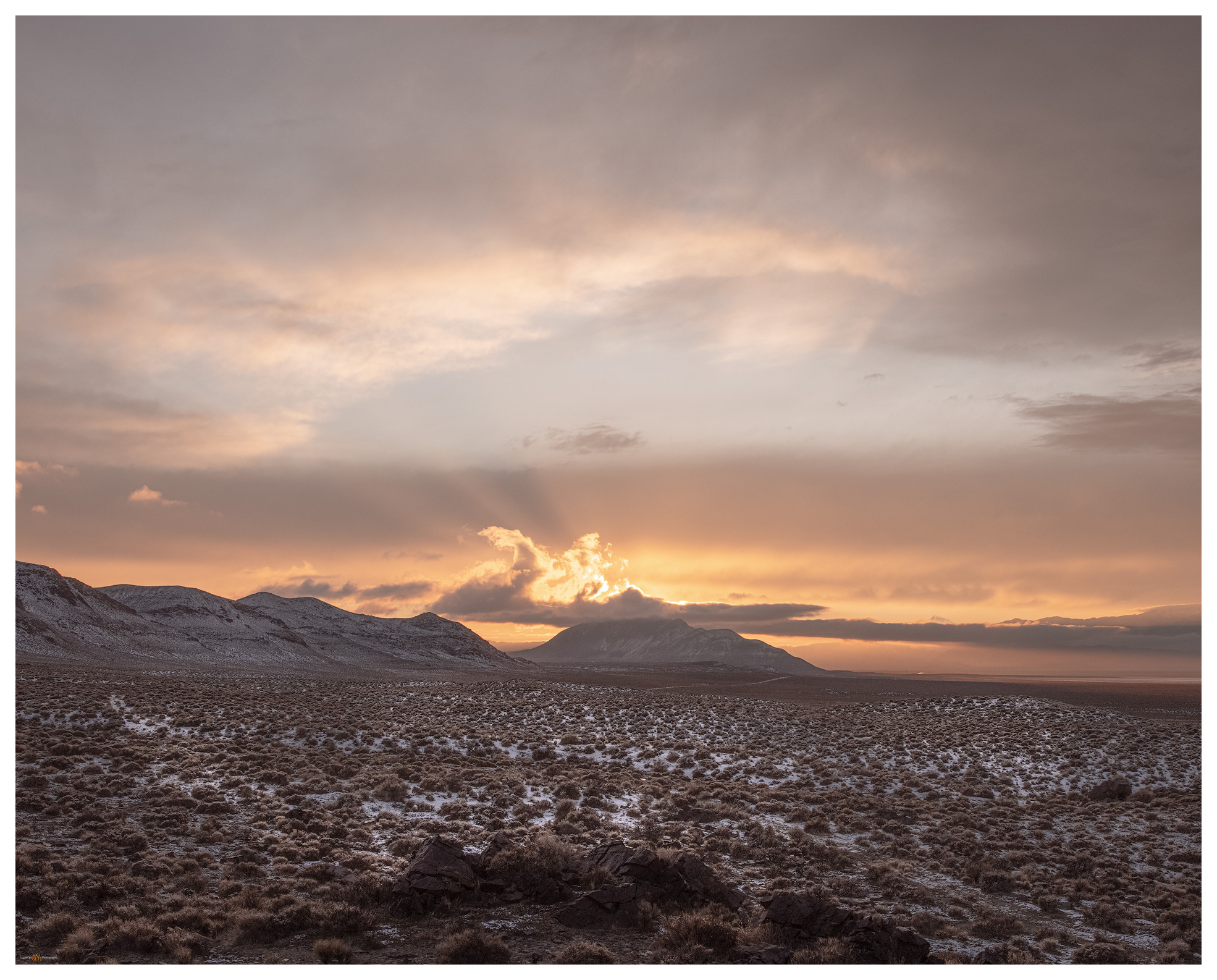
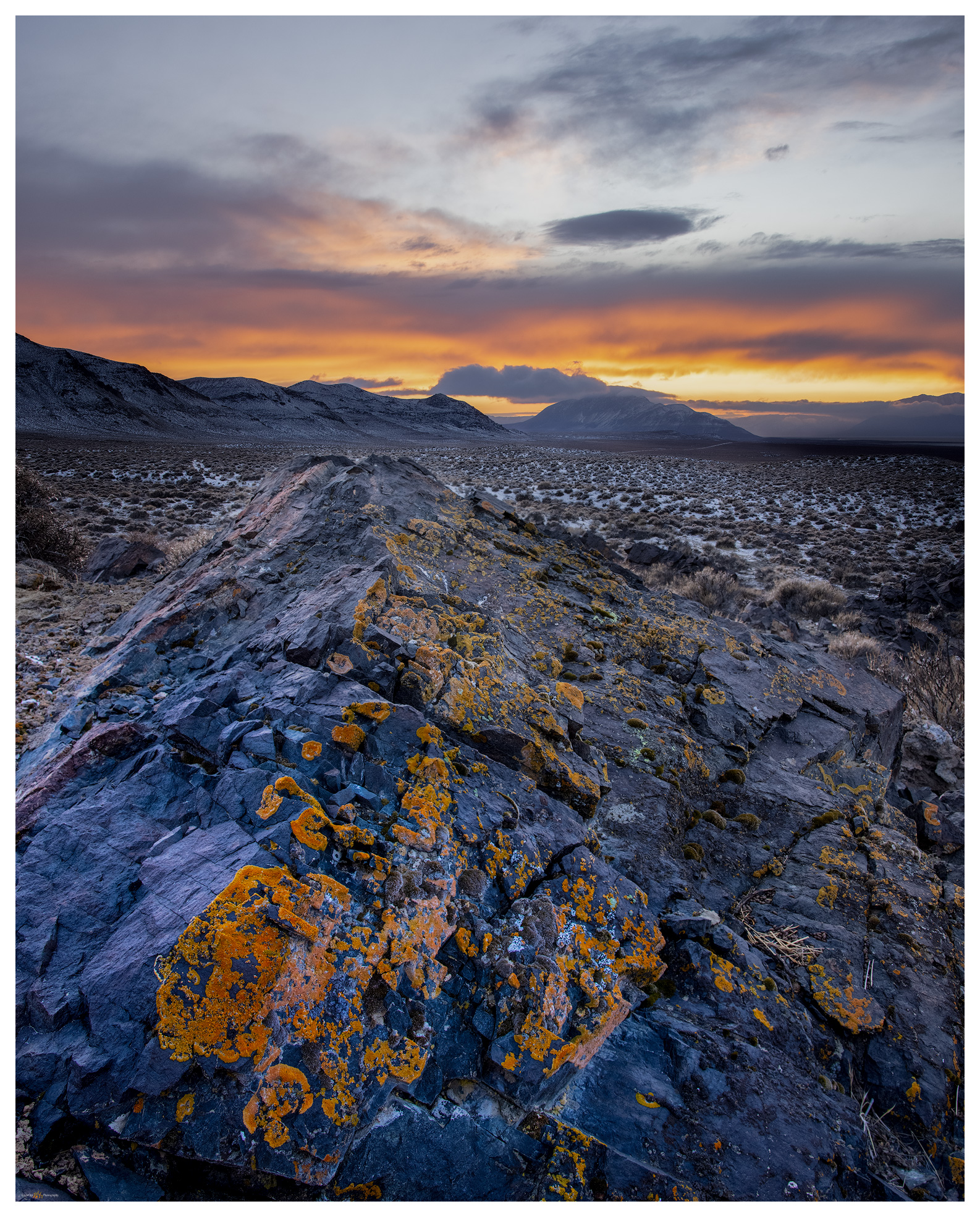
Traversing a series of alluvial gullies cut into lacustrine sediment of pluvial Lake Lahontan, I worked my way to a set of rocky outcrops highlighted by orange lichen dampened by the recent snow. From these rocks I could play with a variety of compositions in all directions.

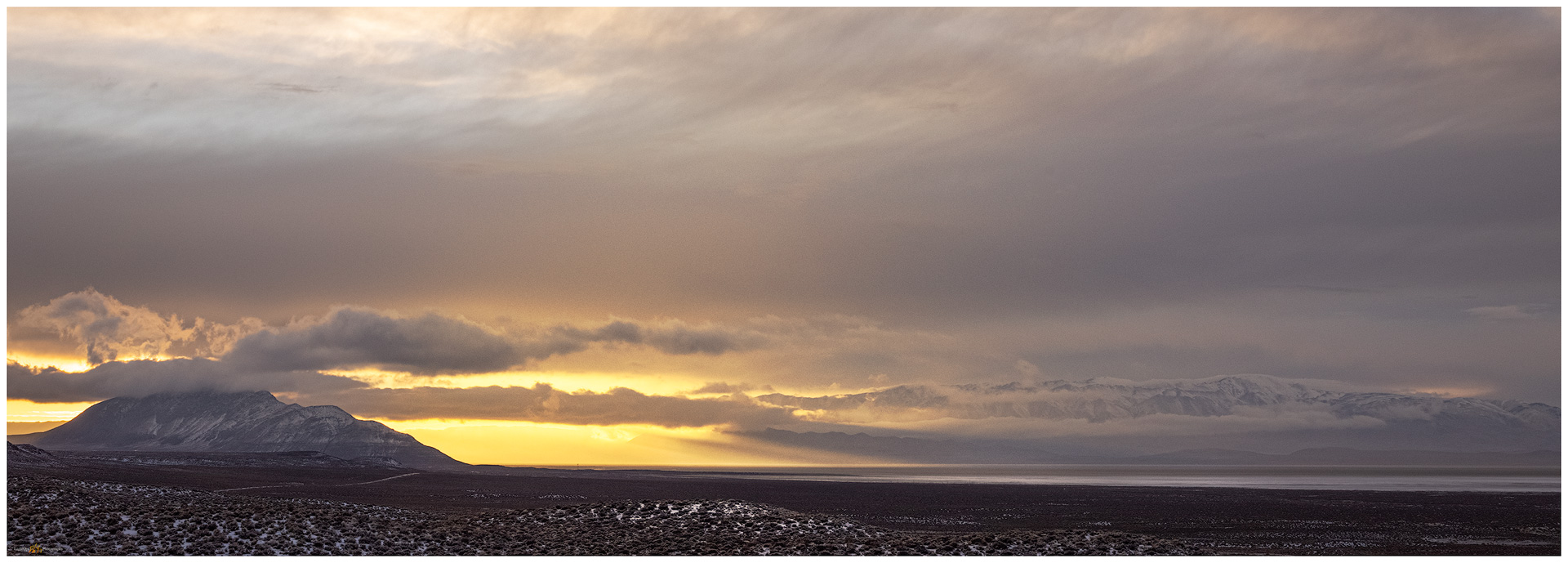
I kept telling myself to go slow, pick a composition and work with the light that was building as the sun began to peak from the horizon on its way to evening. However, the receding squalls behind me — to the east — continued a shadow-play of cloud shapes and snow-fall curtains. While I concentrated on the light show in the west, I did turn for the occasional image in the darkening clouds — sometimes the two interacted and rewarded me with fantastic opportunities. This perspective called for a wide-view. Other times, I just watched in the moment. It was a special evening.

Black Rock Playa at Trego. As the storm receded it allowed the sunset to spread into the Black Rock Playa. (Please click for full view).
Passing snow. Dramatic mammatus clouds as the storm moves out of the Calico Mountains. (Please click for full view).
Two track to Trego. Traces in the snow hint at the old roads above the playa margin, it also makes a subtle pattern through the image.
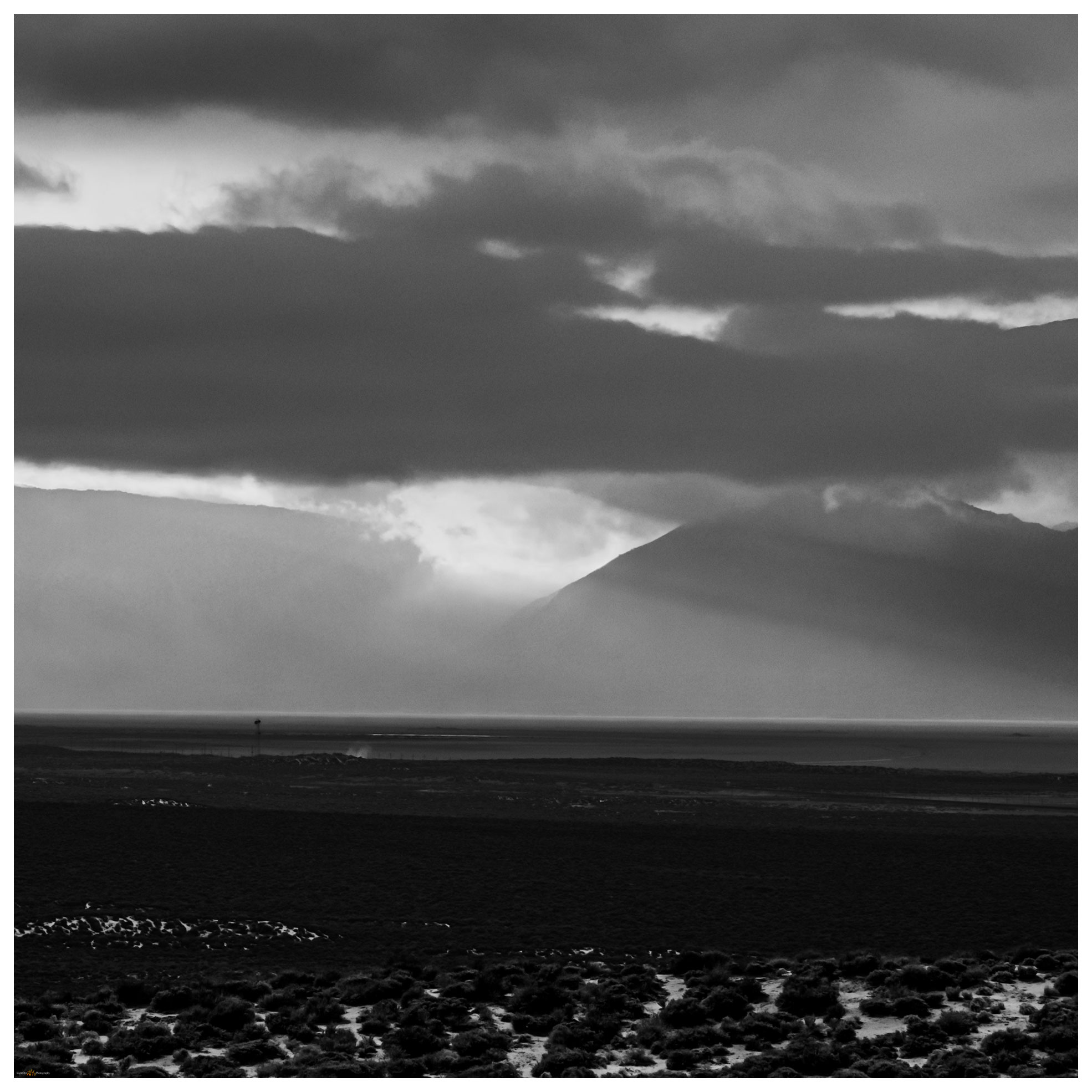
Shadows of Trego. An experiment in black and white; I am happy with the compressed view of the sunset and the break in the Granite Range. The steam of hot springs rise in the mid-ground.
Last Light at Trego. The requisite near-far rock-to-sky scene. Not at all subtle, but this was the feeling at the close of a wonderful day.

Late Snow Collection

A long drive home remained, but everything about the day contributed to a perfect overland excursion. From obsidian maps to playa snow to the requisite afterglow, I count this among the special ones.

Keep going.

Please respect the natural and cultural resources of our public lands.
#naturefirst #keepgoing

Twelve for 2020

D. Craig Young · January 2, 2021 · 12 Comments

Twenty-twenty might not be a year to look back on, especially for those whose lives suffered in the wake of economic setbacks, storms of fire or weather, and the unknowns and uncertainties of the insidious and unrelenting Covid pandemic. Communities, families, and friends suffered as misinformed and misguided (or worse) politics cut and infected deep wounds that may be more difficult to heal than the lingering effects of a virus. Still, hopeful moments rose above the noise as social injustices glared under focal spotlights and many sought connections with the natural world – these disparate things having in common entrapment, by history, by half-news, by the malnourishment of social feed, and, too often, by mandate. Would our masks help us see or simply add to our blindness?

I pursued my occasional photography in this turbid year with this conflict often in mind. My time in the landscape, whether as a scientist, chronicler, or photographer, provides escape, enlightenment, and rejuvenation. I remain hopeful and moving forward, letting the complex elements of light, space, and climate speak for themselves, sometimes to me, sometimes at me, and many times beyond me.

Choosing Twelve for 2020 goes beyond self-reflection, however. Or, at least, it can be reflection of a different sort. “Best of…” reviews are common, and many photographers compile year-end collections to create calendars and highlight portfolio imagery. Hearing a suggestion on a podcast that selecting your best images from the year can be a good way to critically review one’s growth or direction as a photographer, I decided to heed the advice. The podcast host suggested ten images, I picked twelve as a calendar exercise (though roughly chronological, they aren’t month-by-month). The self-critique comes from culling favorites down to a relatively small collection. It takes some thought and analysis of subjective data points to get down to twelve; the last few cuts are especially difficult and provocative. Internal arguments abound. It is, however, rather fun and I think I learned something (see above).

12 for 2020 Collection

You’ll find below twelve images from the landscape of western Nevada and eastern California, the area I am fortunate to call my home. Thank you for spending some time with TrailOption this year, and I know we can look forward to more.

Forest within. Taken in a snowstorm in the forests above Hope Valley, California. I don’t do much black-and-white. This was taken before the storm of the pandemic, but it has come to illustrate so much about it.
Last light. Captured in the iconic Alabama Hills in the growing shadow of Mount Whitney, in the days when the strange thing called Covid-19 had just started to make headlines. I had the pleasure of sharing this final ‘road trip’ with some good friends; we will gather and wander again.
Patterned ground. The Mesquite Dunes of Death Valley get loads of photographic attention, but small patterns between the dunes are revelations, like butterflies before the storm, of the processes that become the drama of the great vistas. I search for clues in the patterns, but the mystery of patterned ground remains. This is what I do.
Self reflection. Light in the afterstorm of Heartstone Hills near our home in western Nevada. This is my 2020.
Into and gone. One day in March I drove through storms at the edge of the Kelso Dunes in the Mojave Desert. The news was getting worrisome and uncertainty seemed to permeate so many thoughts. There was only one way to go.
Pinto mesa. I am very fortunate to ‘work’ in the landscapes of the Great Basin, where self-isolation is almost a way of life. The Black Rock Desert holds the light for me when I need the rejuvenation of open space and silence.
Summer dark. The fire season alters the light and lives of so many in western North America. There is the promise of beauty in the smoke-filled skies of the Carson Range at sunset – the backdrop to our home.
Nowhere curve. Captured near Monitor Pass, California. I do like roads; they are always hopeful if traveled in a good direction.
Fallen. A simple morning scene in a forest grove somewhere above Mono Lake, California. My wife and I have camped and traveled together much more this year; a pleasure to find these stories with her.
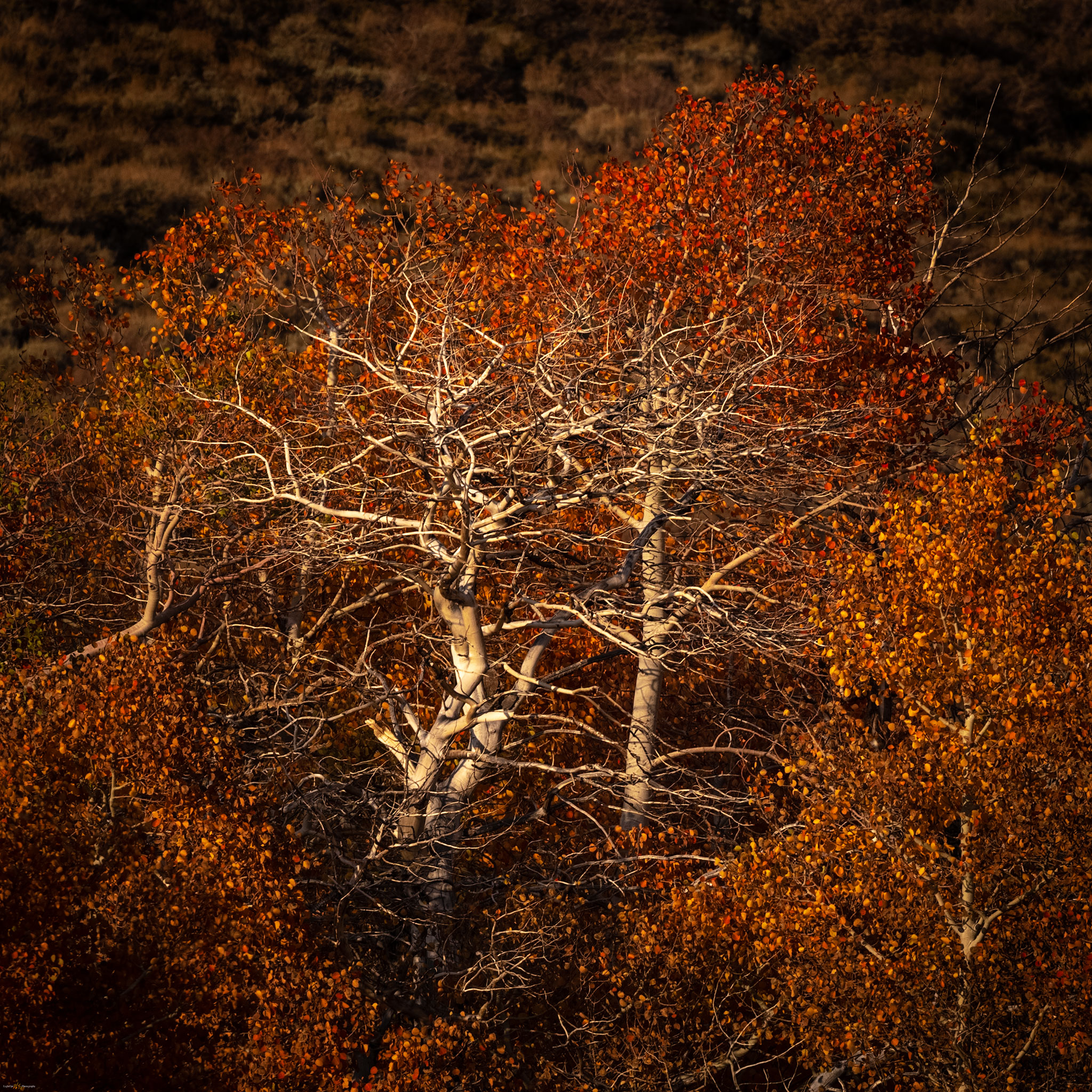
Dendritic heart. Taken in a riparian corridor of the eastern Sierra Nevada. This grove pulled me from my worries of an evening in late autumn. I took dozens of photographs of the aspens. It was only in later review that the heart popped out at me, sending a message that I must have known was there.
Promised harvest. Pinenuts have provided subsistence for millennia across the western and central Great Basin. Their productivity continues as insurance against the dark days of winter. The seeds abound.
Winter stand. Sometimes my photographic journeys are not productive. I often think the light is wrong, my mind is wandering, or I just don’t see. Wandering and chatting with my brother, I set my camera directly on the frozen pond, the long lens scudding on the thin ice. The image was unexpected, balanced, and strong. Taken just the other day on the shores of Washoe Lake, Nevada, we should cherish the unexpected. This winter stand will be colorful in spring, the water and wetland alive; we can be too.

I hope you have enjoyed the 2020 collection. I would, of course, be happy with the validation of you ‘liking’ the same ones from my varied galleries, but, in the end, these are about my year and, honestly, about me. I see quite a lot about my worries and conflicts in 2020, but I also see the beauty that as yet remains hidden in the landscape of 2021.

12 for 2020 Collection

I wish good things in 2021 for all of us. Keep going.

Please respect the natural and cultural resources of our public lands.
#naturefirst #keepgoing

  • « Go to Previous Page
  • Page 1
  • Page 2
  • Page 3
  • Page 4
  • Page 5
  • Page 6
  • Interim pages omitted …
  • Page 10
  • Go to Next Page »

Trail Option

Copyright © 2026 · Monochrome Pro on Genesis Framework · WordPress · Log in

  • Contact TrailOption
  • Substack
  • Waypoints Bibliography
  • Young Archives