• Skip to primary navigation
  • Skip to main content

Trail Option

A personal geography of landscape and place, art and geo-science.

  • Home
  • TrailOption Blog
  • WayPoints
  • Galleries
  • About
  • Contact TrailOption
  • Subscribe!
  • Show Search
Hide Search

intimate landscape

Black Rock Desert Recce

D. Craig Young · March 13, 2017 · 2 Comments

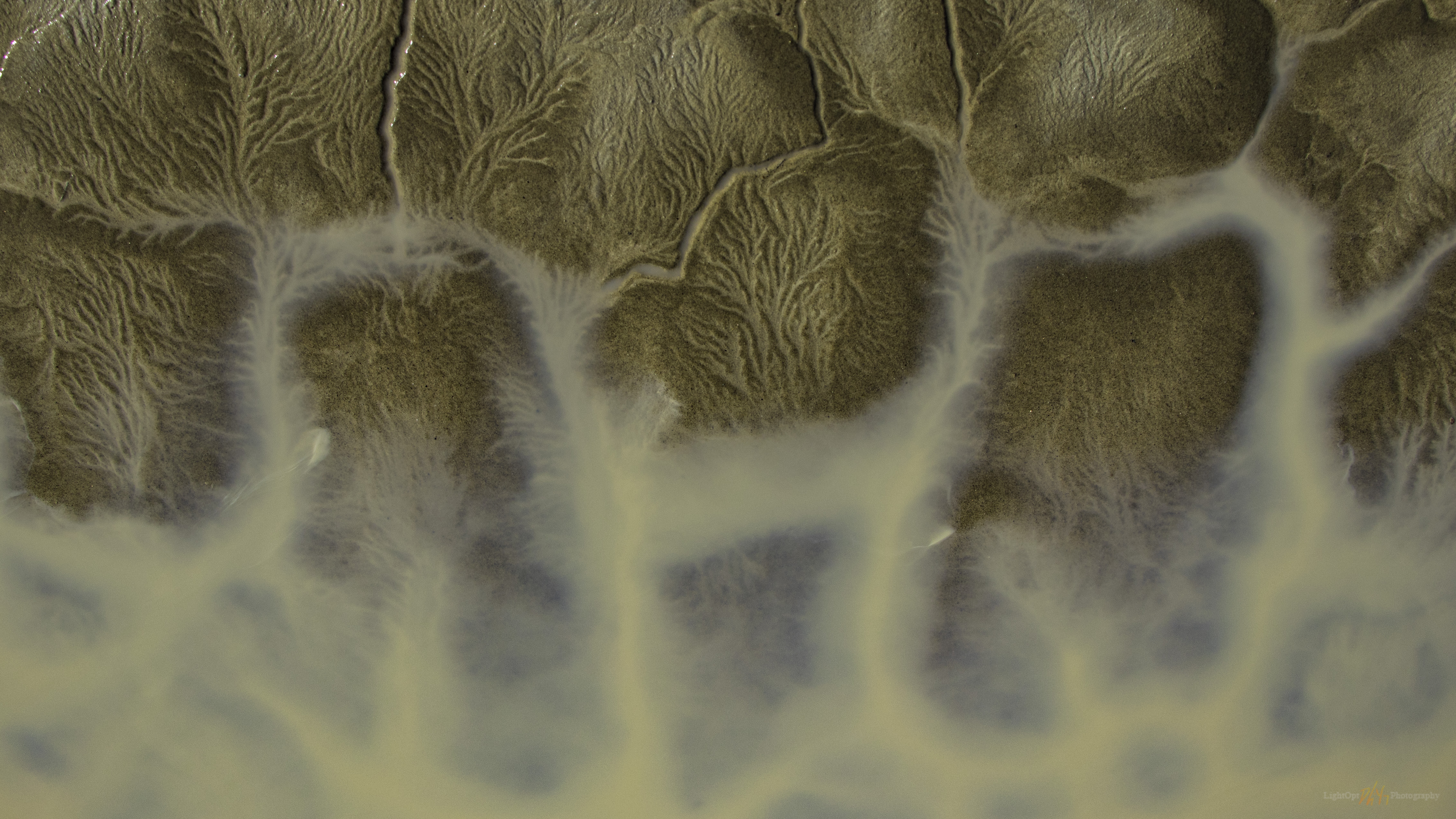
Dendritic sheet. Dendritic, tree-like, drainages form in each drying polygon as puddles dry, and a few square centimeters of playa becomes a whole other world. When the sky doesn’t add to the story, look close. 1/1250 sec, f/5, ISO 100; Canon 80D, 18-135mm.

The Black Rock Desert of northern Nevada is the epitome of expansive space as its vast playa, the remnant lakebed of pluvial Lake Lahontan, rolls off the horizon in all directions. I have been wandering and researching this awesome landscape since the 1980s. Although popularized by denizens of Burning Man – a conceptually nice idea, run amok by human desire for community and expression, that which, it seems, cannot be created at home – the desert playa and its surroundings hold a place in my heart. It is also a splendid research laboratory for investigating the paleogeography – geology, climate, and culture – of a vastly changed landscape.

Anyway, Black Rock Desert photography has transformed into street photography set in somewhat ephemeral Black Rock City. Burning Man imagery dominates any search for any genre of Black Rock photography. That’s fine, the event produces compelling and evocative images. But the Black Rock is more than Burning Man, and I hope to remind myself, and others, that there is beauty and drama beyond the now lost utopia of Burners. A primary goal is to make the desert and its surroundings a focal point of my photographic journey. We’ll see where it takes me…
Black Rock Recon Collection

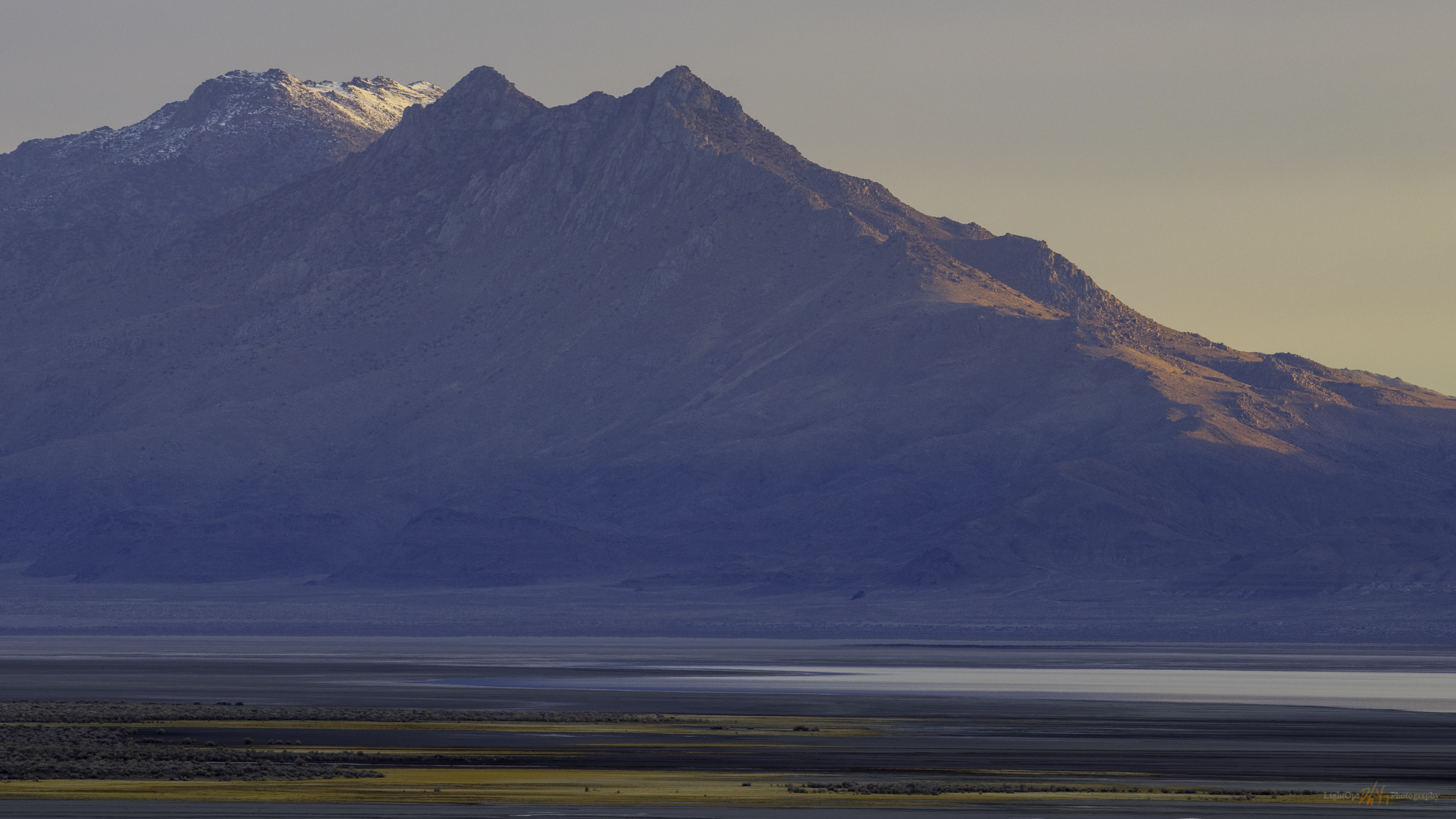
Limbos and Kumiva Peak. Stopped along the highway to watch the sunrise and take first images with new telephoto lens. 1/13 sec, f/11, ISO 100; Canon 80D, 70-200mm.

Not that this quick trip really initiates anything, but it was my first time out to Black Rock with photography in mind. There had been some late winter storms in the previous few days, but the light did not reward me. My opportunities were somewhat narrow as I also needed to recon an archaeological site for an upcoming project, a long drive for a single day out – days still short here in the late winter.

I was hopeful as this this was my first day in the cold desert with my new 70-200 mm f/4L lens. I didn’t make a lot of use of it, still too focused on the wide compositions in a big space; I see now that this should change, especially on days when the sky doesn’t add to the story. I did pause along Winnemucca Lake at sunrise to capture the Limbo Range and Kumiva Peak. The colors of the distant foreground, salt grass on the playa margin, make the image work for me.
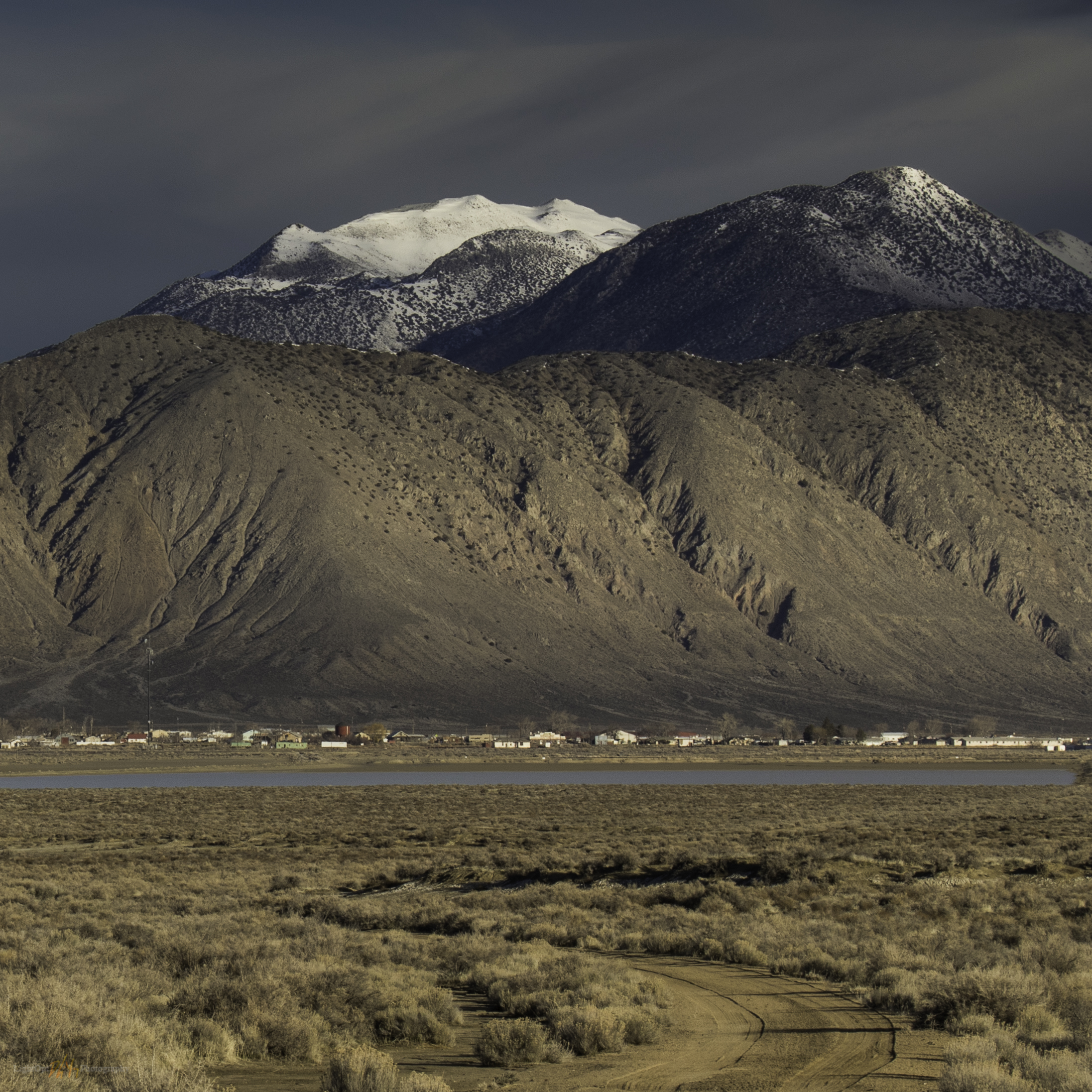
Small town. The town of Gerlach, NV, dwarfed by the Granite Range. 1/160 sec, f/11, ISO 100; Canon 80D, 18-135mm.
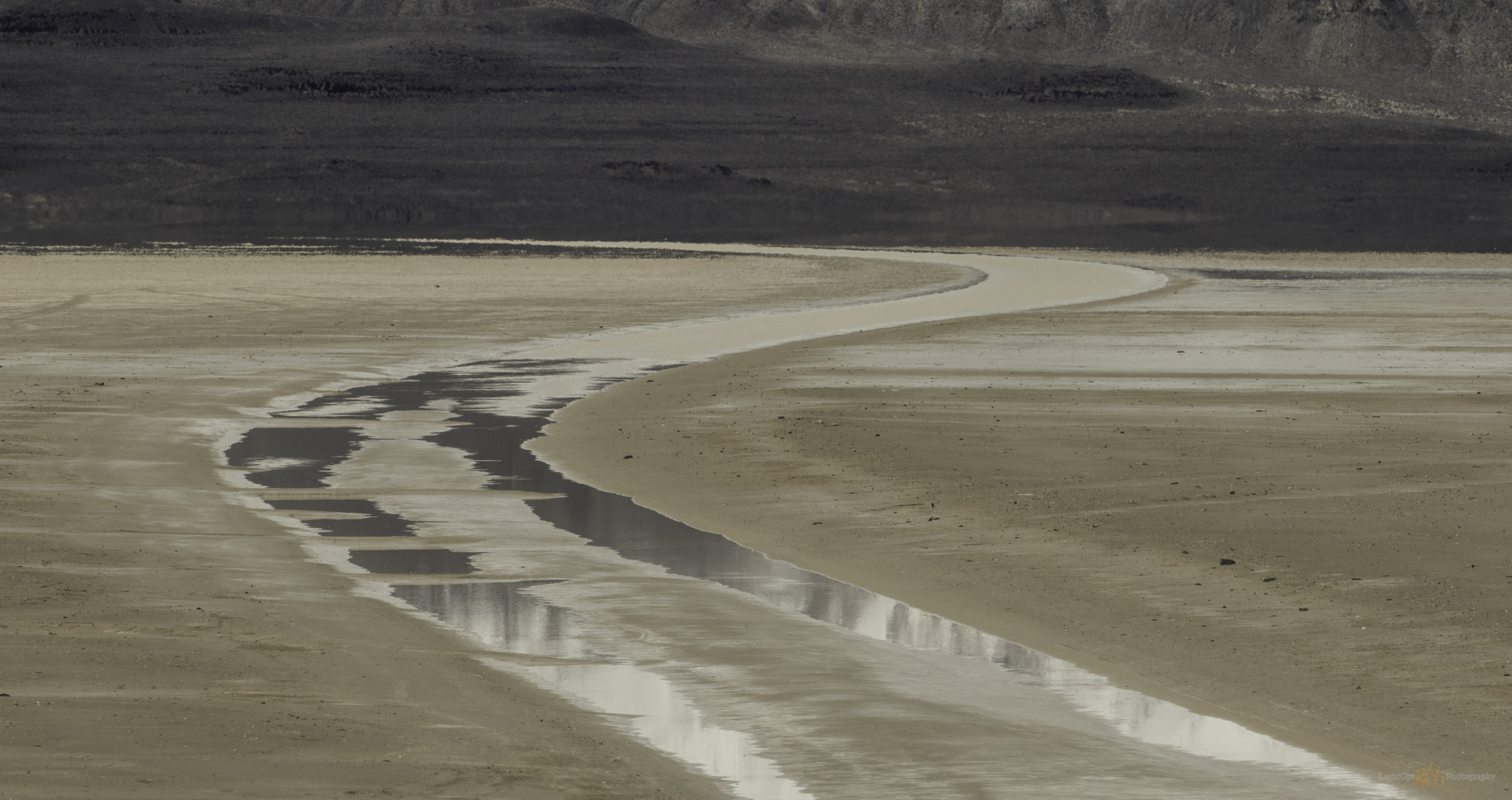
Anansi’s Trail. Playa track after fleeting rain. Tried dozens of compositions to capture the metallic curve on the Black Rock Playa. 1/80 sec, f/14, ISO 100; Canon 80D, 18-135mm.

Near Trego Hot Springs, I walked onto the playa where I really wanted to capture the water-filled path and the curve of the former lakebed. I tried several different compositions of the same pattern, working hard to catch the mirage shimmering on the edges of any distant boundary. Finally, I cropped the far-away mountains, were former shorelines cut into volcanic rocks, to highlight the metallic S flowing to the middle horizon. An ephemeral day on the playa.

Black Rock Recon Collection

Keep going.

Stillness at Walker Lake, NV

D. Craig Young · February 24, 2017 · Leave a Comment

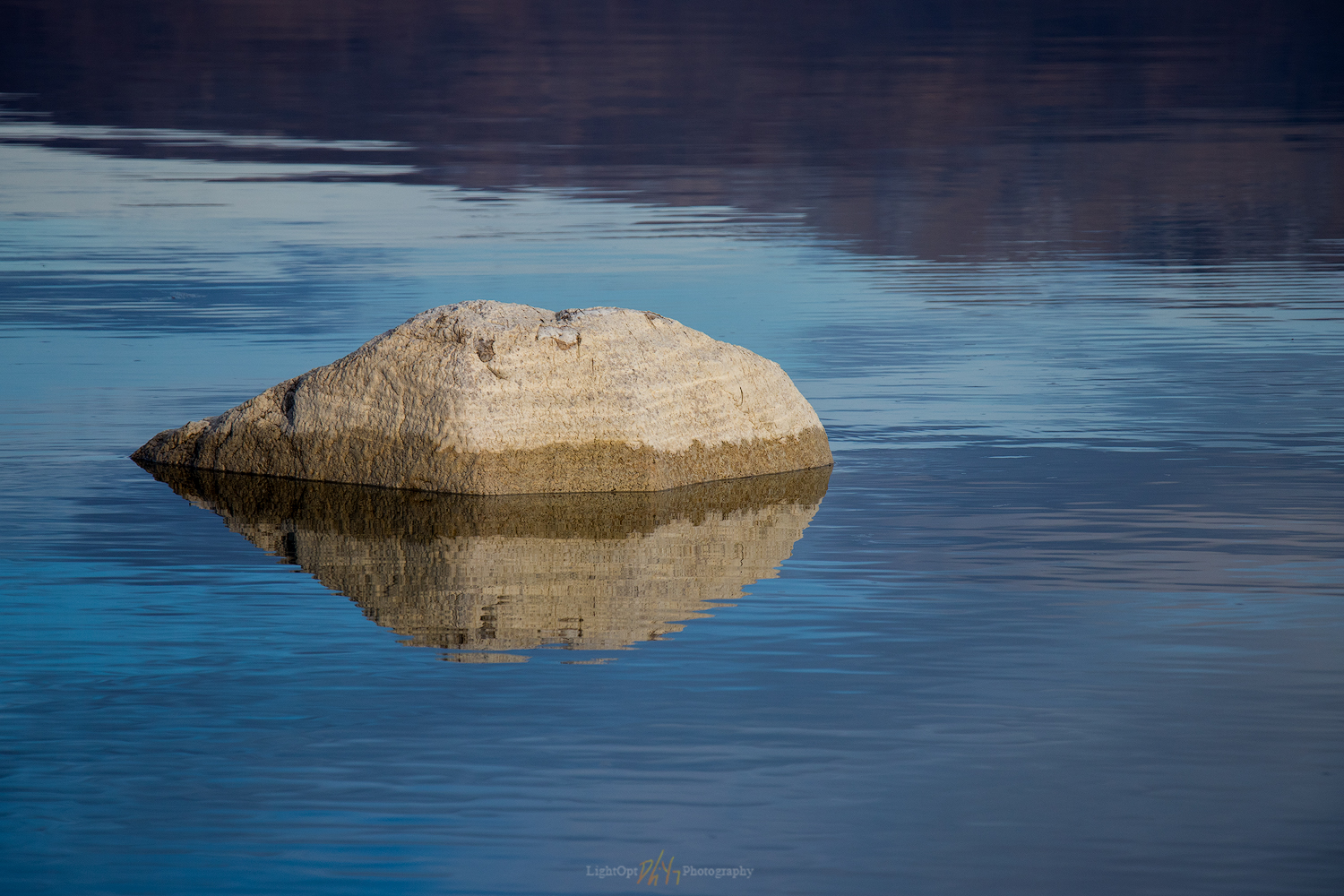
Stillness. 1/500 sec, f/5.6, ISO 100; Canon 80D, 18-135mm.

On any other day I might have composed this image with a neutral density (ND) filter and a long exposure. Today, however, even the vast Walker Lake was a reflecting pond. Although the composition initially included the distant mountain range, this image worked best as a close crop on the tufa-crusted boulder.

I approached Walker Lake from the south at sunset, good timing after a long day’s drive. I have traversed this highway many times and spent some time on the lake, but I had never seen the glass-like stillness of this large remnant of pluvial Lake Lahontan. Amazed, I decided I needed a break from the windshield and turned off Highway 93 at Sportsmans Beach. I found the boat-ram perched far above the lake, even after the very wet winter.

I considered setting up on the roadways of the camp and picnic ground overlooking the lake, but the vast body of water and mostly clear skies dwarfed the Gillis Range in the distance. I was still enamored with the potential for wide images (and have not lost the bias for the wide favorite composition), but could tell that the blue lake and blue sky in a wide shot was not what I wanted. I was drawn to the calm of the lakeshore. Grabbing my monopod and 80D, I jogged down broad beach to the water. The light was turning toward its golden-hour peak but a few mid-level clouds in the west where about to shut it down, attenuating any later reflective drama.

Walker Lake Stillness Collection

I set up a few compositions on the reflective shore area and then turned to occasional bursts of color on the mountain-front of the Gillis Range. I found several reflection compositions, but most where too busy with jumbly boulders and swamped tumbleweeds. It wasn’t until I zoomed in (and ultimately cropped in post) that I captured the close-up magic of what I felt in the calm and silent shore.

I tried some wide-angle reflective images but they feel unbalanced and lack much interest. I like the Gillis Range panorama, but only because I have climbed to its summit, otherwise the photo has no real subject. The contrasty mountain view is the color pallet I really like, but the foreground, or basic lack thereof, muddles the shades of the faraway desert hills. Looking back, I also think I could have used a lower ISO setting to get rid of a small amount of low-light noise; it seems I didn’t trust the monopod, further revealing my inexperience with exposure settings.

Gillis Range Pano. 1/400 sec, f/9, ISO 400; Canon 80D, 18-135mm.

A four image panorama of the Gillis Range. Not the best composition. I’d hoped for colorful sky, but mid-level clouds to the west blocked the setting sun. Still, I’ve always liked the Gillis Range.

North Gillis Sunset. 1/320 sec, f/9, ISO 400; Canon 80D, 18-135mm.

I love the color pallet and contrast of desert mountain ranges. I hate not finding a foreground to go with the distant hills. Probably too much uninteresting sky here too.

Following. Although nowhere to be seen, a young coyote led me up the beach. 1/30 sec, f/9, ISO 400; Canon 80D, 18-135mm.
Maps. With the sky a disappointment, I looked for those intimate landscapes, shapes on the ground. 1/400 sec, f/9, ISO 400; Canon 80D, 18-135mm.

Walker Lake Stillness Collection

Walking back toward the truck in fading light of the beach, I found some intimate compositions of coyote tracks and sandy erosion. On the day, I may be most happy with these simple, monochromatic images. A worthwhile stop, all in all.

Keep going.

  • « Go to Previous Page
  • Page 1
  • Page 2

Trail Option

Copyright © 2026 · Monochrome Pro on Genesis Framework · WordPress · Log in

  • Contact TrailOption
  • Substack
  • Waypoints Bibliography
  • Young Archives