• Skip to primary navigation
  • Skip to main content

Trail Option

A personal geography of landscape and place, art and geo-science.

  • Home
  • TrailOption Blog
  • About
  • Contact TrailOption
  • Subscribe!
  • Lost Journals
  • Show Search
Hide Search

geomorphology

Nevada High Points #115 – Mountain Boy Range

D. Craig Young · January 12, 2024 · Leave a Comment

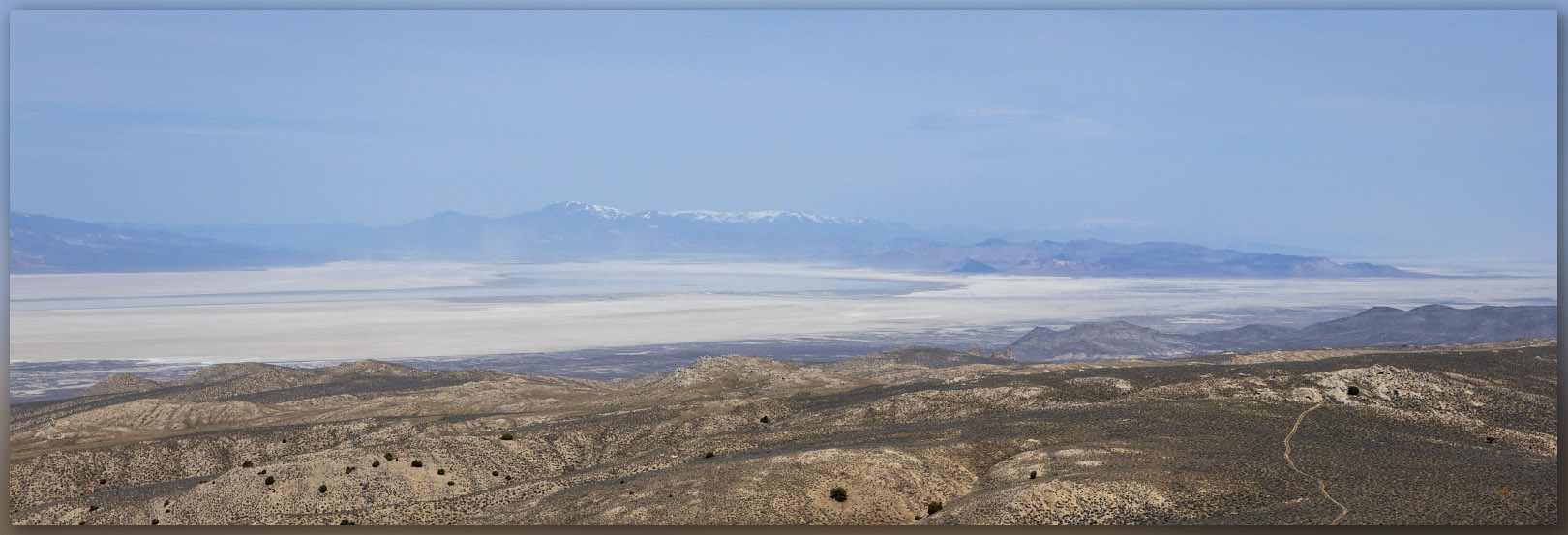
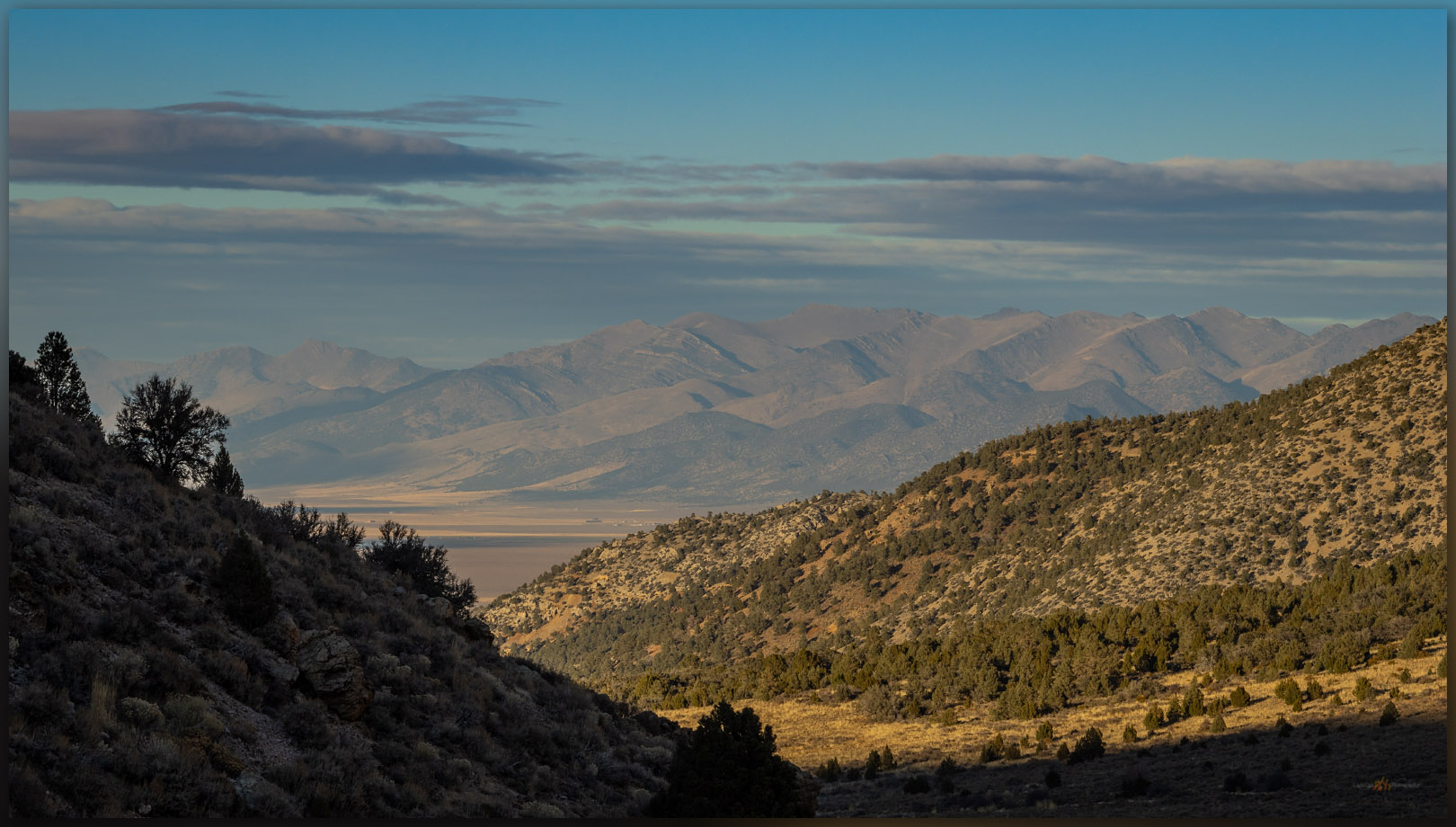
Below Mountain Boy. Looking into Diamond Valley from the slopes of the Mountain Boy Range, Great Basin Desert, NV, USA

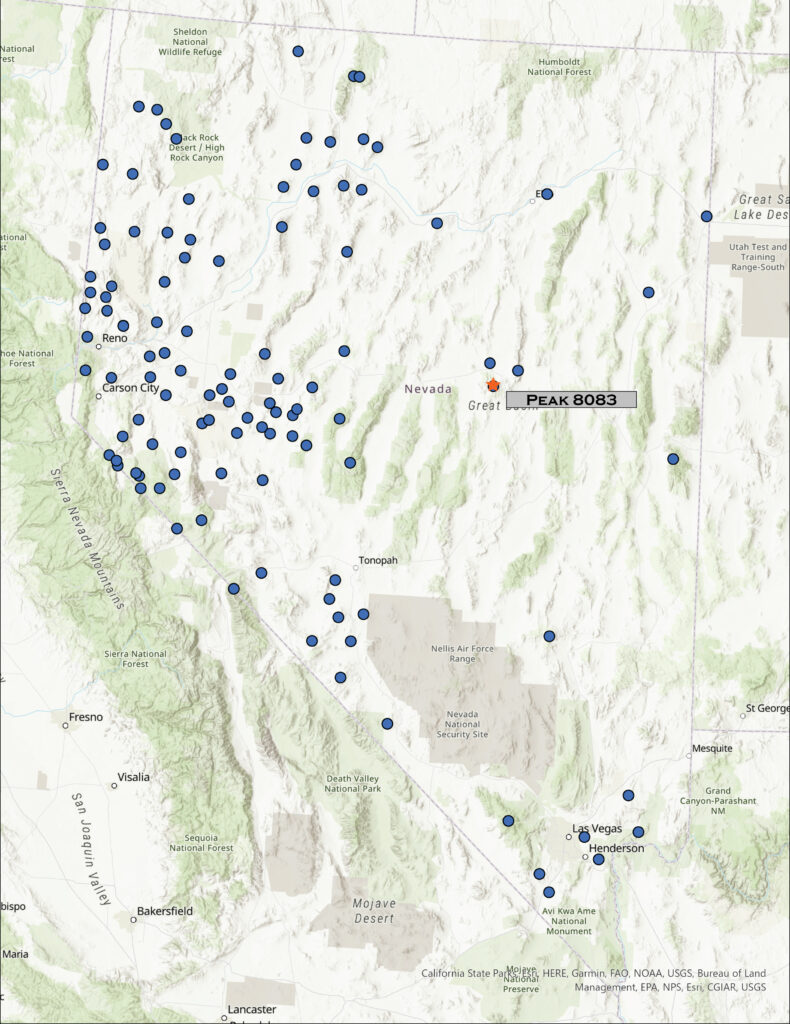
Peak 8083

8083 ft (2464 m) – 804 ft gain

2023.11.09

Mountain Boy Collection


Following several days of landform reconnaissance along Highway 50, across central Nevada, I met Darren in Austin, Nevada, where he had been working with a crew recording archaeological sites in the Toiyabe Range. It was the end of a working field rotation, but we decided to take advantage of Second Friday, heading toward the Mountain Boy Range near Eureka. We skirted along the northern and eastern margins of the range on a well-used dirt road through Spring Canyon. This leads to the eastern arm of Spring Valley, tributary to Diamond Valley to the north, below the Mountain Boy Range and the much more prominent Fish Creek Range – I look forward to climbing to its high point at Prospect Peak.
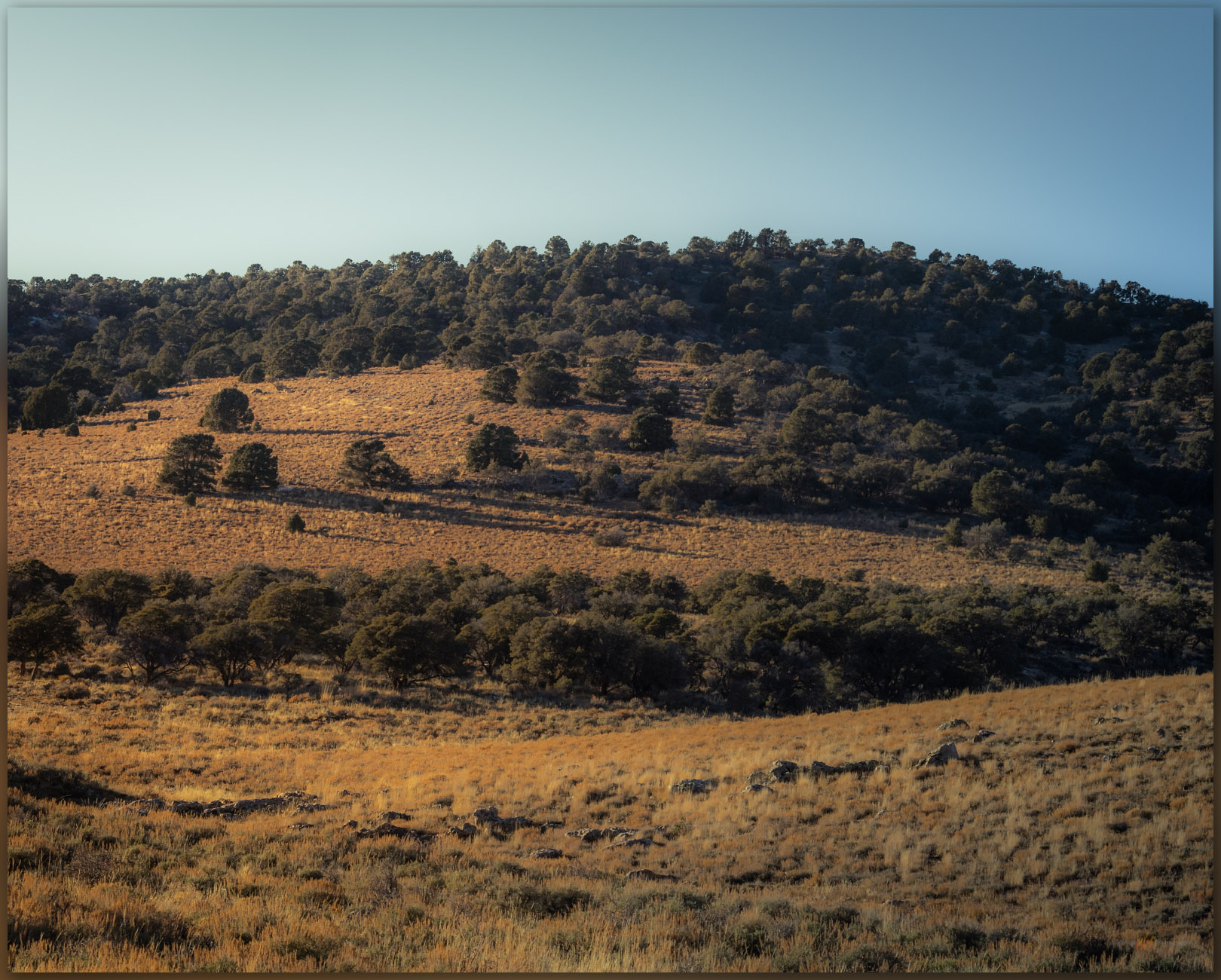
Gentle summit. It is an easy gradient toward the high point of the Mountain Boy Range, Great Basin Desert, NV, USA

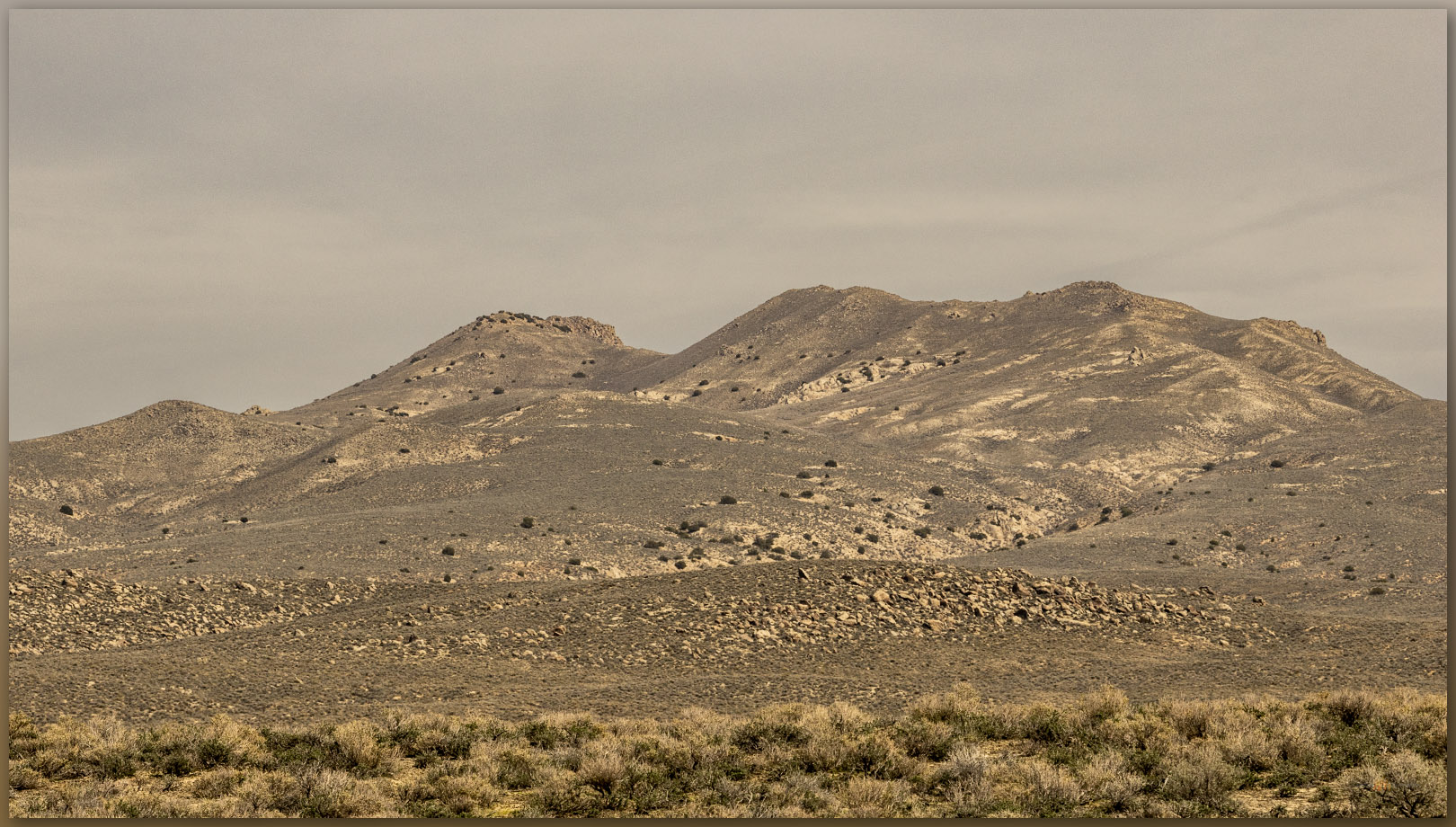
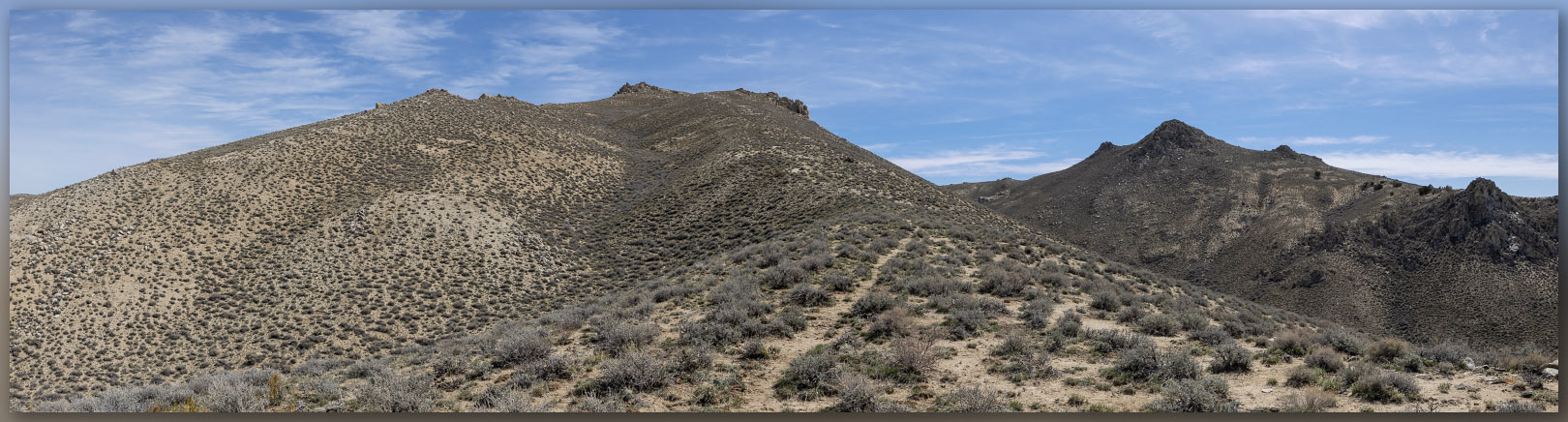
We walked the road for a while before turning uphill to the north. It is an easy wander through pinyon-juniper woodland, skirting new snow, to the broad summit at Peak 8083. Spanish Peak looks nice to east and it is a more well-defined ‘peak, but it is lower than the rocky plateau where the ‘peak’ of Peak 8083 is a misnomer. Moving back and forth from rock to rock, hummock to hummock, we had to search for the small cairn that held the summit register. Still, it was nice to be at altitude and get a walk in, once again, with Darren.
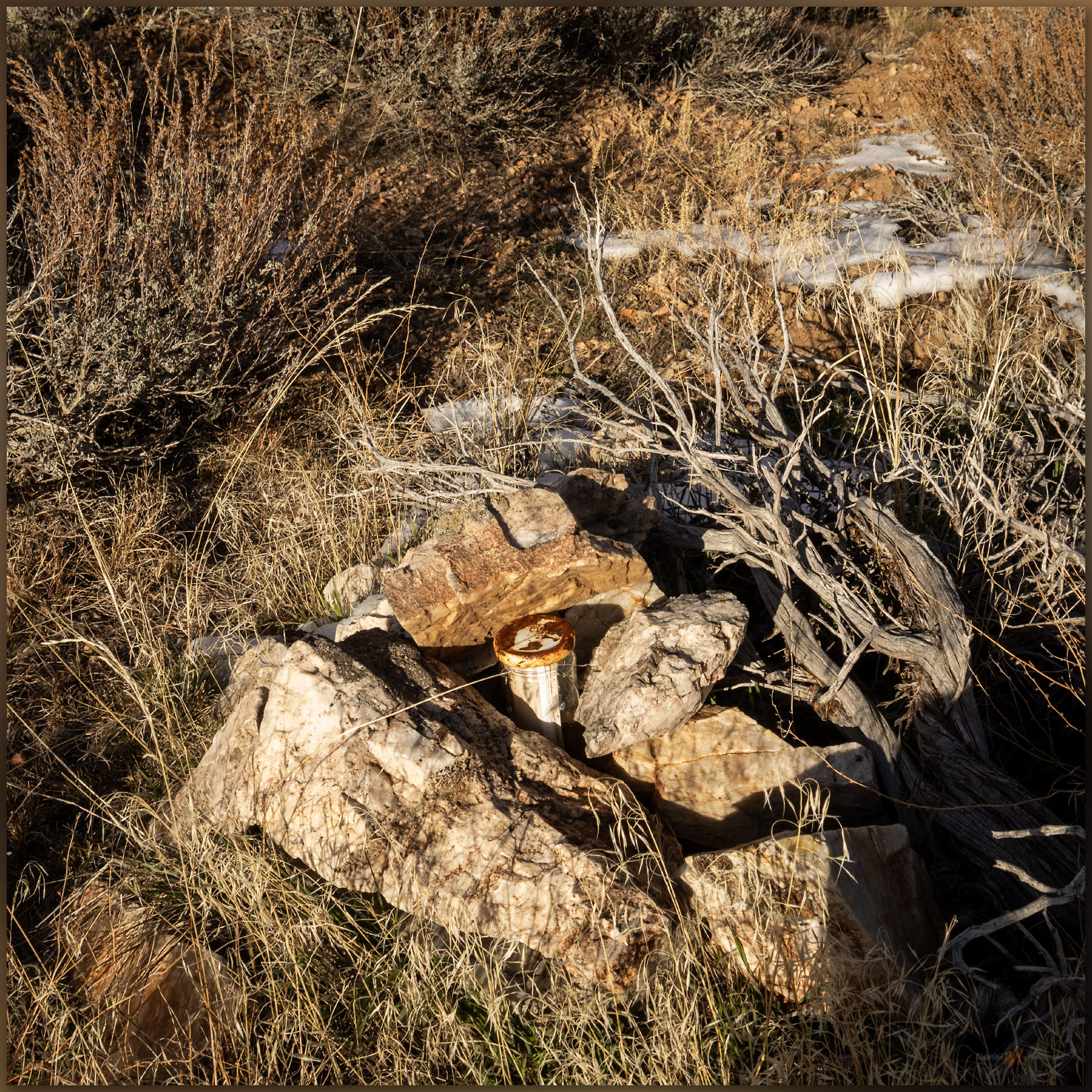
Mountain Boy register. The summit register rests in a low cairn marking the broad high point of the Mountain Boy Range, Great Basin Desert, NV, USA
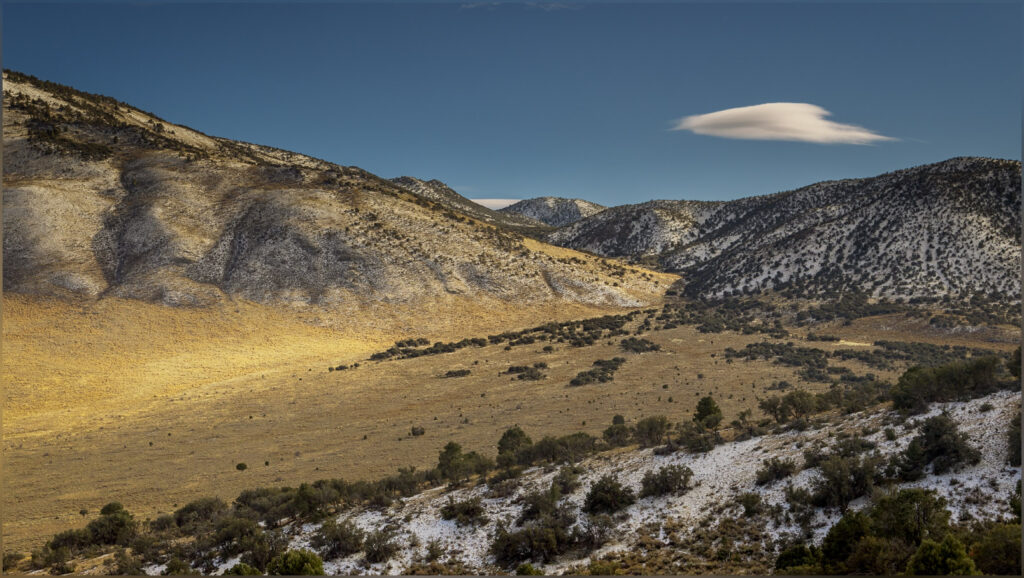
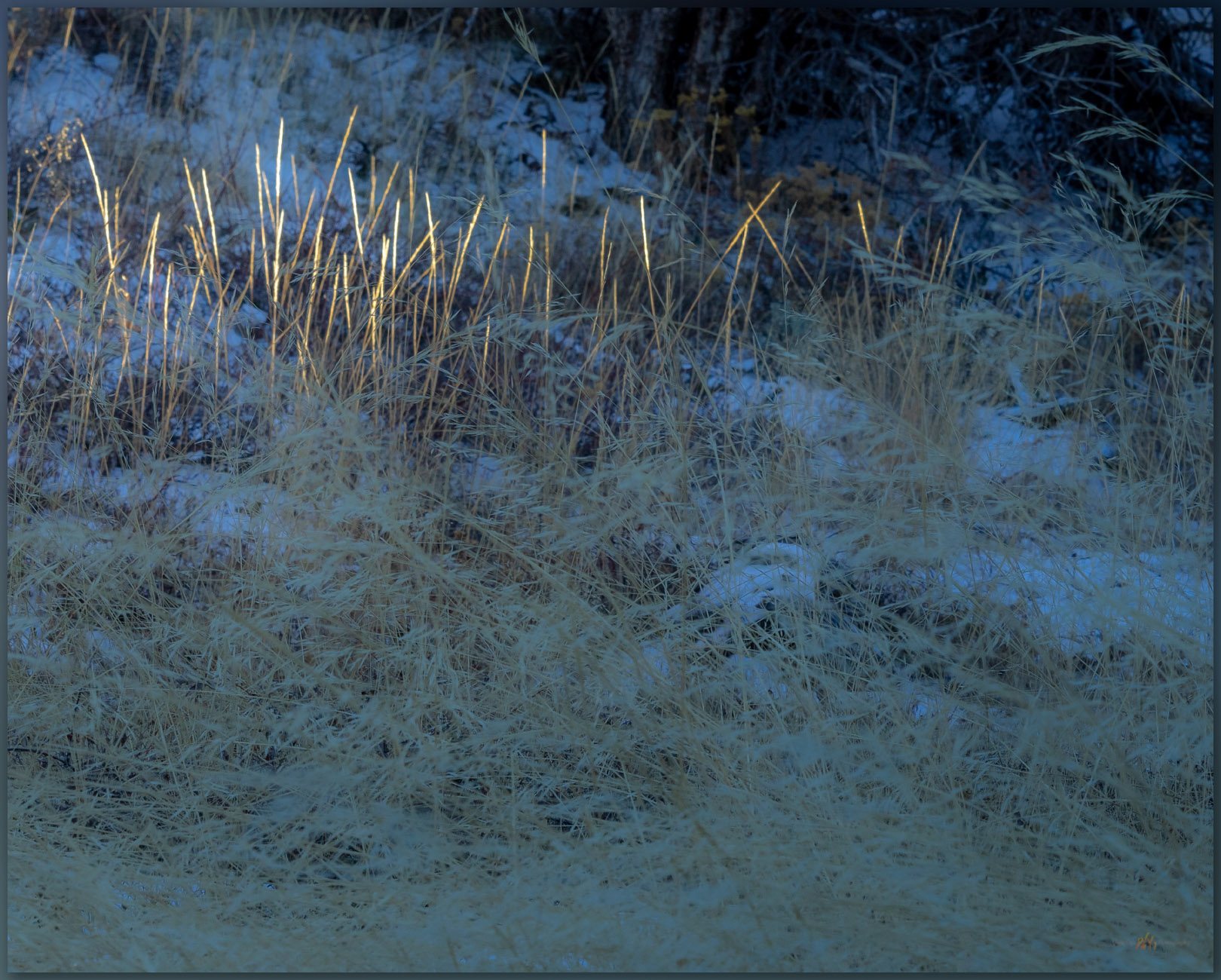
Light tips. Last light in a canyon of the Mountain Boy Range, Great Basin Desert, NV, USA
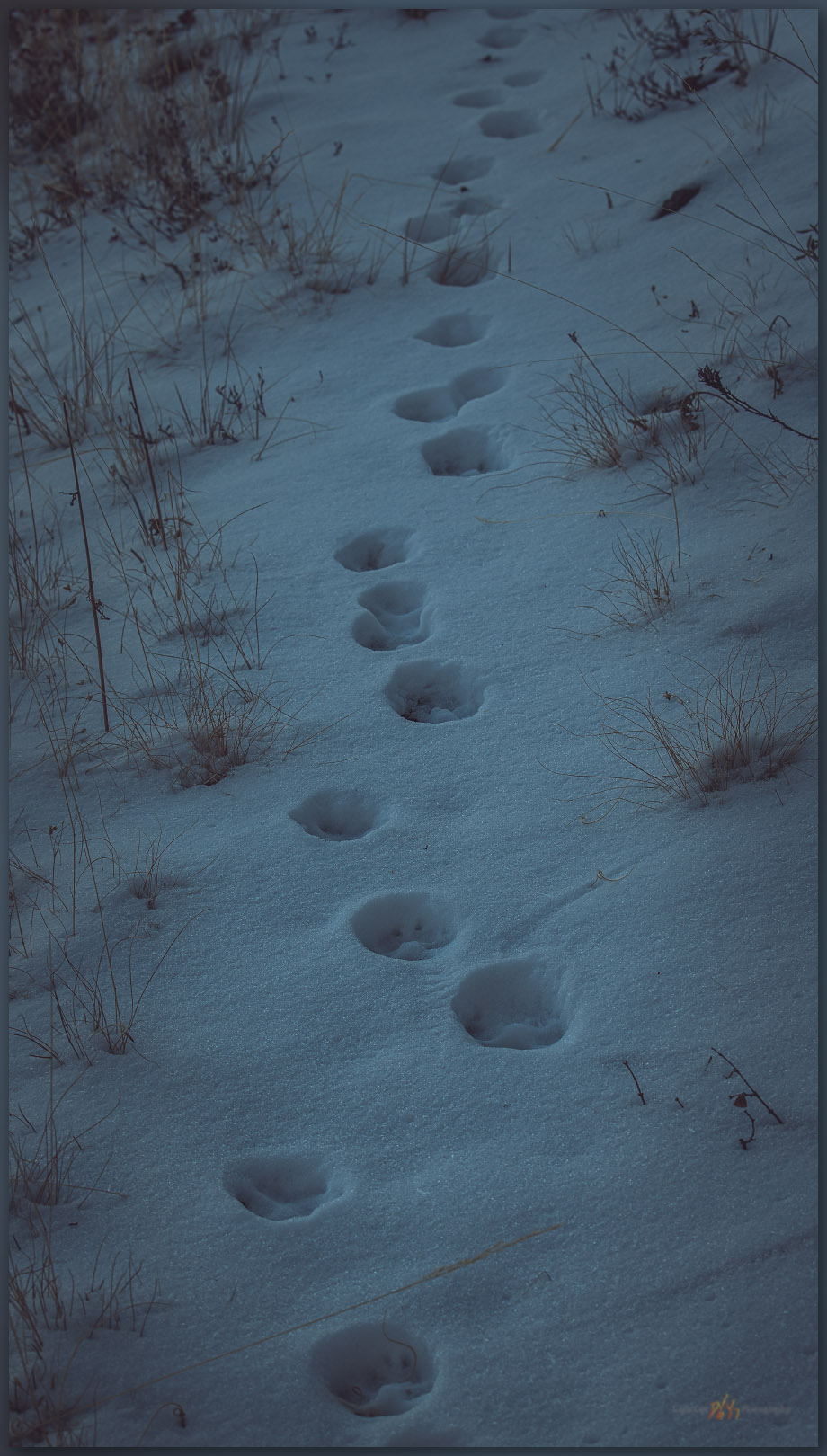
Tracking away. A coyote traverses away from the summit of the Mountain Boy Range, Great Basin Desert, NV, USA

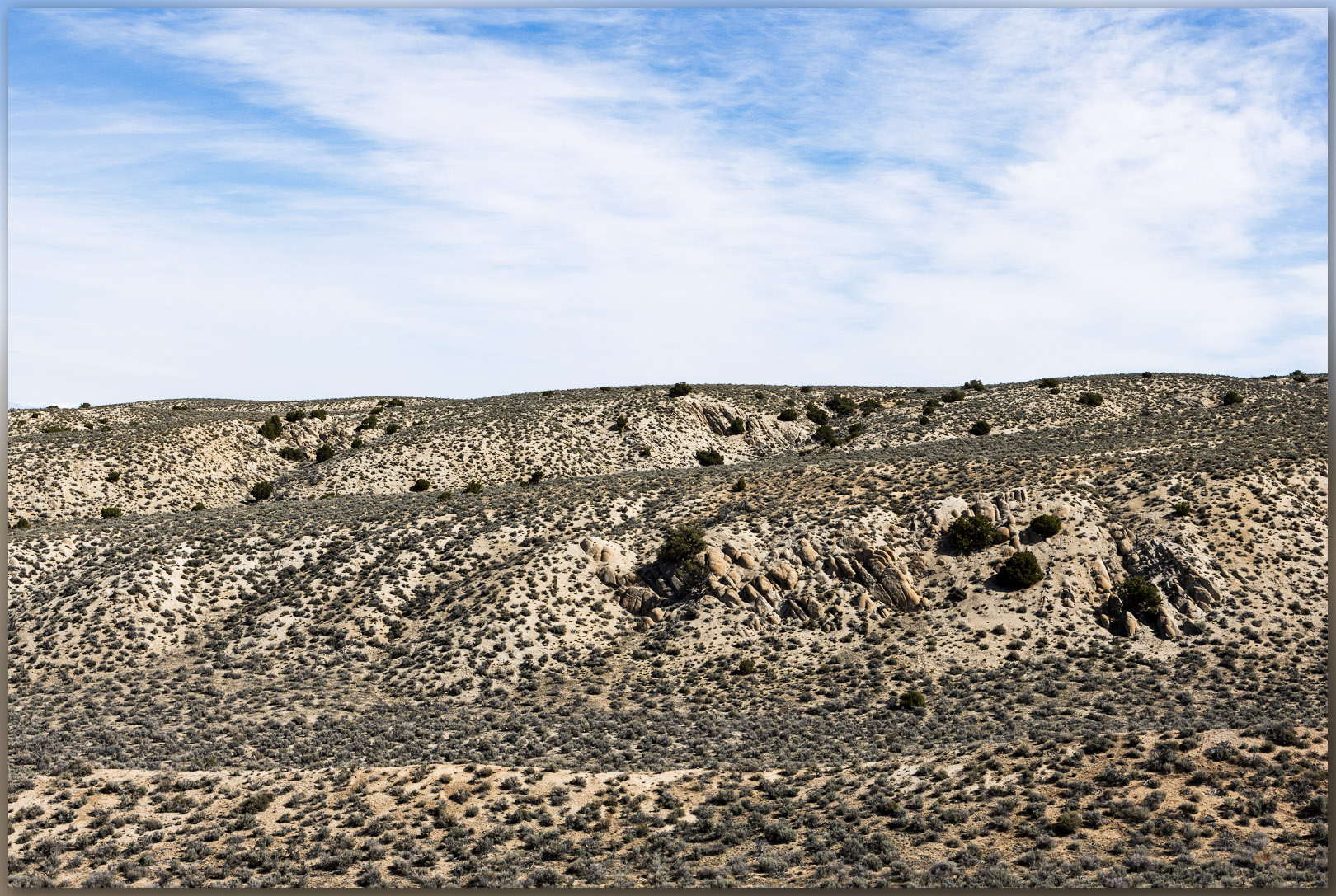
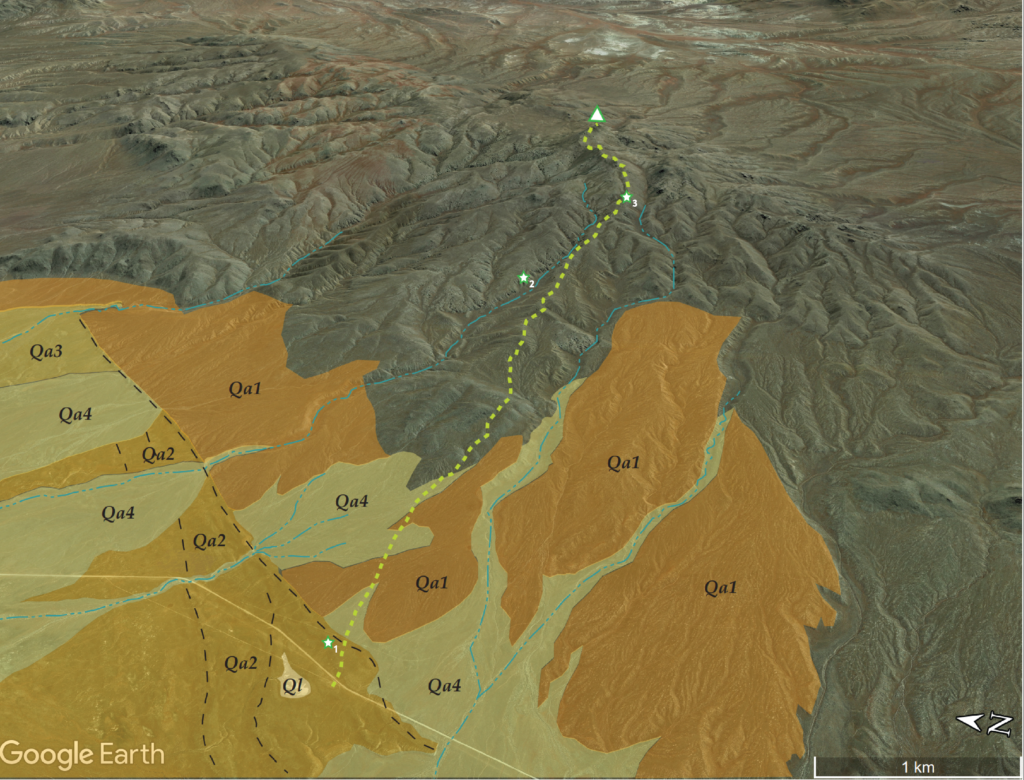
On the way down the south-facing slopes, after tracking through some snow patches following a coyote, I focused on the broad set of alluvial fans emanating from the Fish Creek Range. There is a lot going on there. I easily recognized a series of overlapping alluvial fans, their cross-cutting relationships clear in the contrast of golden-hour light; these would make a nice map. There are at least three ages of fan development along the mountain front. The oldest ones (Qf1) are generally smooth with younger fans truncating their ends, the youngest (Qf3) have rough surfaces formed of convex debris flows and intervening rills. Active drainages (Qa2 and Qa1) combine along the ends of the fans to direct runoff into Spring Canyon and on to Diamond Valley.  
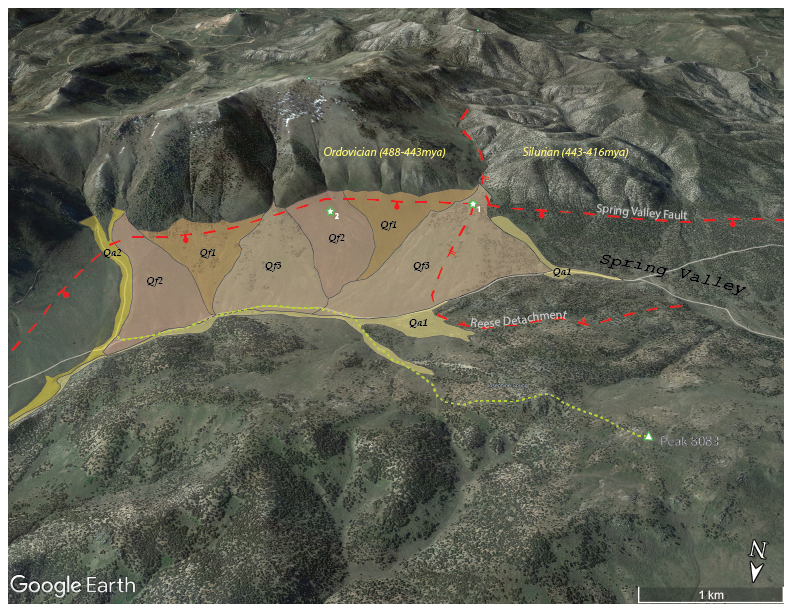
Quaternary landform map of eastern Spring Valley at Peak 8083, Mountain Boy Range, Nevada
Intersections. The Spring Valley fault intersects the Reese Detachment fault, now buried by an alluvial fan in upper Spring Valley, Great Basin Desert, NV, USA (Map Point #1)

The fans originate at the foot of the mountain front where a typical normal fault – the Spring Valley fault – forms the valley footwall with the hillslope headwall lifting upward. But from the Mountain Boy Range, a unique break is evident in the rocks of the Fish Creek Range. The west ridge of Prospect Peak – toward White Mountain and beyond – is broken by a gradual, low-angle detachment fault formed as the regional mountain blocks tilt and drop in the long-term expansion of the Basin and Range Province. This is the Reese Detachment where Silurian (443 to 416 million years ago) limestones lay against Ordovician (488 to 443 million years ago) limestones and quartzites, the way books slide and fall as bookends are removed. It is a subtle change, as detachment faults are not typically as dramatic as the steeper normal faults that jump along the valley margins, but the change in rocks is very clear, here forming a small reentrant canyon where one of the younger alluvial fans begins. The rocks of the mountain are very old (100s millions), the Reese detachment is old (10s of millions), the Spring Valley fault is young (a few million), and the fans are younger still (10s of thousands to today). It is a fascinating picture, time holding still (at the day’s scale), evident on a simple walk traversing from an unobtrusive high point to an axial valley, watching the opposite hills rising to a mosaic of landforms and rock units.
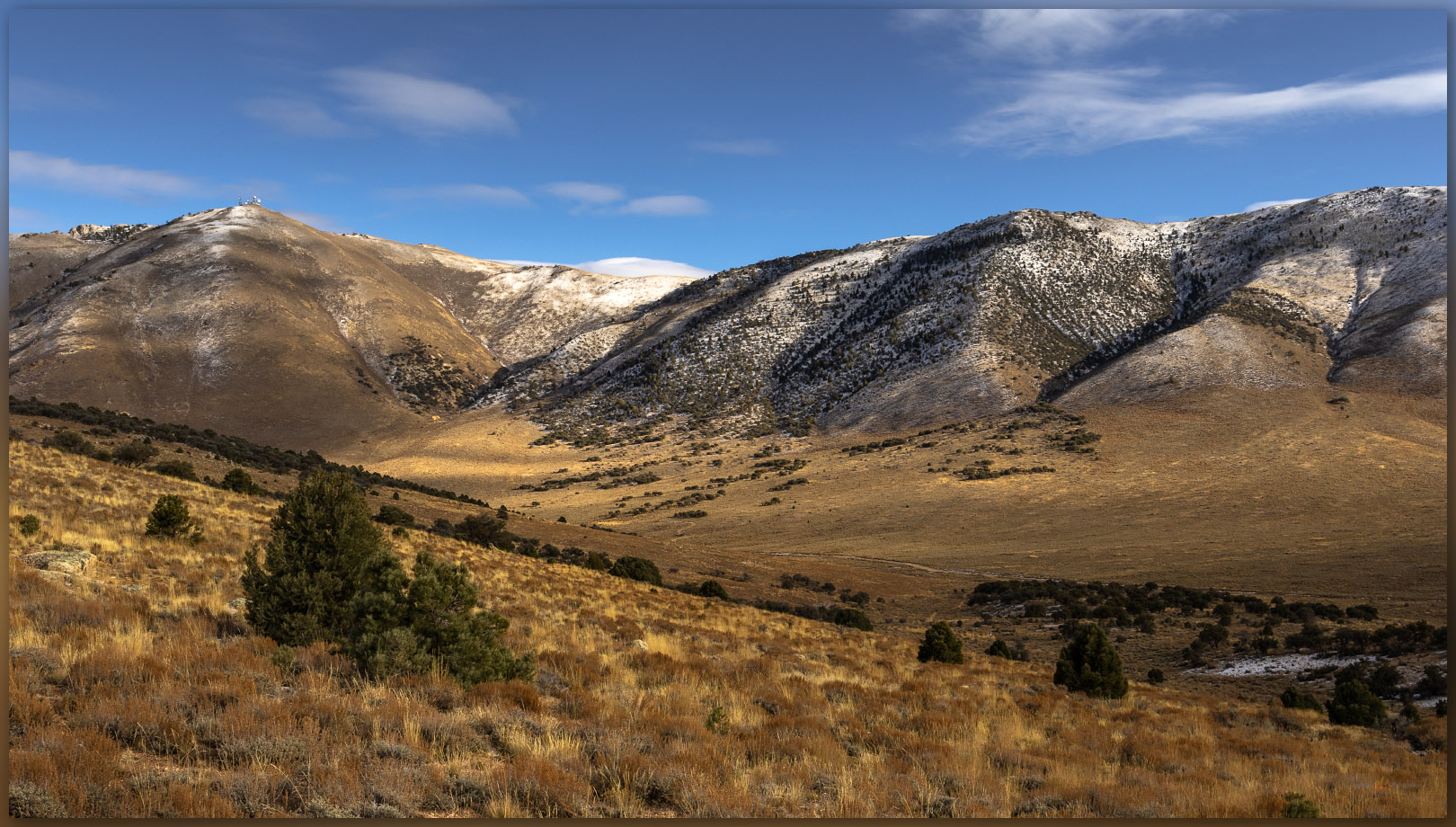
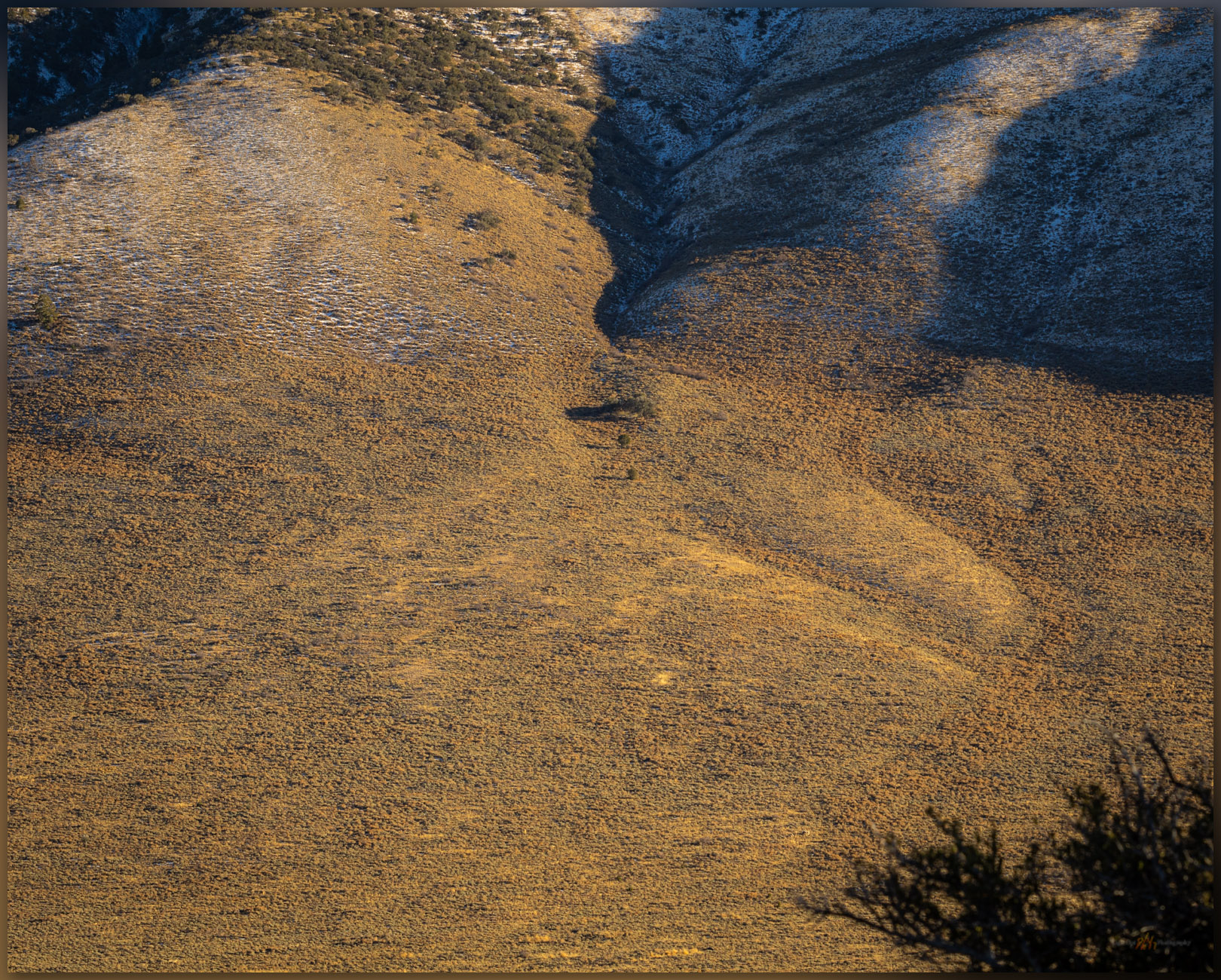
Upland valley fans. Alluvial bajada below the ridges of Prospect Peak in the Fish Creek Range. Opposite the Mountain Boy Range, Great Basin Desert, NV, USA
Last fan. Sediment responds to change in slope below the Mountain Boy Range, Great Basin Desert, NV, USA (Map Point #2)

Mountain Boy Collection

Although I recognized the alluvium of the valley margin as we walked, the bigger picture of time and space only opened to me as I looked into a set of maps to see where we had been. I had slowed to take photographs along the way, pointing my camera at patterns that caught my eye. The mountains are wonderfully colorful, but they became even more wonderful as I pieced together the puzzle collected in the regional maps of the USGS. This is yet another way that the landscape shares its wonder, even when the ‘high point’ of a small group of hills is neither as prominent nor as dramatic as its neighbors. Our curiosity pays off once again.

Keep going.
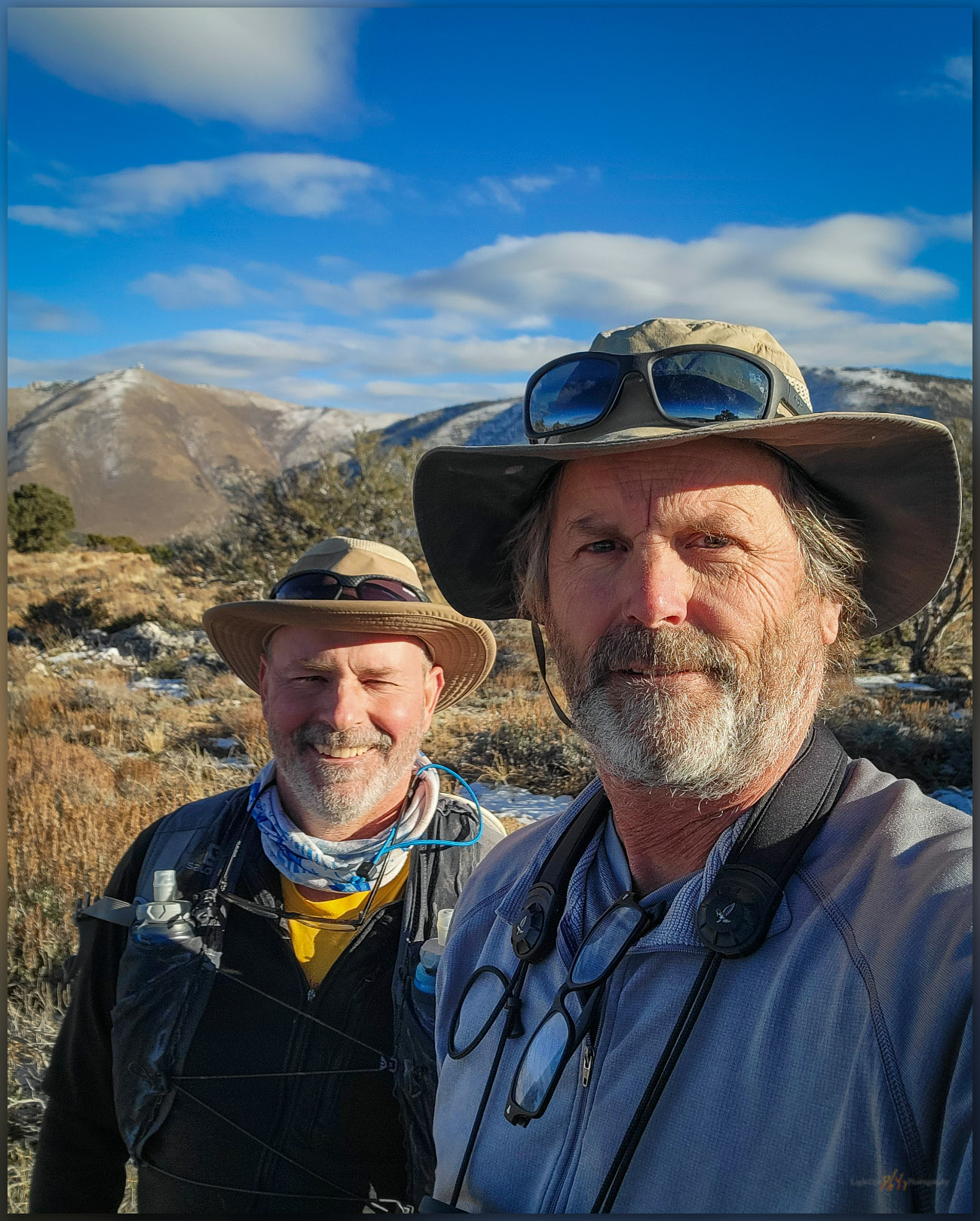
Brothers. A good walk in the hills of the Mountain Boy Range, Great Basin Desert, NV, USA

Nevada High Points #111 – Pahsupp Mountains

D. Craig Young · November 19, 2023 · 5 Comments

Dry Mountain. A good walk in the Black Rock Desert of western Nevada, USA

Dry Mountain

6526 ft (1989 m) — 2800 ft gain

2023.04.16

Pahsupp Collection


It took me awhile to escape Fallon, Nevada, where I attended a conference hosted by the Nevada Archaeological Association, congratulating a colleague on receiving the Silver Trowel, recognition of a career devoted to archaeology in Nevada. From the confines of the meeting rooms, I retreated, none too soon, to the splendid loneliness of a nighttime highway into the Black Rock Desert. I drove for maybe two hours.

At the ‘high road’, our colloquial name for the washboard dirt highway connecting, sort of, Gerlach and Winnemucca, I traverse the southern margin of the Black Rock playa in the dark. I am headed toward the Pahsupp Mountains, where a prominent block rises above Trego Hot Springs at the playa margin, but the range’s high point is stretched out to the south as Dry Mountain (6,526’). As I turn away from the playa, the usual landmarks having long faded into the night, my view is confined to flashy, narrow strips of rabbitbrush bright at the dusty road margins. A jackrabbit darts through the high beams on occasion; hard to tell, but I don’t think it’s the same one each time.

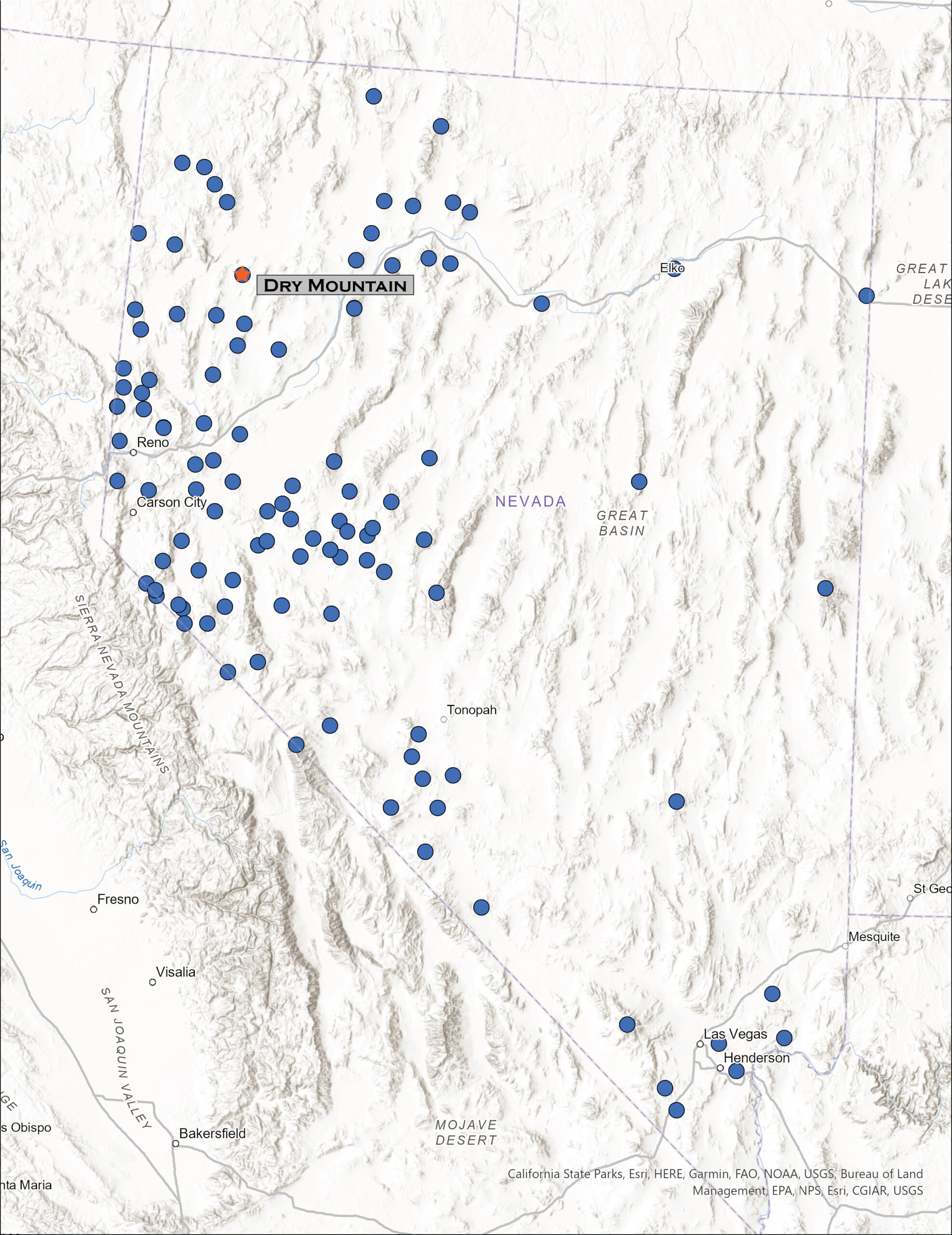
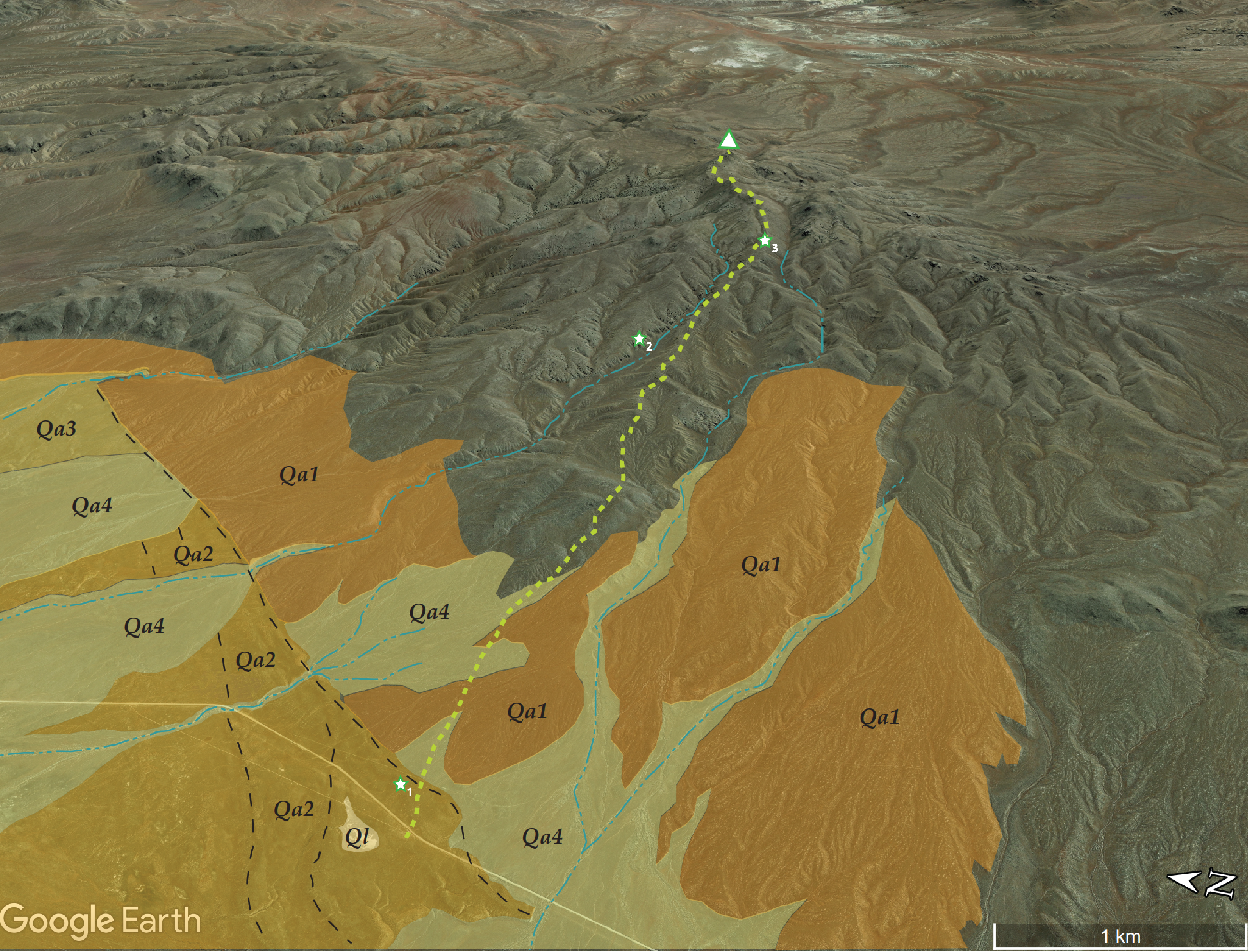
Map of Quaternary landforms near Dry Mountain in the Pahsupp Mountains, Black Rock Desert, Nevada

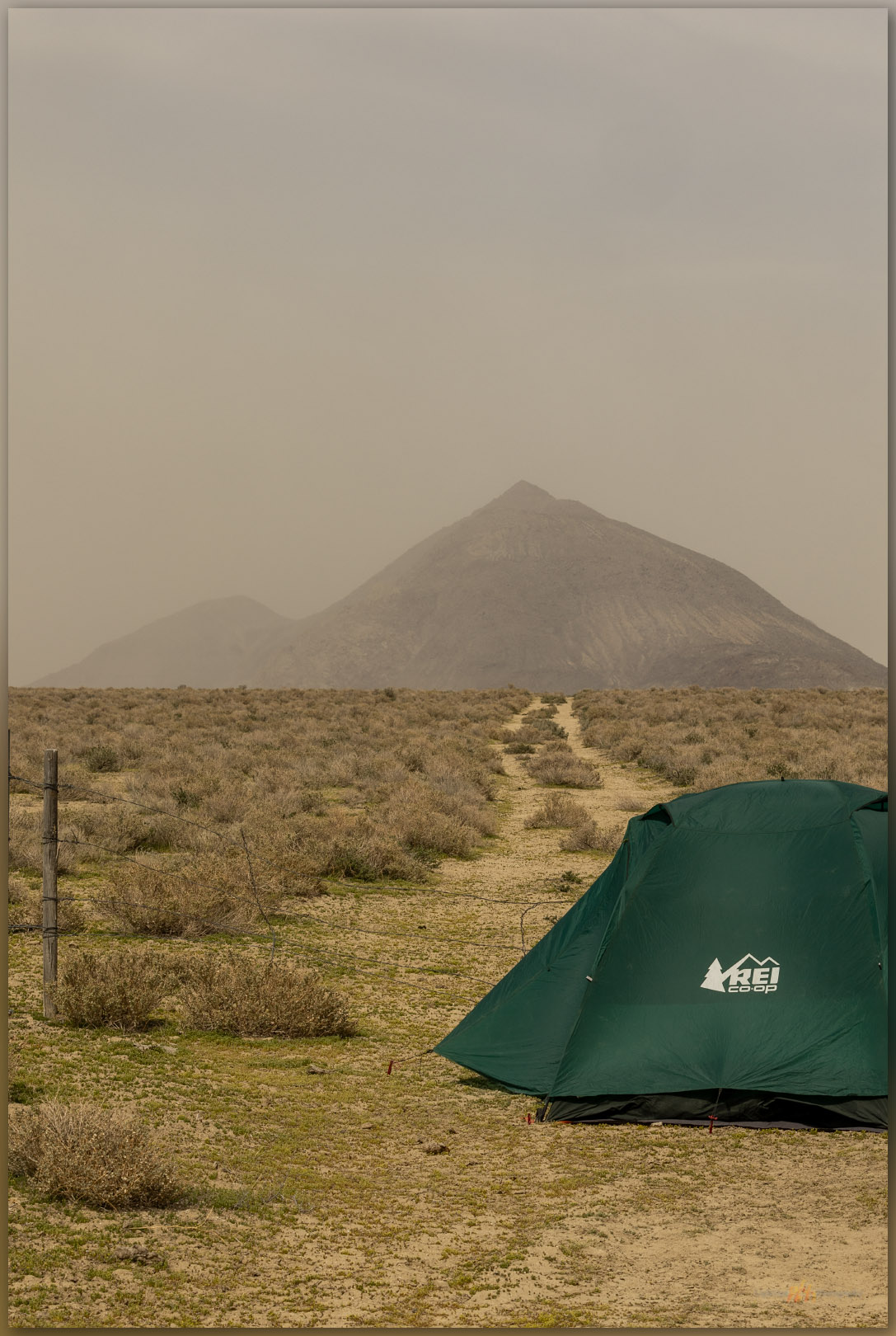
I had scouted on googleland earlier, marking a possible camp in my GPS. The waypoint appears my dashboard screen, finally, and I pull off the road. Not a camp you would write much about, just a wide spot where a two-track takes off from the main dirt. I will not see another car until I am back on the highway tomorrow, so once I climb into my tent, I can immediately forget that I am basically camped adjacent to an intersection. No traffic here.

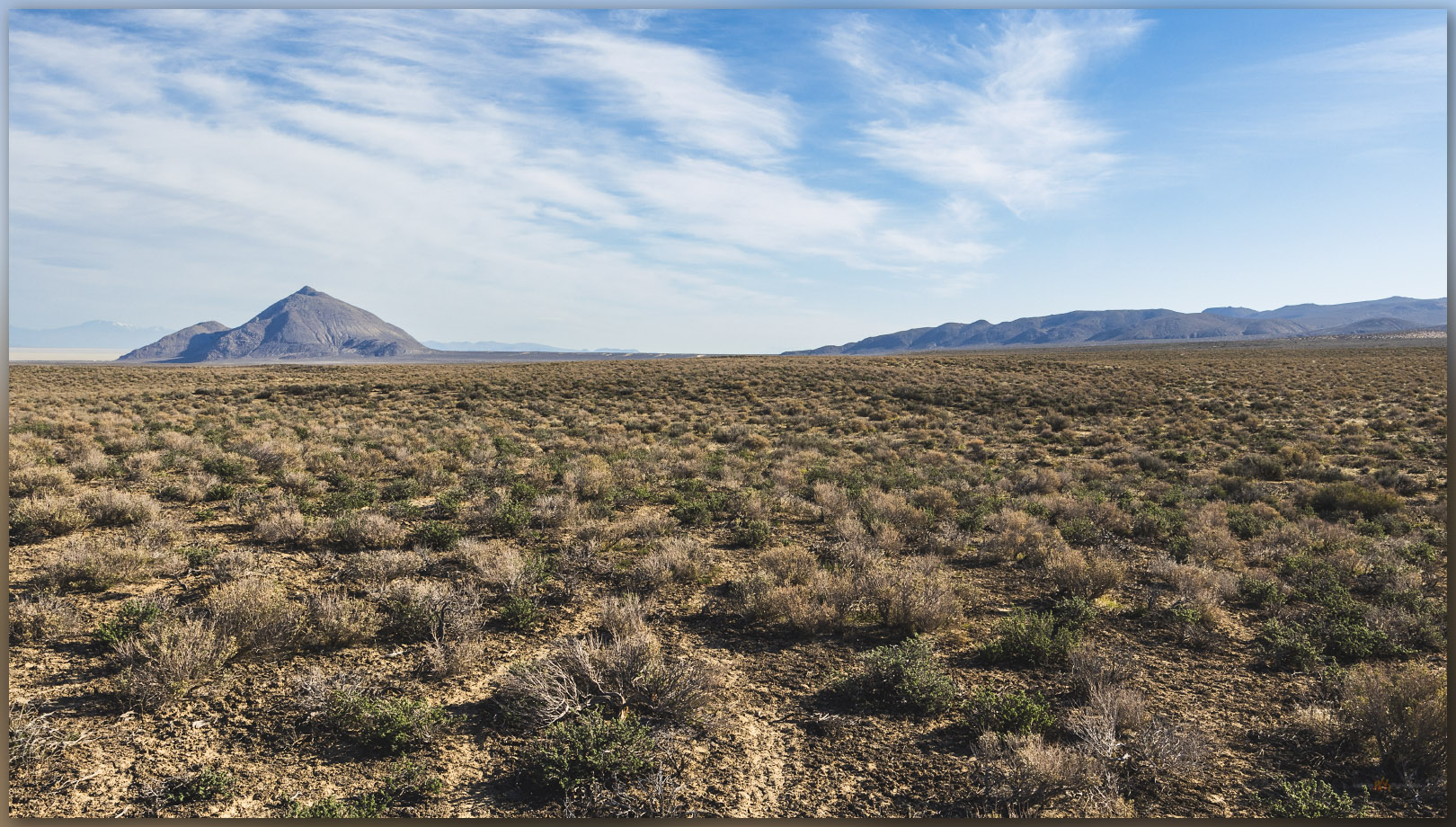
There is a chill in the air, and wispy high clouds resolve as the white-gray of the morning sky shifts to blue. Dry Mountain leans back into the sun toward the eastern horizon. I have five miles to walk to the high point – up a long, generally smooth ramp of alluvial fans and beveled pediments to reach the rocky summit.

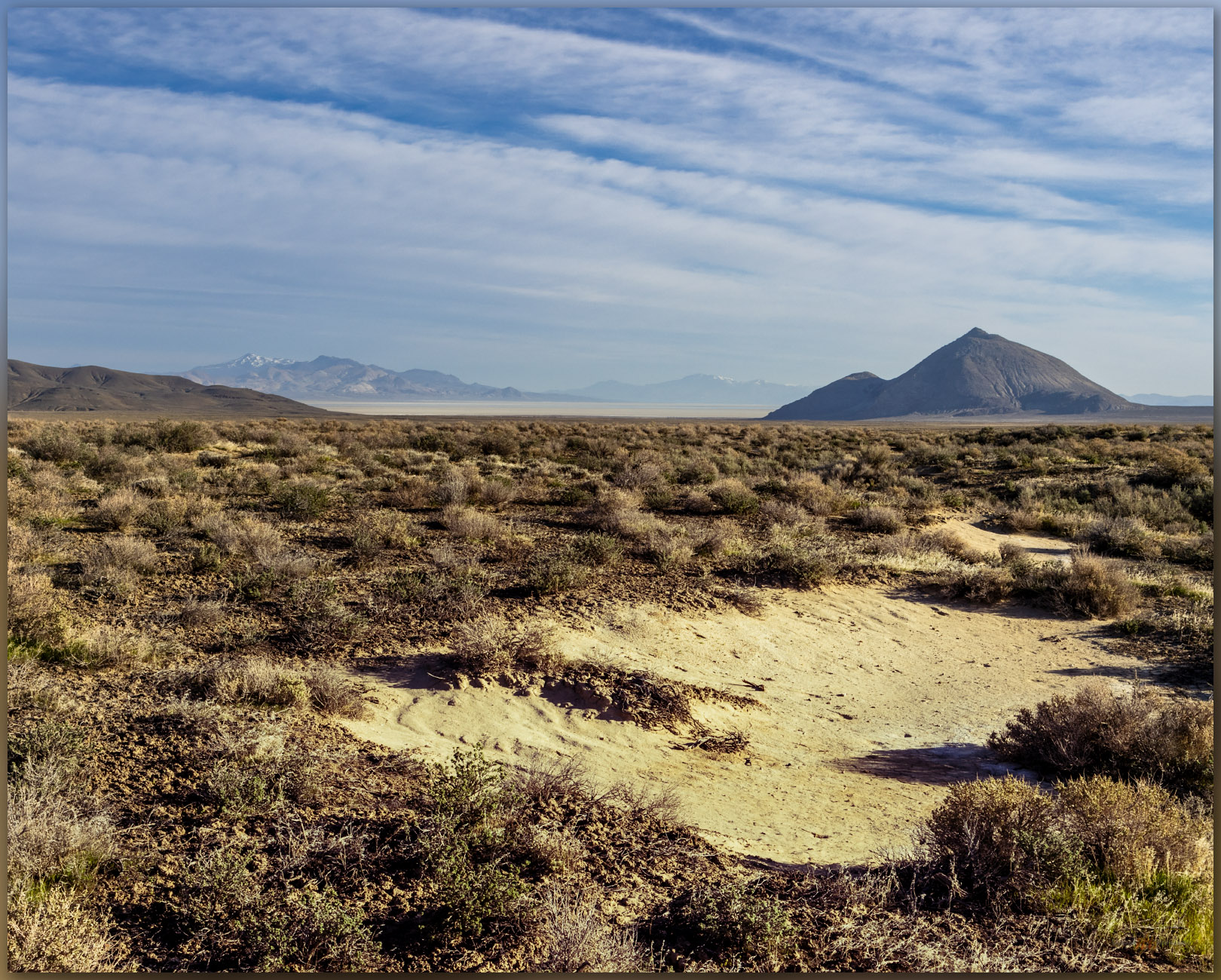
Strand blowouts. Strand lines and silt plain at the base of the Pahsupp Mountains, Black Rock Desert, NV, USA
Subtle strands. Low, gravelly shoreline berms mark the Jessup highstand of pluvial Lake Lahontan on the western margin of the Pahsupp Mountains, NV, USA (#1 on map).

I first traverse a set of alluvial fans where pluvial Lake Lahontan built gravel berms and beaches about 15,000 years ago. The remnant strandlines show as subtle, rounded mounds of dusty gravel stretching perpendicular to the gradual slope of the mountain-front fans. The uppermost strand cuts into the slope formed by a Pleistocene-age fan (Qa1 – older than the lake stand at 15,000 years ago), its erosional scarp formed as waves cut into the gradual slope and arranged gravel in the mounds we walk across today – it is easy to see this berm and scarp tracing its way north and south on aerial imagery just above the road. As the lakes receded, they left stringers of other off-shore bars and recessional beaches, while new alluvial fans (Qa2 and Qa3) chased the receding lake basinward. Once the lake had faded – and during its long, current absence through the Holocene (since 12,200 years ago), young alluvium (Qa4) flows in drainages; it is sometimes dammed by the older berms, coalescing at gaps where storm floods formed cuts in the berms or, in other places, it buries the former beaches altogether.

Beveled pediment. The structure of the granitic pluton is revealed below the alluvial veneer of the western slope of Pahsupp Mountain, Black Rock Desert, NV, USA (#2 on map).

I continue up the long ramp to gain the beveled slope of the granitic pediment that abuts craggy peaks nearer the summit – I’m about halfway through the gradual climb. I can look across the deeper canyons and see how the top of very old (millions of years), uplifted granite, with a fabric of nearly vertical structure, is cut and capped by a gently sloping veneer of alluvium. If I was walking across that alluvium, I might think I was on just another alluvial fan, but the sandy to cobbly veneer is thin (maybe a few meters) and the landform, as a whole, is bedrock – so we emphasize the big picture and call it a pediment, though as archaeologists we would want to be aware of the age of the alluvial veneer. Here, it is generally active and young – it is subject to common slopewash and shows very little soil development. The alluvium is Holocene; there is a lot of time missing from this generally erosional surface. This is the landform that feeds the fans below.

But onward.

Toward the summit. A game trail leads along a ridge to a western false summit outcrop, Pahsupp Mountains, Black Rock Desert, NV, USA (#3 on map).

I gain the steeper sections of ridges and eventually work my way past one false summit to the bouldery crags that form the steep outcrop of the Dry Mountain high point. The views in every direction are Basin and Range at its best. There is shallow lake moving across the Black Rock playa at the terminal end of the Quinn River. Dust is rising from the Smoke Creek Desert to the west, and I can sense a change in the freshening breeze; it will be gusty soon. It is time to settle into the long walk down to camp.

Runoff remnant. The ephemeral lake of the Black Rock Playa, Black Rock Desert, NV, USA
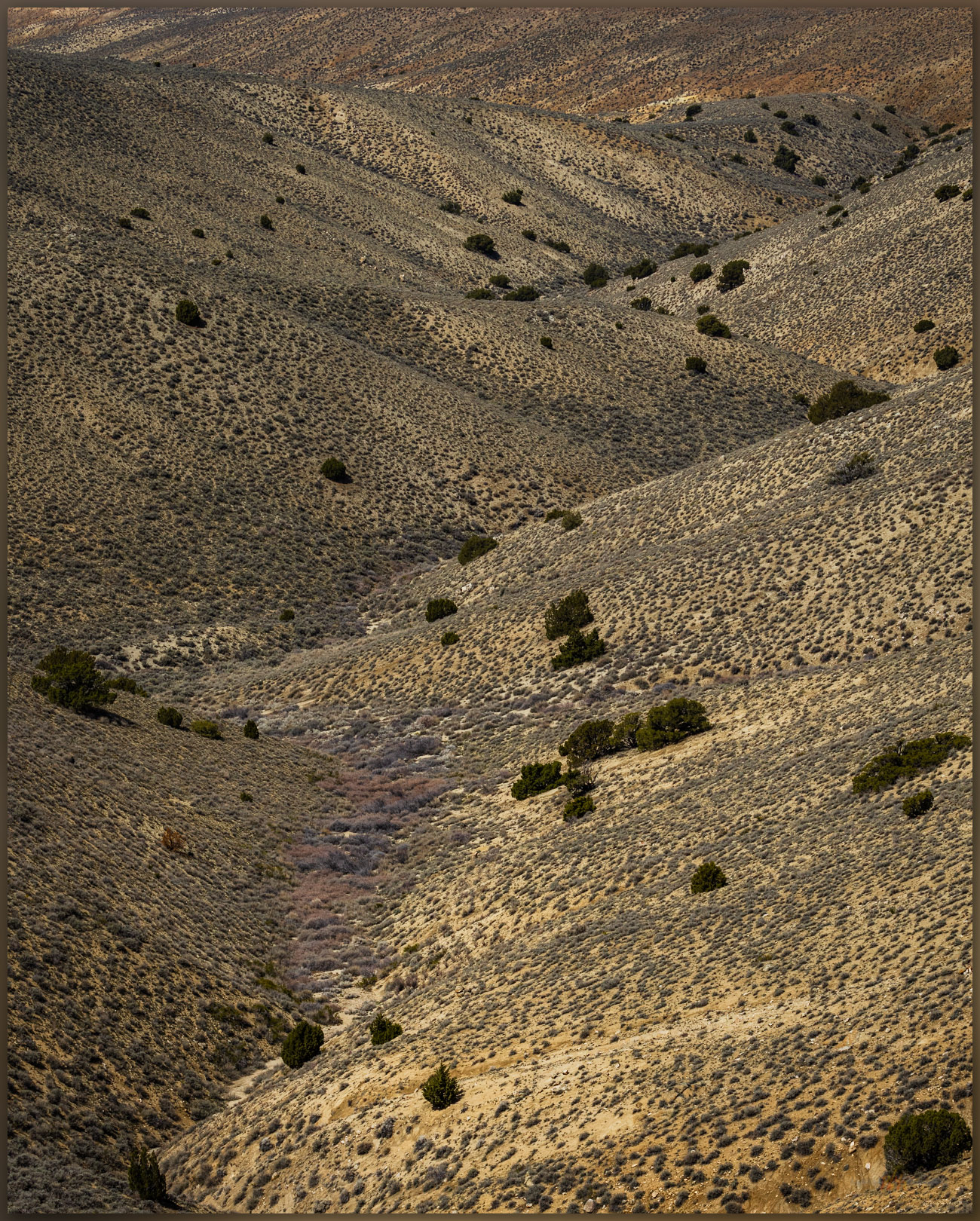
Fading gully. A narrow strip of riparian vegetation waits for spring in the reaches below Dry Mountain summit, Black Rock Desert, NV, USA

Although I cannot help delving into the pattern of landforms as I wander to any high point, I always hope to show the hard, subtle beauty of the Great Basin Desert in a series of landscape photos that go beyond the mapping of geology and geomorphology. To me, these things are inseparable. But bringing the desert to life under blue-sky, dry days is difficult, especially when a long walk means I don’t have time to look for smaller scenes – before each walk, I fantasize that some drama will unfold in front of me. On most days, however, a quiet, desert walk misses the drama of a gathering storm or the bursting gallop of a pronghorn herd – or hassled traffic and the workaday office, and I disappear into the fabric of the landforms that spread from the mountains where I wander. Portfolio pictures may come another time.

Keep going…

Pahsupp Collection

Please respect the natural and cultural resources of our public lands.

#naturefirst #keepgoing

Trail Option

Copyright © 2025 · Monochrome Pro on Genesis Framework · WordPress · Log in

  • Contact TrailOption
  • Substack
  • Waypoints Bibliography
  • Young Archives