• Skip to primary navigation
  • Skip to main content

Trail Option

A personal geography of landscape and place, art and geo-science.

  • Home
  • TrailOption Blog
  • About
  • Contact TrailOption
  • Subscribe!
  • Lost Journals
  • Show Search
Hide Search

Alabama Hills

Winter’s Coming to the Eastern Sierra, CA

D. Craig Young · January 5, 2022 · 1 Comment

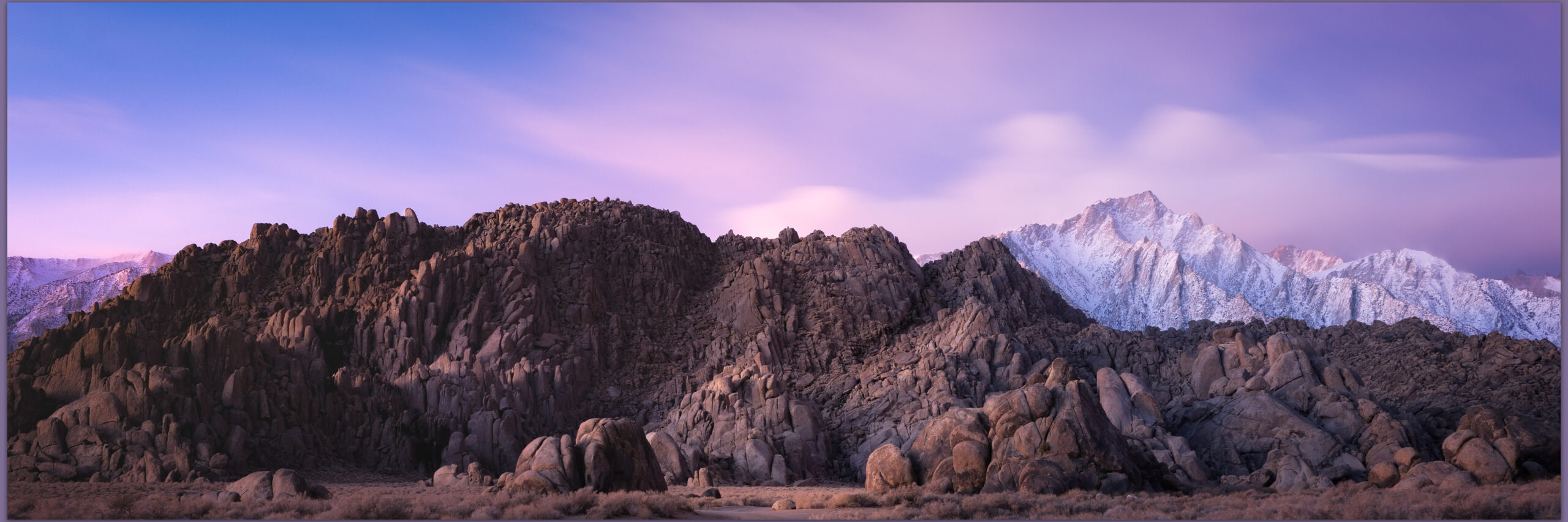
Plutonic glow. A storm clears at dawn in the. Alabama Hills, Eastern Sierra, CA, USA

We were closing out the 2021 field season in Owens Valley, and I had been on a long circuitous road trip working on projects in San Diego, California, visiting with colleagues in Henderson, Nevada, and traversing Death Valley to return to our team working on the fans of the Owens Lake basin. While we wrapped up our fieldwork, the first solid winter storm bore down on the Sierra. Travel home was not possible. The storm meant steady rain in Lone Pine, California, our lodging and logistical base, with the Sierra massif clouded over. I took some time to wrap up some field mapping in the southern valley, taking advantage of the road closures that precluded a homebound journey.

Eastern Sierra – Winter’s Coming Collection
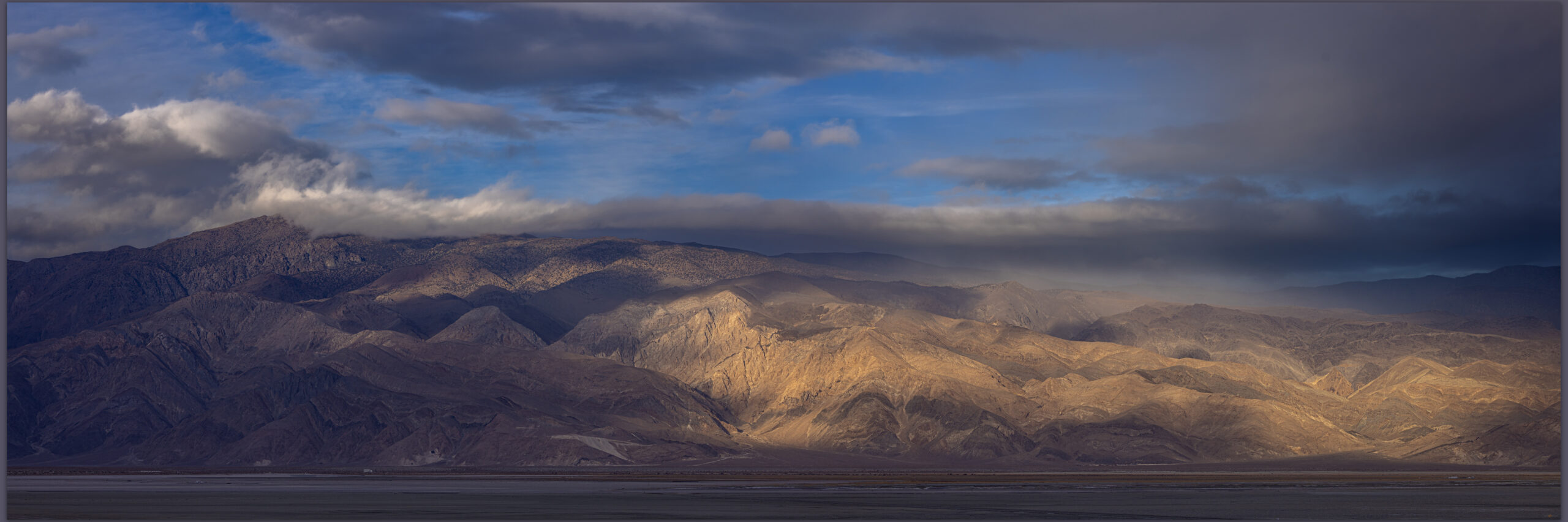
Inyo squalls. Strom clouds clearing from the Inyo Mountains, Great Basin Desert, CA, USA

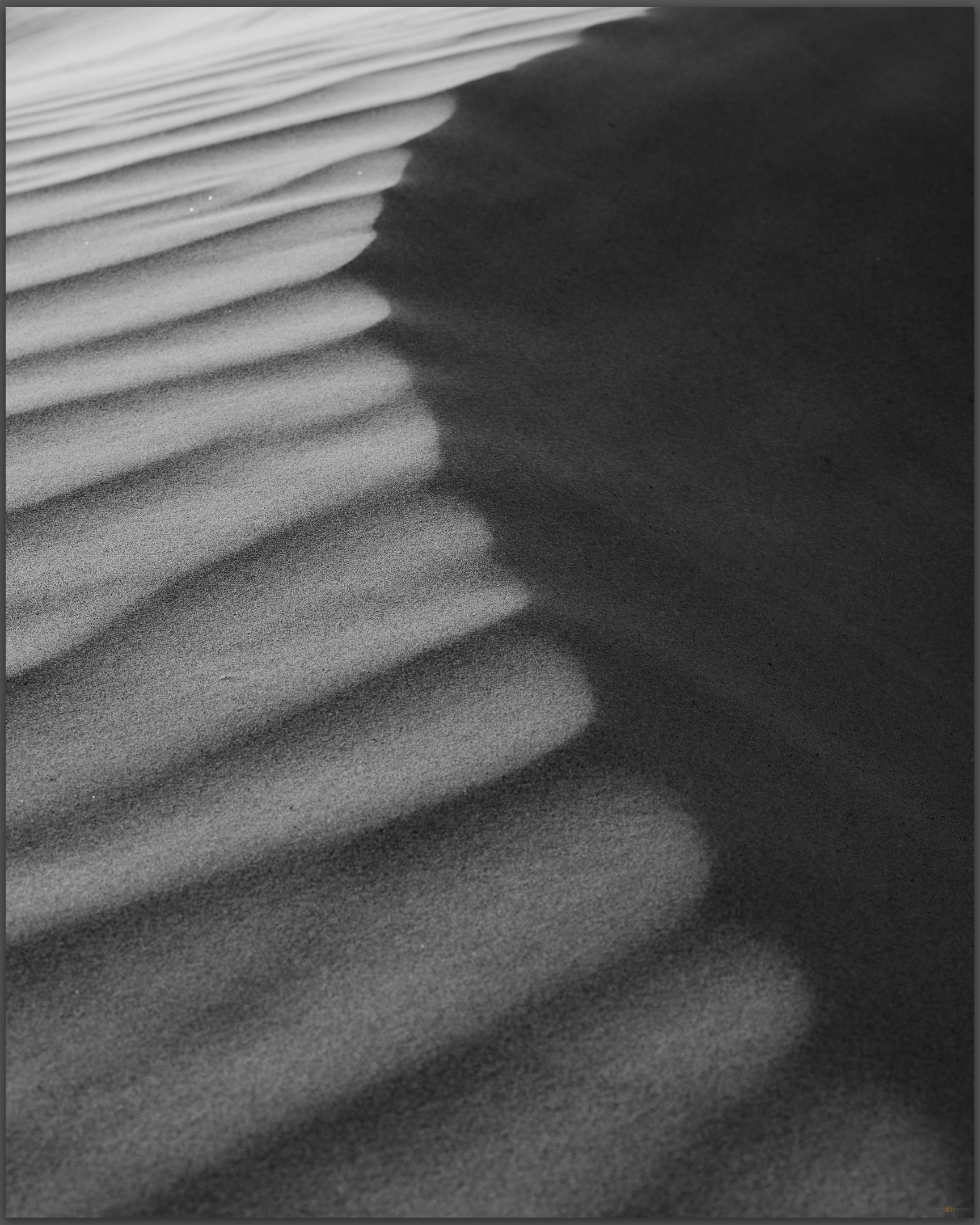
Soon, however, the storm caught up with me and the graded roads of the Olancha and Walker fans were flooded. I retraced my way around to the east side of the valley and visited the falling dunes of the Centennial benches, a small dune-set on the Highway 190 as it climbs out of Owens Valley. I really enjoy this small falling dune and adjacent sand ramps as they move across the dramatic black basalt of the local rimrock benches. Today, the wind was the subject. I was pushed by gusts and polished by grains as a worked low on the dune to tell the story of the wind and its motive power. No changing lenses in these conditions, but I chose well, and I am happy with the results.
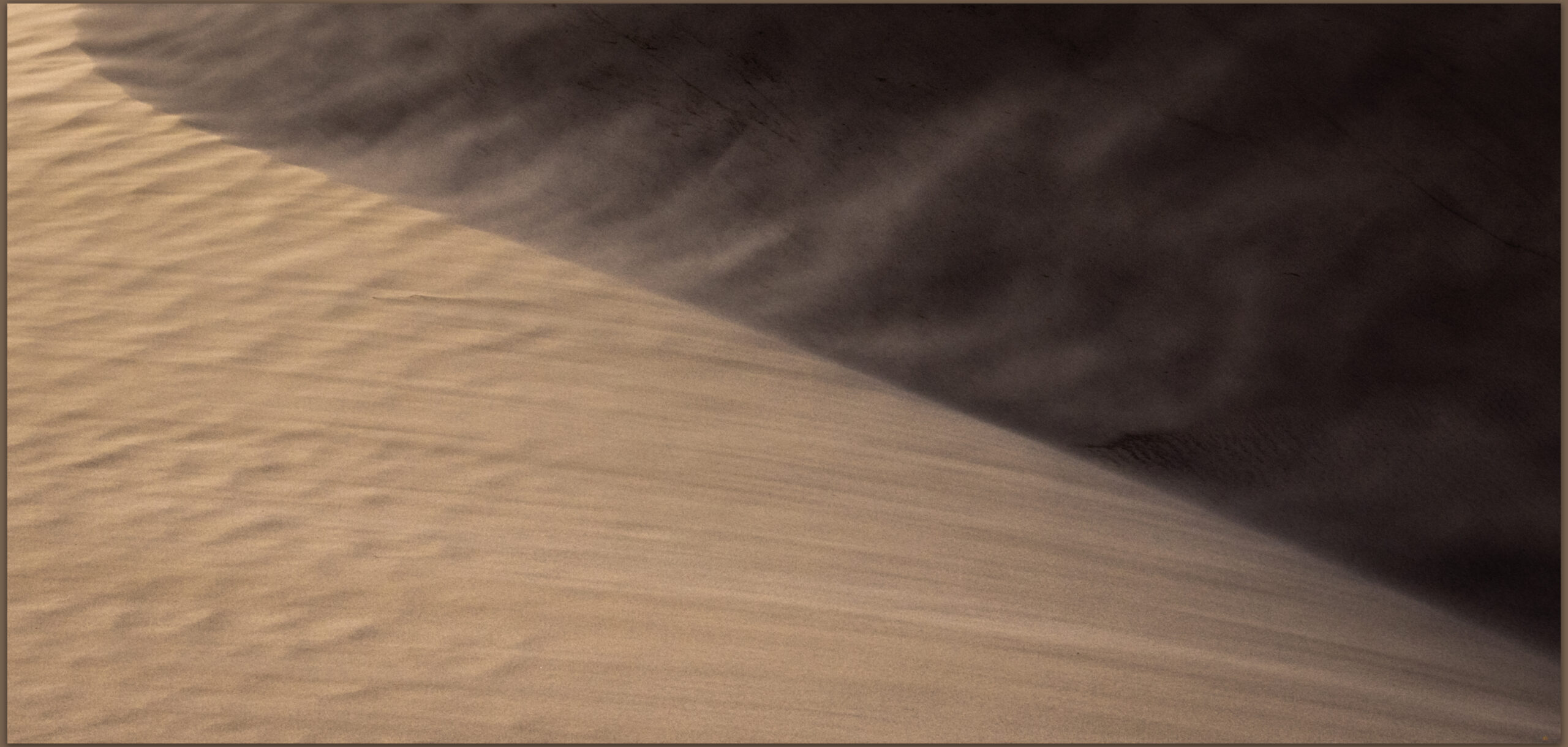
Aeolian rush. Reworking of a falling dune, Owens Valley, Great Basin Desert, CA, USA
Ripples repose. Storm winds rearrange the falling ripples, Owens Valley, Great Basin Desert, CA, USA

The rains finally reached the desert side with the Inyo and Coso mountains soon engulfed in clouds and sheeting rain. I was not quite finished, however. I worked my way into blue hour in the Alabama Hills looking for small scenes in the fading light under the stormy clouds – only the lower mountain-front was visible. The barrel cactus seemed to bend the blue light into a kind of warmth, needles glowing against the cold rocks and sandy grus. Looking for a different perspective, I crawled into a tight cave-like alcove to keyhole small cactus. I am not sure it works but the contortion effort of lifting the camera into the slotted crevices to frame a hoped for subject had me laughing out loud; I am sure a strange solitary sound in the windy evening.
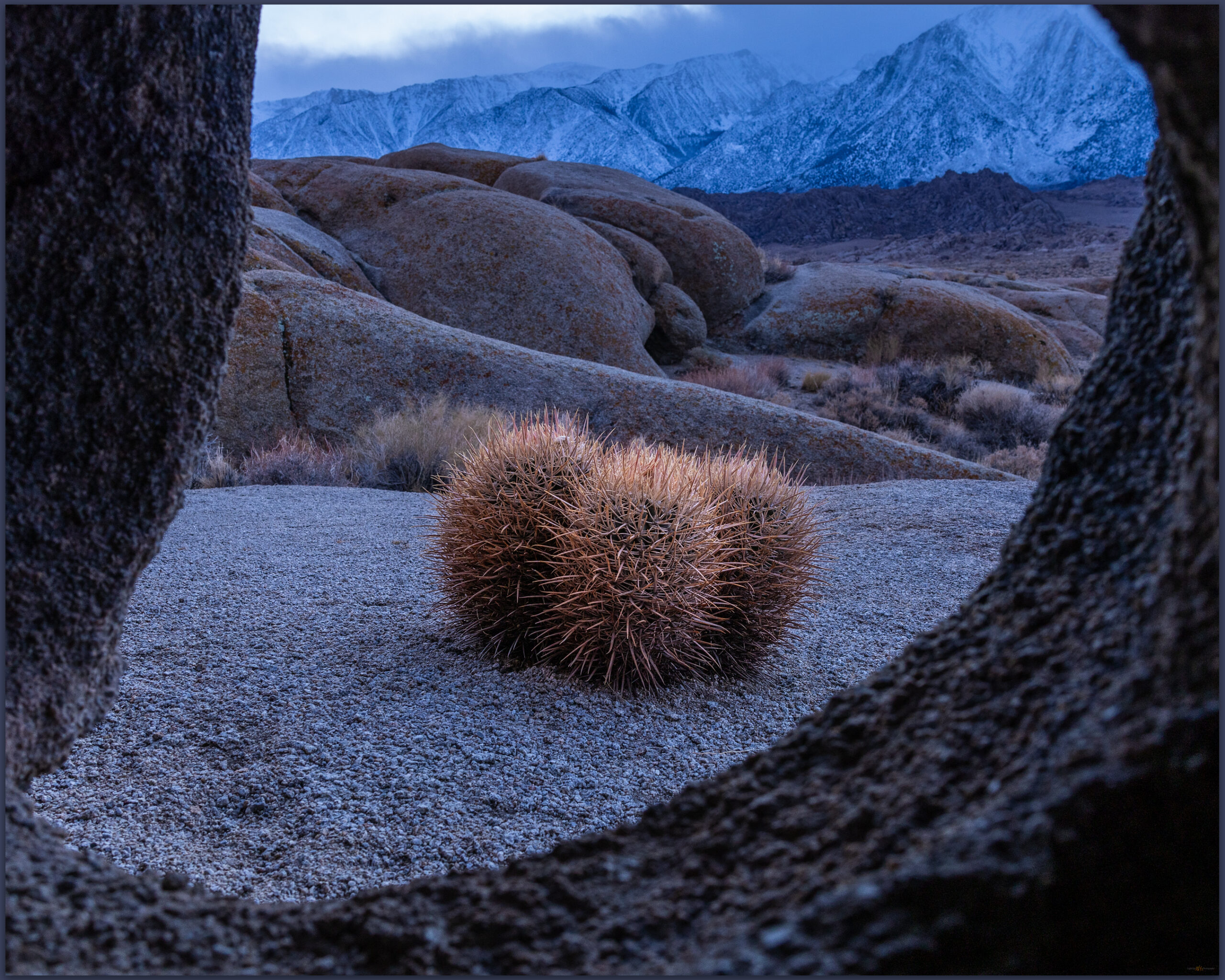
Barrel window. Blue hour and cactus in the Alabama Hills, Eastern SIerra, CA, USA
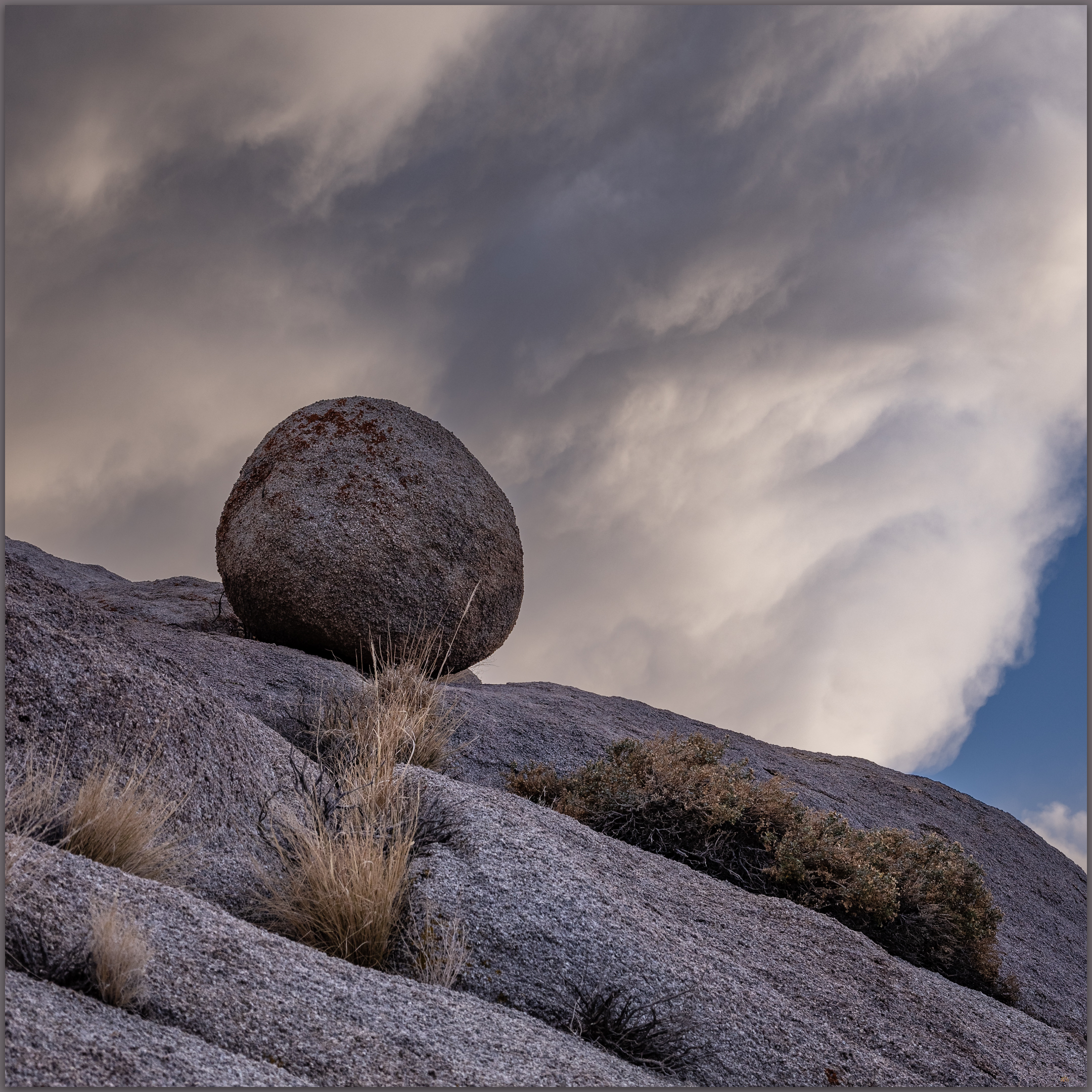
Storm ball. Alabama Hills, Eastern Sierra, CA, USA

I returned to the hotel to hope for a break in road conditions so I could get home. I had logged over 1600 miles on this outing, and the first pangs of homesickness are more acute when conditions change the plan. Clearing skies of the following morning brought reward. Forecasting the changing conditions, I hurried back into the Alabama Hills before dawn. I once again patrolled Movie Road. Driving its full extent and returned eventually to the newly restricted ‘Day Use’ area where the road first bends sharply east. The Sierra crest beckoned, and I had great pleasure watching the refreshed skies on Lone Pine Peak. The light of the Sierra, a gift accepted once again.

Eastern Sierra – Winter’s Coming Collection
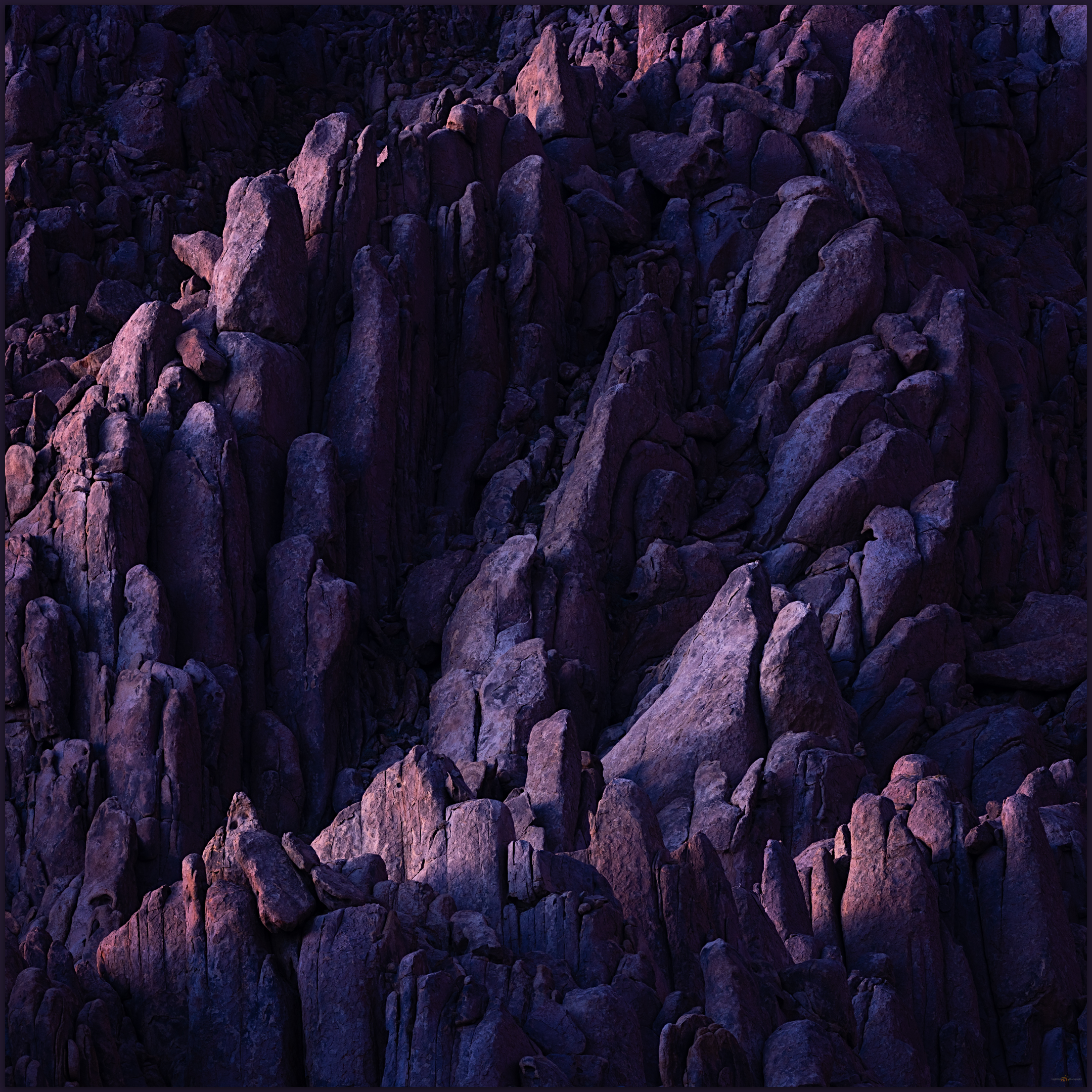
Interior pipes. Early sun and texture in the Alabama Hills, Eastern Sierra, CA, USA

Keep going.

Please respect the natural and cultural resources of our public lands.
#naturefirst #keepgoing

A glow that had to last — Death Valley, Part 3

D. Craig Young · October 12, 2020 · 9 Comments

It was time for a shower. Climbing out of Death Valley, we arrived at Lone Pine, California, in the late morning, seeking refreshment and food. The hotel was not crowded so we checked in easily, cleaned up, and wandered across the street for BBQ. It was not that we ate poorly in Death Valley, we just needed to fuel up for our last outings – an evening and early morning in the Alabama Hills. Lone Pine felt strange. I had worked here for extended periods last year, and I had typically camped in my trailer. Now I was a tourist staying in town and making excursions to the Hills; the role had been switched.

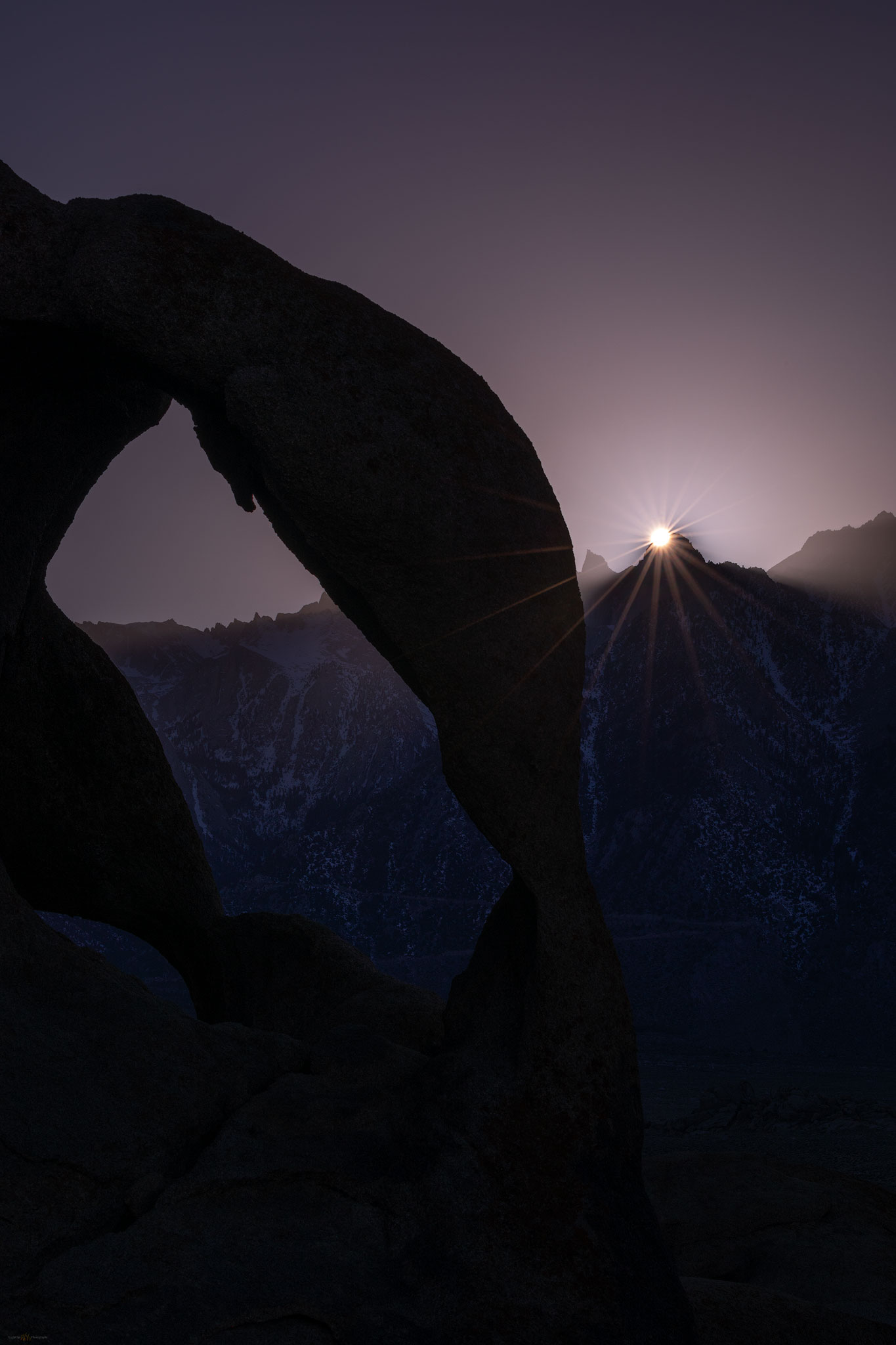
Cyclops arch, sunset on Whitney, Alabama Hills
Cyclops rays. Scouting the arches and an experimental wait to catch the last light of the blue day.

The evening was clear with blue skies settling toward a sudden sunset. Heading toward the portal road, Randy and I grabbed a late coffee and ice cream to go. But the first curve disengaged me from my vanilla, and it dropped surprisingly in my lap (sorry about the any spot I missed Randy!) – one should not juggle espresso and a cone when chasing light. We headed north toward the ‘boot’ and the ‘cyclops’, meeting up with the team as we hiked in. With the sharp and abrupt light, and with the forecast suggesting potential for an interesting morning with storm clouds over the Sierra, we used this as a scout. Our trip would culminate in the morning.

Death Valley Collection

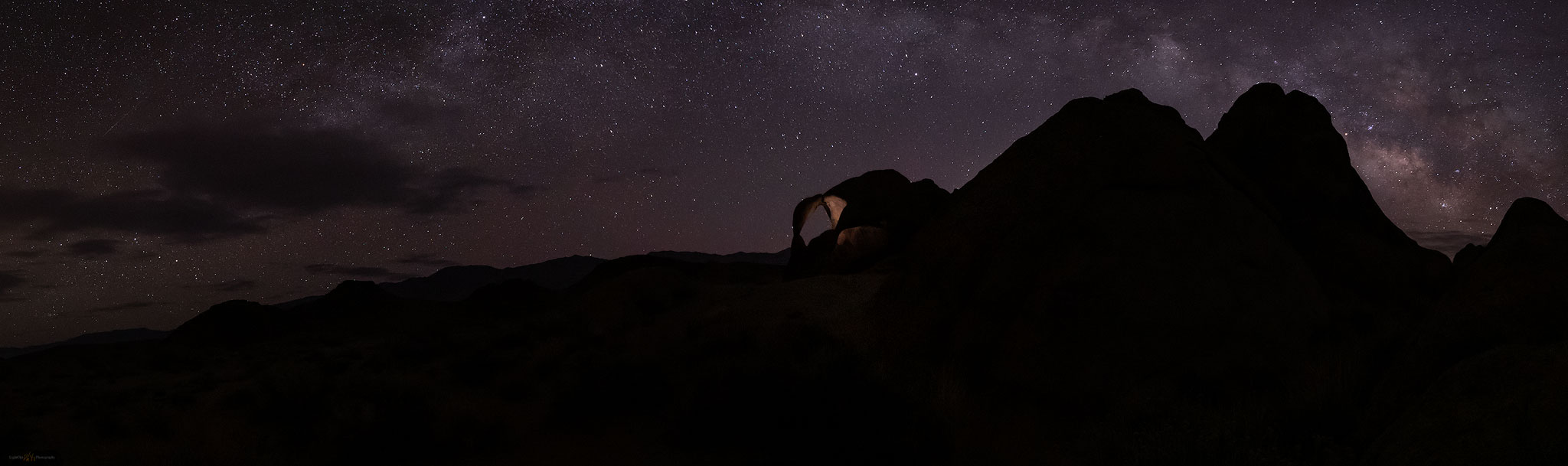
Quinn, Randy, and I met in the parking lot well before sunrise. We wanted to check the Milky Way potential at the ‘cyclops’. It is always a highlight of early morning walking in the star-lit desert, waiting for the granitic outcrops to loom in the light of headlamp. A distant owl warns of our approach. In the darkness of the hills the Milky Way is clear as it settles in a broad arch above the eastern horizon. The promised clouds are evident in dark patches masking stars as they tear away from the mountain front. Some may curse clouds in an astro-shot, but I have always liked any well-placed clouds especially if they simply add glow to a few of the brighter stars or provide depth and scale to the otherwise dark landscape – I am a minimal light-painter. We did, however, light the arch’s interior and committed to working on galactic images until the sun turn our attention to the Whitney massive beginning its glow in the west. The storm was at almost the perfect position, rolling over the summits with a misty gauze below the dark density of water-bearing clouds.

astrophotography at Cyclops Arch, Alabama Hills, California
Cyclops way. Patches of a coming storm approach the Milky Way arch over the Cyclops.
Alpen glow on Lone Pine Peak, Sierra Nevada, Alabama Hills, California
First light. First sun hits Lone Pine Peak overlooking the Alabama Hills. A scene I had not witnessed during the previous summer and fall camping below the peak.
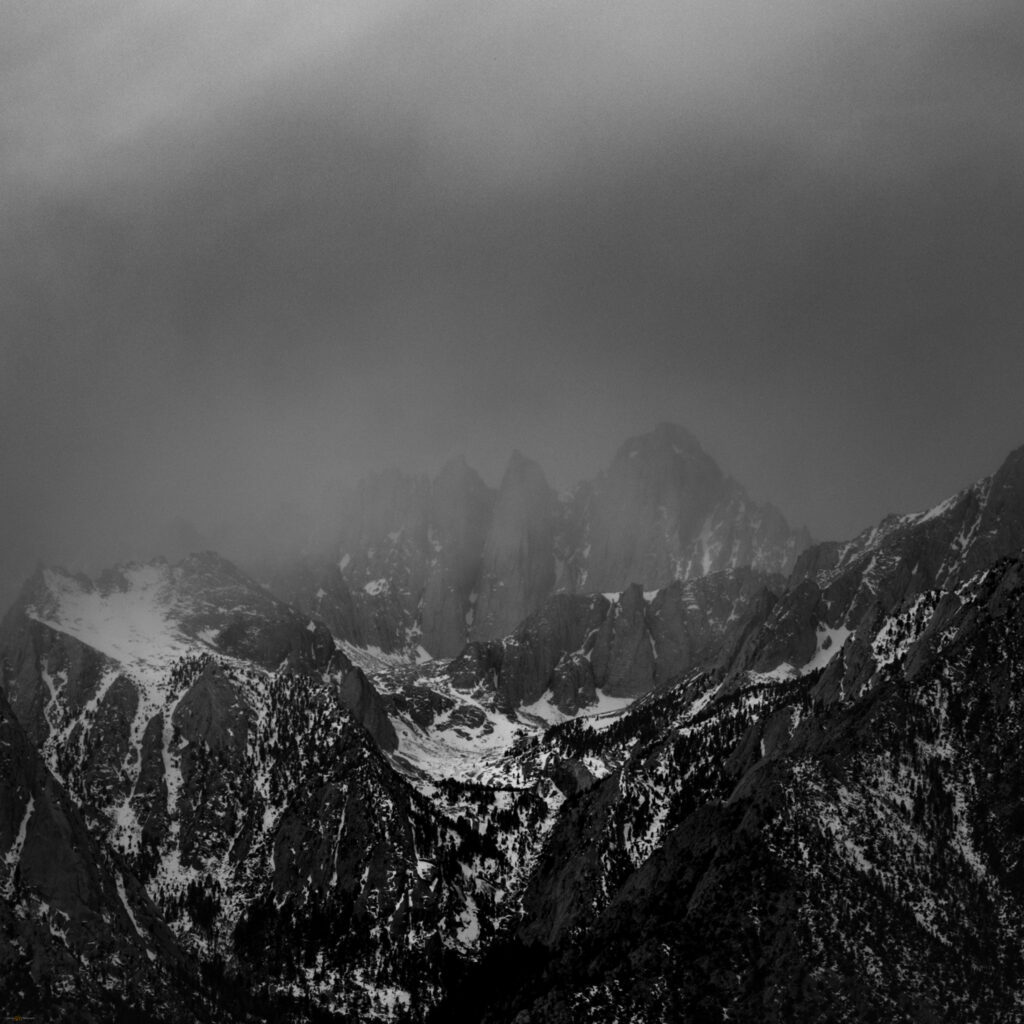
Black and white image of Mount Whitney in the coming, late winter storm
Whitney incoming. Turning a long lens on the shroud of storm clouds on Mount Whitney.

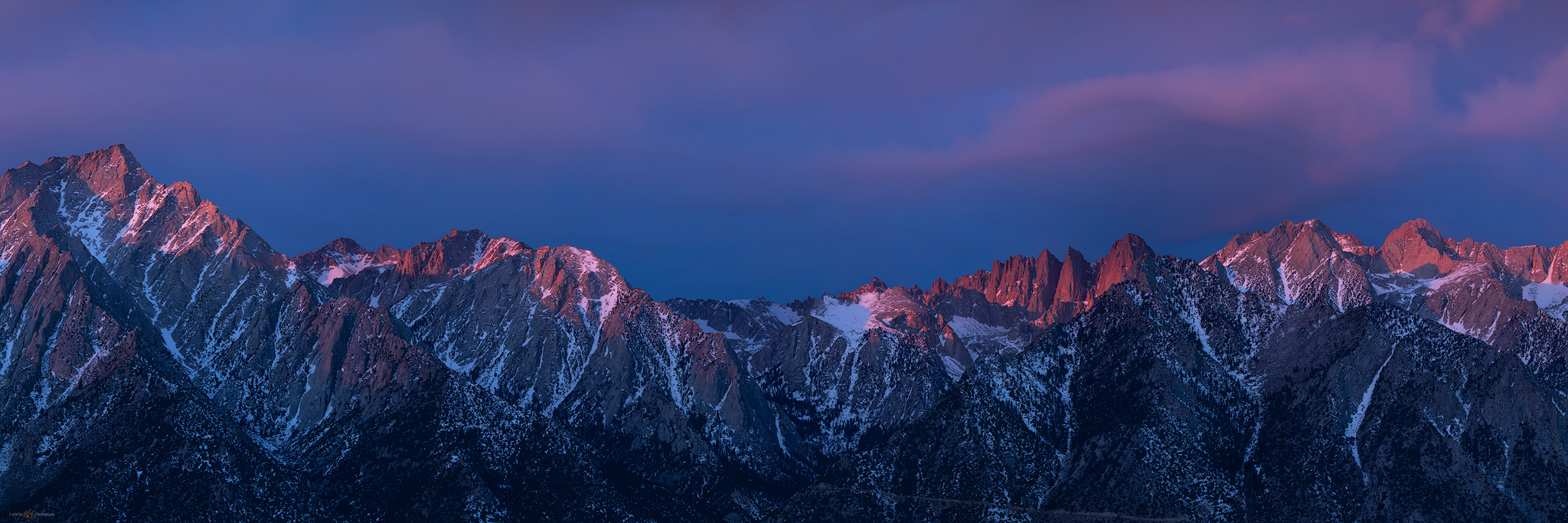
We could tell it would not last long. The gift of alpenglow was fleeting but I think we made the most of it. I had one of my most relaxed mornings of our trip, feeling in-the-zone. I reached for long and close images of Lone Pine Peak and the needles of the Whitney summit ridge before backing away for a wide, multi-image panorama of the Range of Light. Its name written in the first cast of dawn. Our trip came to a close.

Panorama of the Sierra Nevada at Mount Whitney, Alabama Hills, California
The glow that had to last — Range of Light, California

Death Valley Collection

I write this many months and a pandemic or two later. Little did we know as we parted, separately leaving Lone Pine in the late morning, that much of our freedom to roam would fade as the mountains disappeared behind the storm clouds, replaced by seemingly intractable problems brought about by a polarized, dystopian loss of trust and community. We had these few days that we could look back on – the days when we could wander. These few photos, and the memories of comradery, remind me that, with care and effort, our wandering will return. As the landscape and its emotions teach us, let us not take it for granted.

Keep going.

Please respect the natural and cultural resources of our public lands.
#naturefirst #keepgoing

Trail Option

Copyright © 2025 · Monochrome Pro on Genesis Framework · WordPress · Log in

  • Contact TrailOption
  • Substack
  • Waypoints Bibliography
  • Young Archives